



BAKU, Azerbaijan, June 3. Lebanon’s landscape is layered with thousands of years of history, but many of its most treasured archaeological and cultural sites now lie in the path of Israel’s expanding military offensive TurkicWorld reports via aljazeera.
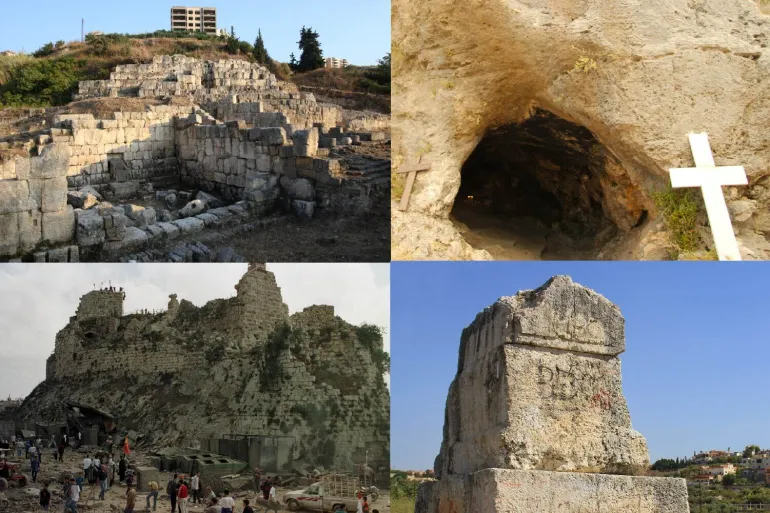
Despite a so-called ceasefire, on Saturday, Israeli forces captured Beaufort Castle, a 900-year-old fortress located on a rocky hilltop near the city of Nabatieh, one of the largest cities in southern Lebanon.
The capture followed days of fierce fighting and forms part of Israel’s deepest military incursion into Lebanon in 26 years. Israeli troops have crossed north of the Litani River and advanced towards the Zahrani River.
Lebanon’s World Heritage Sites
Lebanon currently has six UNESCO World Heritage Sites.
UNESCO World Heritage Sites are landmarks or areas judged to have exceptional cultural or natural importance to humanity and are designated for international protection and preservation.
Lebanon’s Culture Minister Ghassan Salame told the AFP news agency that Israeli attacks on the country’s south are putting heritage sites, including in the ancient city of Tyre, in “serious danger”.
Tyre, located some 83km (52 miles) south of Beirut, contains the remains of one of the most important cities of the ancient Phoenician world, including extensive Roman-era ruins and one of the largest hippodromes of the Roman Empire.
Israeli forced displacement orders and bombardments have pushed tens of thousands of people to flee Tyre, with some estimates putting displacement from the city and surrounding area at about 200,000. Across Lebanon, the wider war has uprooted more than one million people.
Dated to the third millennium BC, Tyre grew into one of the Mediterranean’s leading maritime powers. After Alexander the Great’s siege in 332 BC linked the island city to the mainland, Tyre flourished under Greek, Roman and Byzantine rule before gradually declining in the centuries after the Crusades.
“Bombings fell very close to the ruins of Tyre,” Minister Salame said, adding that the medieval Beaufort Castle overlooking Nabatieh was “directly hit”.
UNESCO enhanced protection
Lebanon is home to at least 39 cultural sites that have been granted provisional enhanced protection. Several of them are in the south, in areas affected by the ongoing Israeli military operations.
The designation provides the highest level of legal protection for cultural heritage under international law, with any noncompliance constituting a serious breach of the 1954 Hague Convention and its 1999 Second Protocol and potentially giving rise to criminal responsibility.
In a news release on April 1, Lazare Eloundou Assomo, the assistant director-general for culture at UNESCO, emphasised the protection of cultural heritage and how it serves as a backbone of people’s identity.
“When heritage is destroyed anywhere, moral standards are undermined, social cohesion is eroded, and trust and resilience are jeopardised,” he stated.
Some of the most notable protected sites include:
Beaufort Castle
Known in Arabic as Qalaat al-Shaqif, the 12th-century Crusader fortress is perched 700 metres (2,300ft) above southern Lebanon. Overlooking the Litani River, its commanding position made it one of the region’s most strategic strongholds.
Control of the castle passed from the Crusaders to successive regional powers, including the Ottomans. Palestinian fighters later used it as a base before Israel captured it during its 1982 invasion and occupied it until it withdrew from southern Lebanon in 2000.