

BAKU, Azerbaijan, November 14.
Abdulhamid Hamid Al-Kba
Opinion writer specializing in Central Asia and Azerbaijan
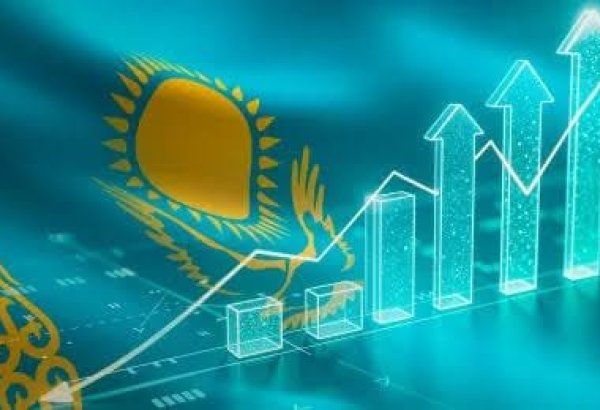
The 2026 UNCTAD report places Kazakhstan firmly at the top of the new investment landscape within the Eurasian Economic Union. The country accounted for roughly 93% of the total value of newly announced greenfield investment projects across the Union in 2025 — nearly $24 billion.
Yet behind this striking figure lies a clear economic paradox. Announcing large projects does not automatically mean money is actually flowing into the economy, something the foreign direct investment numbers make plain.
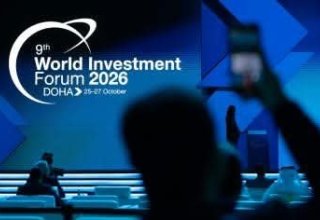
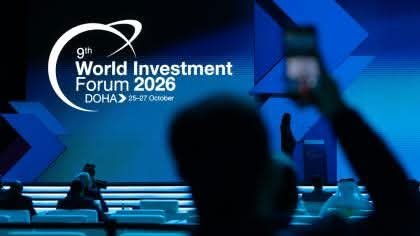
According to the UN report presented at the World Investment Forum in Doha in October 2026, Kazakhstan captured the largest share of greenfield projects in the Eurasian Union, with a value of almost $24 billion — a 34% jump from the previous year. Across the Union as a whole, the total value of announced projects reached $25.9 billion, up 12% year-on-year. What stands out is that this financial surge came alongside a sharp drop in the number of projects, from 122 in 2024 to just 80 in 2025. The market has simply shifted toward a handful of very large deals.
These numbers reflect serious industrial ambition and point to promising opportunities in manufacturing, infrastructure, engineering, and logistics. But economic reality requires a reminder: we are talking about promises and plans on paper, not factories that have already been built.
This is where the real gap appears. While Kazakhstan leads in announced projects, its net foreign direct investment flows turned negative by about $860 million in 2025. Negative net flows do not necessarily mean an absence of new investment; they can also result from the repayment of earlier obligations, the sale of existing assets, or other financial movements. Still, the contrast is striking: roughly 93% of actual FDI inflows into the Union went to Russia. We are looking at two different readings of the same landscape — one measures the value of announced projects, the other tracks the real movement of capital on the ground.
Globally, foreign direct investment rose 6% to $1.6 trillion in 2025. Inside the Eurasian Union, China topped the list of countries announcing new projects, with around $16 billion. Investor interest concentrated heavily in the metals sector, where announced projects jumped from $2.3 billion to $12.5 billion in a single year.
These announced investments open a real opportunity for Kazakhstan to expand local processing and produce higher-value goods instead of remaining a raw-materials exporter. Whether that opportunity is seized will depend on actual project implementation, technology transfer, and the development of local supply chains. The report also notes the role of government reforms, including the one-stop-shop system and the national digital investment platform. UN monitoring shows that 69% of investment policy measures in Kazakhstan, Armenia, and Kyrgyzstan between 2016 and 2025 were designed to encourage capital, supported by a strong network of railways, dry ports, and border crossings that reinforce the country’s position as a bridge for Eurasian trade.
On the financing side, international project finance in the Union rose 81% to $8.6 billion across 11 deals. Industrial deliveries between Union members more than doubled from $13.7 billion in 2016 to $31.1 billion in 2023, while industrial output grew 35.6% over the same period.
Kazakhstan’s position at the top of the Eurasian investment landscape is significant, but its long-term success will depend on more than the scale of announced projects. The real test is whether these investments translate into domestic production, technology transfer, skilled employment, and stronger local supply chains.
For decision-makers in Astana, the challenge is not simply to attract more capital, but to ensure that it generates lasting economic value. The coming years will reveal whether the nearly $24 billion in announced projects marks the beginning of a broader industrial transformation or remains largely a story of investment potential.