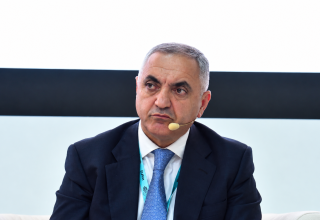








BAKU,TurkicWorld Abdulhamid Hamid Al-Kba / Writer and researcher specializing in Central Asia and Azerbaijan affairs
Sometimes I pause in front of a map of Central Asia and try to imagine what cities and regions would look like if they could truly “sense” what is happening inside them.
Not an emotional kind of sensing, but a practical ability to read data, anticipate bottlenecks, and improve services before people even begin to complain. This is what Kazakhstan is trying to do today — quietly and with confidence. It is not merely a collection of numbers about “smart cities.” It is a genuine attempt to make technology serve the daily life of the citizen in the village as much as in the capital.
Let us look at this journey with balanced eyes, away from excessive enthusiasm or excessive skepticism.
At the heart of these changes, the Ministry of Artificial Intelligence and Digital Development approved a new version of the methodology for building the smart city and the smart region. The document does not speak of scattered digital projects. It speaks of building a unified system for managing territories based on artificial intelligence.
This means a gradual shift from individual solutions to an integrated system that covers transport, infrastructure, utilities, price monitoring, and the quality of public services. Data management occupies a central place: regional analytical centers and data lakes become part of the digital infrastructure.
With this data, systems can detect patterns, anticipate problems, and contribute to decision-making. These requirements apply particularly to new urban projects such as Alatau City, where digital components can be integrated already at the design stage. This expansion relies on the unification of the government IT sector, including the transition to the single QazTech development environment and the launch of a digital assistant that ranks public services based on a simple text description of a life situation. Work is also underway on an electronic notary platform and a digital business map that brings together government data and company profiles, along with a digital employment service that is expected to cover all regions by the end of 2026.
All these steps are building a broader foundation for the later application of artificial intelligence.
But technology does not work in a vacuum.
That is why Kazakhstan needs strong computing power. The state is therefore developing shared infrastructure, including the national Data Center Valley in Ekibastuz, with the participation of national companies and international partners. This shared base allows regions to use advanced data-processing tools without having to build separate technological infrastructure for every project.
Together with regional analytical centers and data lakes, the conditions are created for using artificial intelligence not only in service delivery but also in analysis, forecasting, and the preparation of administrative decisions. Yet the practical success will ultimately depend on how effectively these tools are integrated into the daily work of local administrations.
This is where international cooperation becomes important. Kazakhstan plans to develop smart-city and smart-region projects in partnership with the DEC40 community. The signed agreement opens the door to exchanging international experience, attracting technology companies and investors, and involving Kazakh specialists in advanced training programs.
The first practical steps include forming a list of priority projects for Kazakhstan in the smart-region and smart-city directions and presenting them to the international DEC40 community in search of technological solutions, strategic partners, and potential investors. The parties are also considering the possibility of holding an international smart-city forum in Astana.
Officials believe the agreement gives Kazakhstan’s regions direct access to a global network of technology companies, best practices, and investment opportunities. They emphasize that the country’s task is not merely to introduce ready-made technologies, but to create conditions in which every region can implement its own AI-native city projects with the participation of international partners.
In a further step that strengthens regional ambitions, Kazakhstan is planning to establish another international technology center dedicated to artificial intelligence and startups. Prime Minister Olzhas Bektenov met with Balaji Srinivasan, founder of the Network School international technology community, to explore cooperation in AI, startup development, and tech entrepreneurship.
The discussion centers on creating a Network City in the Burabay area of the Akmola Region, with possible future expansion to Alatau City. A notable feature is that the project will be fully financed by private investment and will combine educational programs, co-working spaces, startup accelerators, hackathons, and international conferences within a single innovation ecosystem. This initiative comes as part of a series of earlier projects such as Astana Hub, the Alem.ai International Artificial Intelligence Center, and others, forming an integrated system that extends from infrastructure to talent development.
Kazakhstan has also become a founding member of the World Artificial Intelligence Cooperation Organization, reflecting its desire to contribute to global AI governance while building its own innovation ecosystem.
From an analytical perspective, Kazakhstan’s strategy appears coherent in its broad outlines: building computing infrastructure, unifying government platforms, linking regions through data and analytics networks, and opening up to international partnerships and talent. This approach reduces the risk of duplication and provides a common foundation on which regions can build. The focus on education and human-capital development also addresses one of the greatest challenges in any digital transformation.
Nevertheless, real challenges remain. The success of smart regions is not measured by the number of platforms launched, but by the extent to which ordinary citizens’ lives improve: Have waiting times decreased? Have services become fairer and more transparent? Do residents of remote areas feel the same benefits as those in major cities?
Reliance on data also raises questions about privacy, cybersecurity, and the ability of local administrations to absorb the new tools. Private investment, important as it is, requires a stable regulatory environment and long-term trust. Kazakhstan is following an ambitious path that balances centralization in infrastructure with decentralization in implementation, and the government role with private initiative. If it succeeds in linking these elements effectively, it may become a regional model worth following.
In the end, behind every algorithm, data center, and smart city, the human being remains the measure. The citizen who wants a less congested road, a faster service, and a better job opportunity; the young person who dreams of building something new in his own country. Kazakhstan is laying the technical and organizational foundations for this future today. The road is not easy and will not be free of obstacles, yet it carries a real promise that technology can be a tool in the service of people rather than merely a slogan. The coming days will show how much of that promise turns into a tangible reality on the ground.