






BAKU,TurkicWorld Abdulhamid Hamid Al-Kba / Writer and researcher specializing in Central Asia and Azerbaijan affairs
Having followed major development projects across Central Asia for years, I still remember the excitement that greeted the announcement of Asman City in 2021. A gleaming new smart eco-city on the shores of Issyk-Kul — it sounded almost like a dream. Five years later, that dream has met reality, and the picture is far more complex than the early renderings suggested.
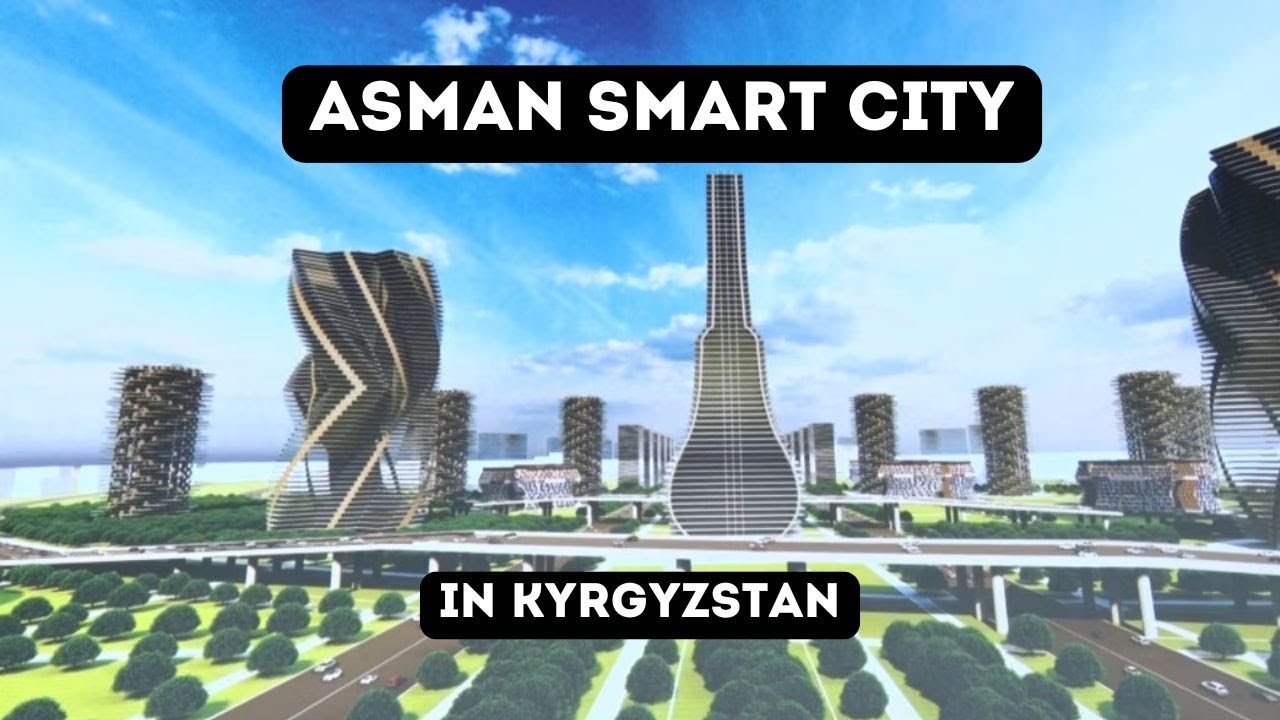
The project is undeniably ambitious. A city of 4,000 hectares, designed to house between 500,000 and 700,000 people, shaped like the komuz when viewed from above. Renewable energy, smart systems, green transport, modern schools, and financial centers — all intended to turn this corner of Kyrgyzstan into a regional economic bridge connecting East and West.
For Kyrgyzstan, which in recent years has been working to diversify its economy and expand investment beyond traditional sectors, the promise of thousands of new jobs and stronger economic opportunities is especially attractive. I have observed in my research how large-scale development projects can raise expectations and strengthen confidence in the future when they are aligned with realistic implementation strategies.
Yet big dreams often collide with hard realities, and Asman is no exception.
Environmental concerns are serious and difficult to ignore. Issyk-Kul is not just a scenic lake; it is a fragile ecosystem that local communities and scientists have worked to protect for decades. During my research on urban development trends in the region, I have found that while investors are often drawn to ambitious master plans, they remain far more cautious when it comes to execution risks — particularly those related to water resources, pollution, and biodiversity.
Financing is another key challenge. While the project relies heavily on foreign investment, its long-term success will depend on diversifying funding sources and building transparent, stable partnerships. We have already seen agreements announced with great optimism later delayed, revised, or quietly dropped, highlighting the importance of consistency and trust in long-term megaprojects.
Then comes the energy question, one of the most sensitive issues. Anyone who follows Kyrgyzstan’s energy situation during peak winter demand knows that the electricity system can come under significant pressure, despite ongoing infrastructure improvements. It is difficult to imagine a smart city of this scale operating efficiently without a strong and reliable energy backbone.
There are also the communities living near the project site. Their concerns about the loss of farmland and grazing areas are not abstract policy debates, but immediate lived realities tied to livelihoods that have existed for generations.
Global experiences such as Masdar City in the UAE and Songdo in South Korea show that technology alone does not guarantee success. Governance, adaptability, and genuine community engagement are often more decisive than design or infrastructure.
In the end, I believe Asman still has a real chance — not because it is perfect, but because it reflects something relatively rare in the region: a willingness to think on a long-term scale. The road ahead will not be smooth. Delays, adjustments, and compromises are almost inevitable. But if Kyrgyzstan manages to balance ambition with pragmatism, and economic diversification with environmental responsibility, Asman could still become an important reference point for future smart cities in Central Asia.
But the path toward this remains complex and requires a delicate balance between ambition and reality.