




BAKU,TurkicWorld Abdulhamid Hamid Al-Kba / Writer and researcher specializing in Central Asia and Azerbaijan affairs
In Kazakhstan, the small and medium-sized enterprises (SMEs) sector tells a story of gradual success, yet it carries important questions about its ability to endure and expand sustainably. After years of economic reforms, this sector has become one of the primary engines of growth. However, it still faces deep structural challenges that require bold and continuous solutions.
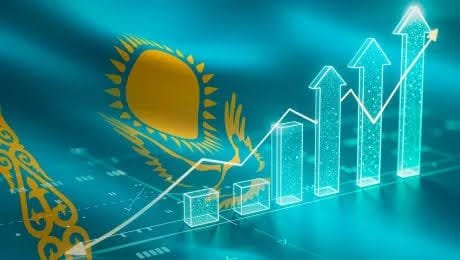
The contribution of SMEs to Kazakhstan’s GDP reached 40.9% by the end of 2025, up from just 32.9% in 2020 — a remarkable increase of nearly 8 percentage points. This rise did not happen by chance; it is the result of sustained reform efforts focused on reducing administrative burdens, simplifying procedures, and advancing digitalization.
During its 100th meeting, chaired by Deputy Prime Minister and Minister of National Economy Serik Zhumangarin, the Interdepartmental Committee reviewed the sector’s performance. According to Vice Minister Yerlan Sagnayev, as of January 1, 2026, Kazakhstan had 2.4 million registered SMEs, of which 2.2 million were actively operating. The share of active enterprises rose from 84.3% to 92.2% over the past five years — a clear indicator of improved operational efficiency.
Small enterprises contributed 33.7% to GDP, while medium-sized ones accounted for 7.2%. Overall, the sector generated products and services worth over 104 trillion tenge, recording a real growth of 12.3%. SMEs remain the country’s largest employer, providing jobs for more than 4.5 million people — approximately 46.6% of the active workforce. This role gives the sector strategic importance beyond pure economics, as it directly helps reduce unemployment and enhances social stability across various regions.
Despite this clear progress, serious structural challenges persist. Nearly 90% of small enterprises are still classified as “micro,” with significantly lower productivity compared to medium and large companies. Economic activity is also heavily concentrated in trade within major cities, where SMEs contribute 65.9% to Astana’s regional product and 59.8% to Almaty’s. This concentration highlights weak regional and sectoral diversification, making the economy more vulnerable to local shocks.
On the regulatory front, the Committee approved important amendments that directly impact the business environment. In terms of easing administrative burdens, total business inspections decreased by 4.9% in 2025, while qualification-related inspections dropped by 69.5%. This positively affects small enterprises in particular, which had suffered the most from frequent inspections and bureaucratic procedures. The government has also made progress in simplifying permits, shortening processing times, and automating more than 40% of reporting tools.
In sensitive sectors, the Committee decided to reinstate sanitary certificates for transporting agricultural products between regions to protect quality and public confidence following rising violations. For electronic lotteries, the interval between draws was extended to 30 minutes, with new restrictions on ticket purchases in response to citizen complaints. The Committee also supported the restoration of mandatory annual inspections for grain receiving and storage facilities.
In my opinion, reaching a 40.9% contribution to GDP represents a genuine qualitative leap for Kazakhstan’s economy, which has long relied on natural resources. The SME sector has become a vital source of employment and income, marking an important step toward economic diversification. However, long-term success depends on Astana’s ability to strike a delicate balance between easing administrative burdens on small businesses and strengthening oversight in sensitive sectors that affect public health and economic stability.
Sustaining this path requires radical solutions to existing problems: facilitating access to affordable financing, raising productivity through training and technology, and supporting medium-sized enterprises to enable them to export and compete internationally.
I expect the sector’s contribution to grow further in 2026–2027, especially with programs like “Isker Aymak” focusing on rural areas, alongside continued digitalization and improved financing mechanisms. The figure could reach 43–45% if reforms continue effectively. Yet, true success will depend on transforming quantitative growth into qualitative growth supported by technology, innovation, and skills.
Kazakhstan now possesses real momentum in its SME sector. The opportunity is available, and the challenges are well known. The key question remains: Will Astana succeed in turning this sector into a sustainable economic pillar that truly reduces dependence on natural resources? The answer will become clear in the coming few years.