



BAKU,TurkicWorld Abdulhamid Hamid Al-Kba / Writer and researcher specializing in Central Asia and Azerbaijan affairs
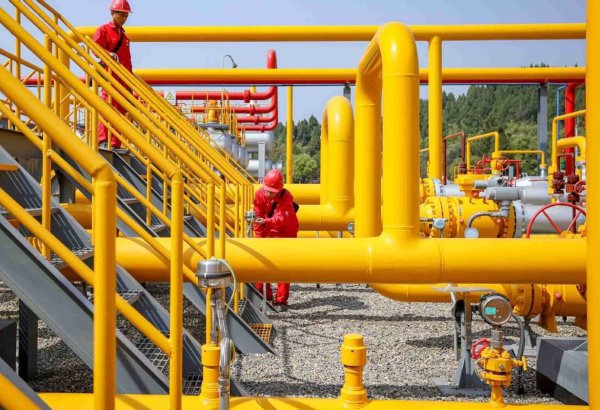
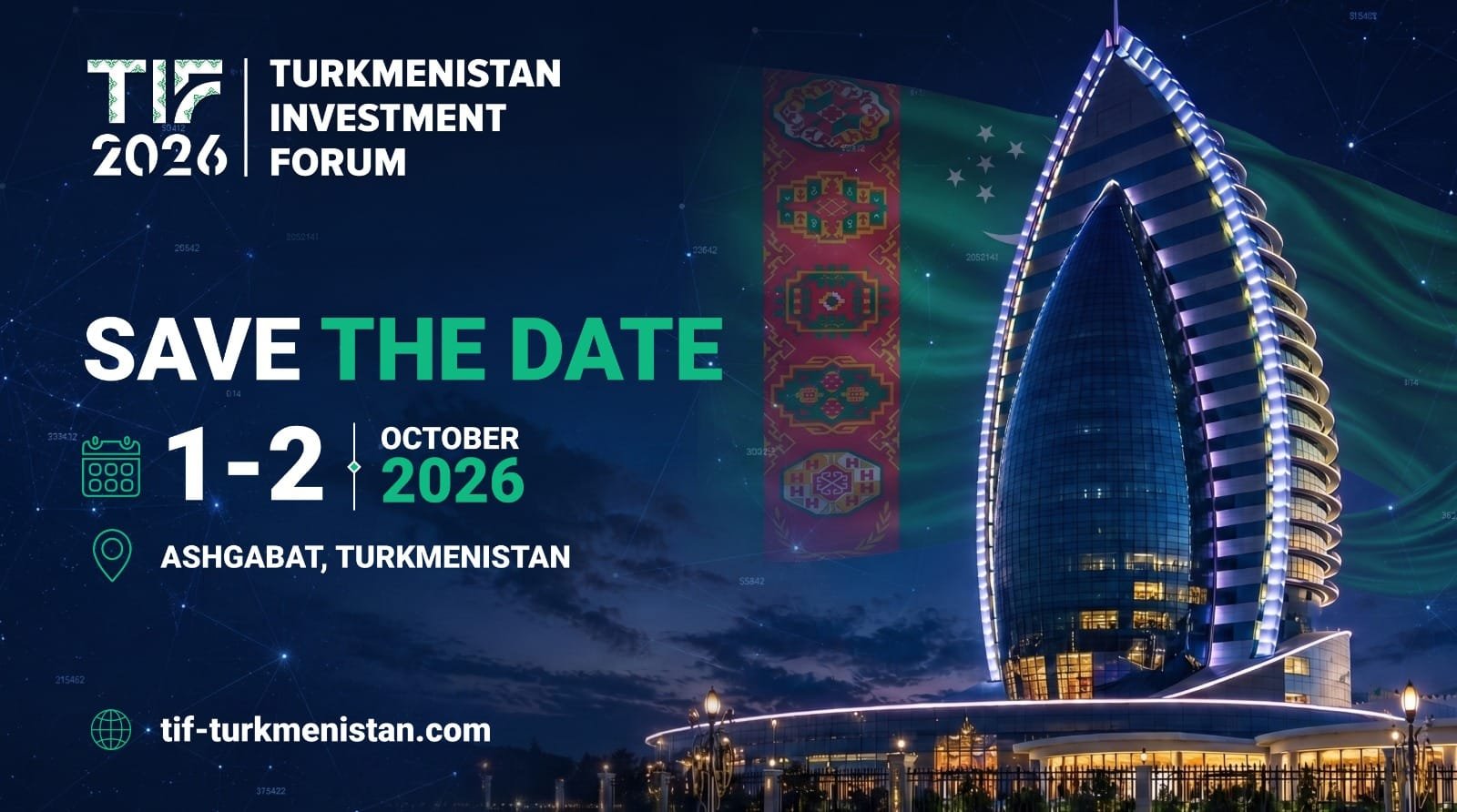
Ashgabat is preparing to welcome investors from around the world on 1–2 October 2026 for the Turkmenistan Investment Forum (TIF 2026) at the Yildiz Hotel. The event is more than a ceremonial gathering. It reflects Turkmenistan’s clear desire to expand its circle of economic partnerships and present investment opportunities that go beyond traditional reliance on gas. The central question today is this: how can the forum turn the country’s current economic stability into concrete projects on the ground?
The forum is organized by the Ministry of Finance and Economy and the Ministry of Foreign Affairs of Turkmenistan, with support from the Turkmen Conference. It will bring together government representatives, international financial institutions, and the business sector to discuss projects and take decisions focused on practical implementation. The programme covers energy and petrochemicals, transport corridors including the Caspian Sea region and the Middle Corridor, the digital economy and virtual assets, green projects, agriculture, tourism and urban infrastructure, and water resources. A special session will be devoted to artificial intelligence in the economy. Participants will be able to hold direct meetings with government officials, attend a practical seminar on legal and financial aspects, and engage with institutions such as the International Finance Corporation and the European Bank for Reconstruction and Development.
The forum comes at a relatively positive moment. Turkmenistan’s economy recorded growth of 6.3 percent in the first half of 2026, driven by the oil and gas sector along with gains in construction, trade and services. Fitch Ratings affirmed the country’s rating at “BB-” with a stable outlook, citing the strength of the external balance and foreign-exchange reserves covering approximately 46 months of external payments. This rating strengthens the confidence of potential investors in the economy’s ability to meet its obligations and gives the forum a firmer foundation for attracting international interest.
The importance of the forum lies in its attempt to diversify opportunities beyond traditional energy. The focus on the Middle Corridor, green projects and digitalisation aligns with broader regional trends. The Middle Corridor, which links China to Europe via the Caspian Sea and Turkey, is no longer merely a logistics project; it has become a genuine arena of economic competition. Turkmenistan, with its geographic position, is capable of playing a pivotal role if it succeeds in offering clear customs and logistical facilitations. Green projects and digitalisation are not luxuries but necessities in a world seeking sustainable investments. Agriculture, which depends heavily on irrigation systems, also requires modern technologies and capital capable of raising productivity and reducing water waste — a field that could attract specialised companies from Turkey, China and Europe.
Here the comparison with Kazakhstan becomes instructive. In recent years Kazakhstan has succeeded in attracting greater investment interest thanks to gradual reforms in the business environment. Astana did not limit itself to organising investment forums; it linked them to practical steps: simplifying company registration procedures, improving protection of intellectual property rights, and expanding the scope of public-private partnership. It also established special economic zones with clear tax incentives and opened the door to dispute settlement through international arbitration centres. The result was foreign direct investment inflows that in some years exceeded two billion dollars, with clear diversification into mining, agriculture and renewable energy. In Turkmenistan, by contrast, the volume of foreign direct investment remains relatively limited outside the gas sector and is estimated at a few hundred million dollars annually at best. Despite growing interest from partners such as China and Turkey, the absence of parallel reforms in the business environment makes attraction more difficult.
Challenges exist and are clear. The need for greater transparency in government procedures, easier repatriation of profits, and a clearer legal framework for long-term investments are issues repeatedly raised by foreign investors. Heavy dependence on the energy sector also leaves the economy exposed to fluctuations in oil and gas prices. Nevertheless, the current economic stability and strong reserves provide a real opportunity to strengthen confidence. If the forum is accompanied by announcements of tangible regulatory facilitations — such as simplified licensing procedures or government guarantees for transport and renewable-energy projects — it could move from being merely a platform for dialogue to a launching point for real projects.
I believe the true success of the forum will not be measured by the number of participants or the volume of media statements, but by its ability to open practical dialogues that go beyond general promises. The most promising areas are transport along the Middle Corridor, renewable energy, and irrigated agriculture that needs investment in modern irrigation technologies. The artificial-intelligence session could also open the door to technical partnerships with international companies if there is the will to adopt clear data policies.
In the months following the forum, international investors will closely watch three practical indicators: first, the issuance of decisions or implementing regulations that facilitate the repatriation of profits and clarify dispute-resolution mechanisms; second, the announcement of specific pilot projects in transport or green energy with clear timelines; and third, the degree of openness of government bodies to public-private partnership mechanisms according to international standards. The absence of these steps will turn the forum into just another meeting that is held and then forgotten. Their presence, however, will convert current interest into measurable confidence.
The Turkmenistan Investment Forum 2026 represents an important platform for Ashgabat to present a more open image of international partnerships. Current growth and the stable credit rating strengthen this image, but they are not sufficient on their own. The coming years will determine whether these efforts lead to sustainable partnerships that serve Turkmenistan’s development ambitions. The opportunity exists; political will is the decisive factor.