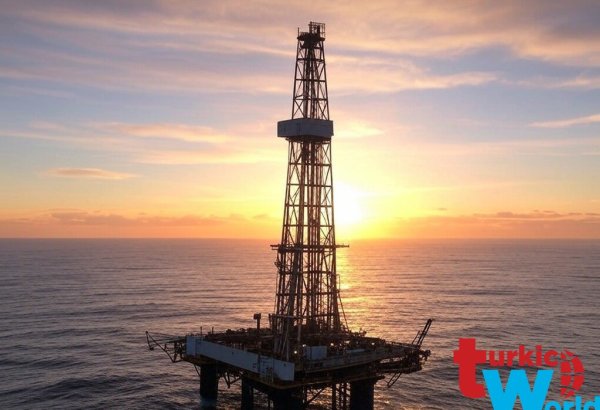


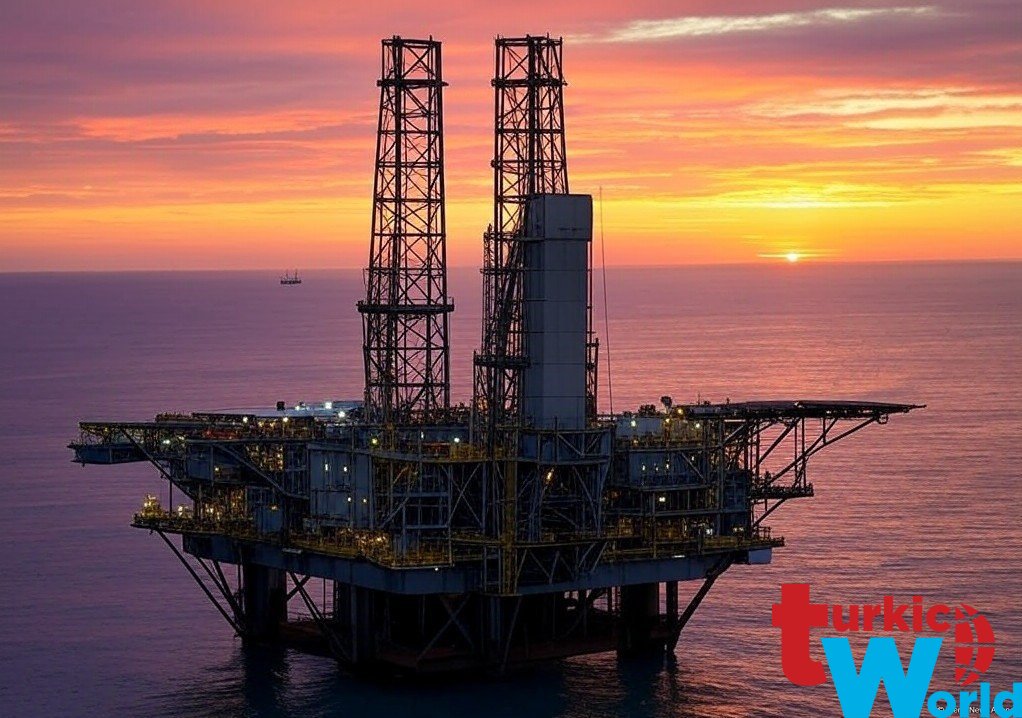
BAKU, Azerbaijan, September 20. September 20 marks Oil Workers' Day in Azerbaijan—a date of both professional and historical significance for the country. It was on September 20, 1994, that the Contract of the Century was signed—an agreement on the joint development of the Azeri, Chirag, and deepwater Gunashli (ACG) fields, which served as the starting point for independent Azerbaijan's modern oil strategy.
The document was signed at the Gulustan Palace in Baku, involving 13 major oil companies from eight countries: Azerbaijan, the US, the UK, Russia, Türkiye, Norway, Japan, and Saudi Arabia. The agreement's historical importance lay not only in attracting international capital and technology but also in laying the foundation for integrating Azerbaijan's oil industry into the global energy system.
The next key milestone was the creation of export infrastructure. In September 2002, the foundation for the Baku-Tbilisi-Ceyhan (BTC) oil pipeline was laid at the Sangachal Terminal, and the inauguration ceremony took place on July 13, 2006, in Ceyhan, Türkiye. The launch of the BTC provided Azerbaijani oil with direct access to global markets and marked one of the most significant achievements of the new oil strategy.
ACG: 30 years of production and new development phase
Today, the ACG remains the central asset of Azerbaijan's oil industry, though its role is gradually extending beyond traditional oil extraction. From the start of commercial production at ACG in November 1997 through the end of the first half of 2026, approximately 4.6 billion barrels of oil were produced at the block. Additionally, 63 billion cubic meters of associated gas were supplied to the state.
As the giant field transitions to a more mature stage of development, the industry faces the challenge not merely of increasing production, but of maximizing the efficient use of remaining reserves.
In 2026, bp launched two pilot enhanced oil recovery (EOR) projects at ACG: BrightWater and IWAG. Their objective is to tap into additional oil reserves remaining in the reservoir. Seismic data, well data, production metrics, and geological models are utilized to manage the natural decline in production.
Another significant milestone is the commencement of free natural gas production operations at ACG in June. Consequently, the country’s largest oil asset is gradually taking on an increasingly pronounced oil-and-gas character. Recoverable free gas reserves at ACG are estimated at approximately 4 trillion cubic feet, with the potential to increase to 6 trillion cubic feet.
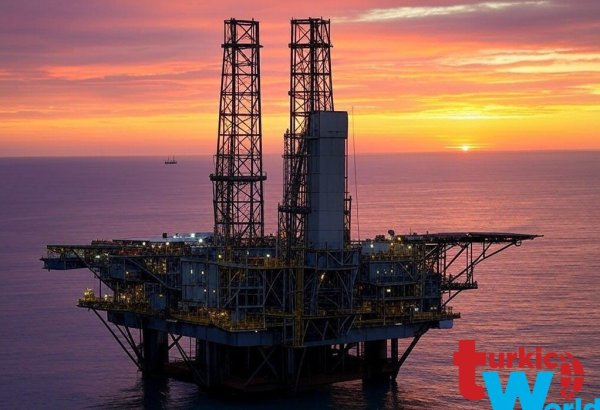
Development continues on the oil front as well. April 2026 marked two years since the start of oil production at the new ACE platform. By April 15, the platform had produced 2.1 million tonnes of oil. The project cost is approximately $6 billion, with a production capacity of up to 100,000 barrels per day; total production over the operational lifespan could reach 300 million barrels.
In the first half of 2026, ACG operations incurred approximately $268 million in operating expenses and $733 million in capital expenditures. Compared to the same period in 2025, capital expenditures rose by 31.4%, while operating expenses increased by 3.5%. Revenues for the State Oil Fund of Azerbaijan from the ACG fields are projected at $4.236 billion for 2026.
From oil to an integrated oil and gas system
Azerbaijan’s energy sector has undergone significant changes over the past decades. The country, once primarily associated with oil, is now also a major producer and exporter of natural gas.
In the period from January through August 2026, Azerbaijan produced 17.692 million tonnes of crude oil, including gas condensate. During the same period, exports of crude oil and petroleum products totaled 14.67 million tonnes, valued at $9.28 billion. Concurrently, the importance of the gas sector is growing. In the first eight months of 2026, natural gas production reached 33.4 billion cubic meters, while exports amounted to 16.37 billion cubic meters, valued at $5.7 billion. Natural gas accounted for 26.18% of Azerbaijan's total exports during the reporting period.
Today, Azerbaijani gas is exported to 16 countries—predominantly in Europe—via the Southern Gas Corridor. The volume of gas transported through the Trans-Adriatic Pipeline (TAP) has reached 60 billion cubic meters.
Thus, the initial oil-focused strategy has gradually transformed into a broader energy model in which oil, gas, pipeline infrastructure, and new energy projects have become interconnected elements of the economy.
The Shah Deniz gas-condensate field plays a pivotal role in this transition. From the start of development in 2006 through the end of the first half of 2026, approximately 278 billion cubic meters of gas and 54 million tonnes of gas condensate were produced at the field. In the first half of 2026 alone, operating expenses for the project amounted to approximately $1.39 billion, while capital expenditures totaled $712 million. Compared to the same period last year, operating expenses rose by 8.7%, and capital expenditures — by 50.8%.
The current production capacity of the existing Shah Deniz infrastructure stands at approximately 76.8 million standard cubic meters of gas per day, or roughly 28 billion cubic meters per year.
Simultaneously, the $2.9 billion Shah Deniz Compression project is underway, aimed at developing low-pressure gas reserves and increasing the hydrocarbon recovery rate. The project is expected to enable the additional production and export of approximately 50 billion cubic meters of gas and around 25 million barrels of condensate.
New fields and new opportunities
Azerbaijan’s oil and gas history extends beyond the ACG and Shah Deniz fields.
Since the launch of the early production phase at the Absheron field, about 4.8 billion cubic meters of gas and 1.8 million tons of condensate have been produced. Currently, a single well yields about 4 million cubic meters of gas and 12,000 barrels of condensate per day. Full-scale gas production is scheduled for August 2029.
Plans for the second development phase include drilling three new wells. Each is expected to produce around 40,000 barrels of oil equivalent per day, with the project's initial production level—including the early phase—projected to reach approximately 120,000 barrels of oil equivalent per day.
Prospects also exist for other assets. Geological oil reserves at the Karabakh field are initially estimated at over 60 million tonnes, and a final investment decision regarding its development is expected soon.
A new development phase has also begun at the Bahar and Gum-Deniz fields. According to Bahar Energy, operations carried out at the Bahar field have resulted in a 50% increase in gas production.
Resource base remains crucial
At the same time, Azerbaijan's energy potential is defined not only by current production volumes but also by the scale of its resource base.
According to OPEC estimates, Azerbaijan's proven crude oil reserves stood at 7 billion barrels in 2025, while proven natural gas reserves amounted to 2.6 trillion cubic meters. OPEC data indicates that these figures have remained unchanged since 2021.
Moody's projects that SOCAR's proven hydrocarbon reserves will reach 1.48 billion barrels of oil equivalent in 2026–2027. This figure rose from 1.42 billion barrels of oil equivalent in 2023 to 1.48 billion in 2025.
These figures demonstrate that the key issue for the industry is no longer merely the availability of resources, but the ability to extract them efficiently—both technologically and economically—over the long term.
President of Azerbaijan Ilham Aliyev highlighted this perspective—viewing natural resources as a tool for national development—during his speech at the official opening ceremony of Baku Energy Week this June.
"Azerbaijan was the first country to open the Caspian reserves to international oil companies. Since that time, a lot has happened. If we look at Azerbaijan today and see this transformation, how we used this wealth, how we reinvested in social infrastructure, education, healthcare, and energy development, we will see that this is how countries should develop. And this is the way forward for many other countries that today suffer from more or less the same problems that we suffered from at the beginning of the 1990s," the head of state said.
In this context, the head of state emphasized Azerbaijan's principled position regarding the role of oil and gas in national development.
"Countries should not be blamed for having oil and gas because oil and gas are commodities like any other. And every country uses what it has under its soil or on the seabed in order to develop. And that was the case for Azerbaijan in the beginning of our independence. Oil and gas were the only way for us to survive as an independent country. So countries should be judged not by whether they have oil or not, but by how they use the revenues, how they invest the funds they accumulate from energy development to develop their countries, provide better living conditions for their people, and invest in green agenda issues. And I think the example of Azerbaijan can be very illustrative. It can demonstrate that when you open your country to international investment and conduct a wise policy based on national interests, you achieve success," stated President Ilham Aliyev.
This assessment effectively reflects the logic underpinning the country's oil strategy since the 1990s: attracting international companies and capital, establishing export infrastructure, securing revenue inflows, and channeling a portion of the proceeds into the development of other economic sectors.
Azerbaijan's role in global oil cooperation
Today, the country's significance extends beyond the mere extraction and export of hydrocarbons.
In an exclusive interview with Trend, OPEC Secretary General Haitham Al Ghais highlighted Azerbaijan's role in strengthening cooperation among participants of OPEC+.
"Under the wise and able leadership of President Ilham Aliyev, Azerbaijan has been instrumental in promoting and supporting the cooperation between OPEC+ producers for ten years now," he said.
At the same time, OPEC’s stance demonstrates that the oil industry retains its long-term significance, even amidst the global energy transition. According to Al Ghais, OPEC’s core message remains that oil will continue to be a fundamental element and a key pillar of the global economy.
"It has been for so many years and decades, and it will continue to be. We just launched our updated World Oil Outlook to 2050, which shows clearly that oil will still remain dominant in the energy mix until 2050, at around 30% of the energy mix. When you add gas to that equation, we are talking about oil and gas combined accounting for nearly 55% of the global energy mix," he said.
Concurrently, OPEC opposes interpreting the energy transition solely as a move away from oil and gas. This position is particularly significant for countries whose economies have historically been linked to the hydrocarbon sector.
Azerbaijan’s oil industry looks vastly different 32 years after the signing of the Contract of the Century.
Over this period, the country has established export routes, forged international partnerships centered on major fields, transformed oil and gas revenues into a funding source for large-scale infrastructure development, and simultaneously built a gas export system linking Azerbaijan to the European market.
At the same time, the current phase is characterized not only by the continuation of oil production but also by the industry's increasing technological sophistication—including enhanced oil recovery at mature fields, the development of gas resources at the ACG field, the ACE and Shah Deniz Compression projects, and the development of the Absheron and Karabakh fields, alongside the more efficient use of existing infrastructure.
That is precisely why Oil Workers' Day today is not merely an occasion to reflect on the history of the Contract of the Century. It’s an opportunity to assess the journey the industry has traversed: from the initial international agreements and the construction of export pipelines to the establishment of a modern oil and gas system integrated into the global energy landscape.
For Azerbaijan, oil served as the starting point for a large-scale economic transformation. Its role is now defined not only by production volumes but also by how the accumulated technology, infrastructure, capital, and international partnerships are leveraged for the next stage of the country's energy development.