
Top US envoys are in Qatar on Tuesday, but uncertainty over the timing and content of any diplomatic talks raised questions over efforts to bring a lasting halt to the Iran war and fully reopen the Strait of Hormuz TurkicWorld reports via arabnews.
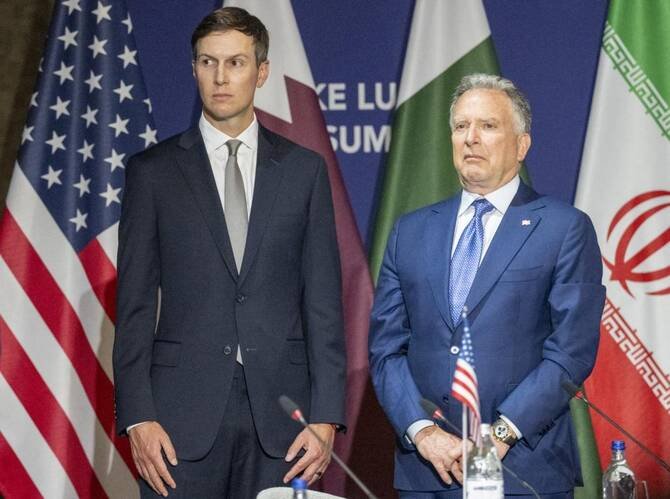
The White House said US President Donald Trump’s son-in-law Jared Kushner and his envoy Steve Witkoff were expected to land in Doha on Tuesday for “high-level meetings,” with technical meetings to continue on the sidelines.
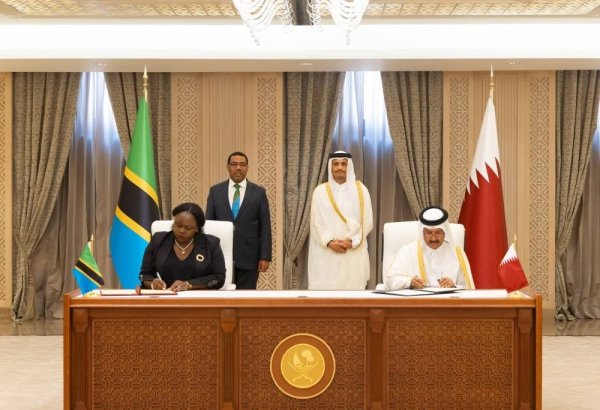
Kushner and Witkoff will meet Qatari mediators to discuss US-Iran negotiations, but there will not be a high-level meeting between Washington and Tehran, Qatar’s foreign ministry spokesperson said on Tuesday.
“Mr. Steve Witfoff and Mr. Jared Kushner are here in Doha to meet with mediators, with Qatari officials, and the talks will be around all regional issues … including, of course, negotiations with Iran, but also including Lebanon,” foreign ministry spokesman Majed Al-Ansari said.
“They are not here for their negotiations with the Iranians,” he added.
Al-Ansari also said coordination was being done with Oman on the Strait of Hormuz and on the safe passage for vessels.
“A direct line of communication for de-confliction in the Strait of Hormuz has been used to contain confrontations over the past few days,” he said.
The spokesperson also said the $6 billion Iranian frozen funds have not been transferred to Iran, and that they are subject to 2023 agreement and earmarked for the purchase of humanitarian goods.
But while Iran is sending a technical delegation to Qatar this week, Foreign Ministry spokesperson Esmaeil Baghaei said this had “no relation” to the Americans’ visit, with no talks scheduled between the two sides.
“We will not have any negotiation meetings at any level with the American side in the coming days,” Baghaei said.
A senior Iranian official said a meeting in Doha would be limited to discussions on managing the Strait of Hormuz and reducing tension.
Still, oil prices slipped further on Tuesday on the de-escalation since the weekend, and were set for their biggest quarterly loss since the COVID-19 pandemic in 2020.
Iran tries to exert control over strait
After the war began four months ago, maritime traffic through the strait, which previously carried about a fifth of the global trade in oil and liquefied natural gas, came to a virtual standstill.
Iran has since sought to exert control over the strait alongside Oman, which lies across the waterway, saying it plans to charge fees to ships to use it and obstructing vessels that stray outside defined paths.
Since Thursday, the US has accused Iran of hitting at least two commercial ships with missiles or drones, and bombed Iranian military facilities in response.
Iran in turn launched missiles and drones at US military sites in Kuwait and Bahrain on Sunday, with both sides accusing each other of breaking the ceasefire.
The war pushed up global inflation and has put Trump under political pressure domestically before midterm elections in November that will determine control of the US Congress.
On Monday, the White House said Trump had authorized a temporary suspension of some duties on imports of phosphate fertilizer from Morocco, as US farmers grapple with shortages and shipments of fertilizer through the Strait of Hormuz are expected to return to pre-conflict levels only gradually.
“The meeting in Doha is going to be perhaps important, perhaps not,” Trump told reporters in the Oval Office. “We’re going to find out.”
In Iran, where the theocratic leadership survived the war but faces domestic anger over a battered economy, two members of the Revolutionary Guards were killed in what the elite force described as a “terrorist” shooting in a western province.
The interim deal between the US and Iran also provides for an end to the conflict between Israel and Iran-backed militant group Hezbollah in Lebanon.
But Lebanon’s powerful parliament speaker Nabih Berri, an ally of Hezbollah, cast doubt on a separate, US-brokered framework deal between Lebanon and Israel to halt that war.
Analysts said the deal risks entrenching a stalemate by tying Israel’s withdrawal from southern Lebanon to Hezbollah’s disarmament.