






BAKU, Azerbaijan, June 3. Uzbekistan and Japan highlighted their growing partnership on climate resilience, water management, environmental innovation and sustainable agriculture during a series of side events held at the Eco Expo Central Asia 2026 exhibition, TurkicWorld reports via the Uzbek National Committee on Ecology and Climate Change.
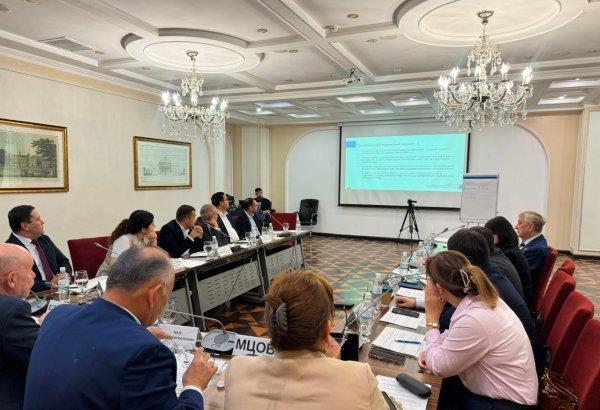
The events, hosted at the Silk Road Samarkand complex, brought together government officials, researchers, academics and private-sector representatives to discuss scientific solutions to climate challenges, particularly in the Aral Sea region.
The first session, titled "Japan–Uzbekistan Blue & Green Nexus: Science, Sustainability, and Community Resilience for Climate Action," focused on climate adaptation, sustainable resource management, renewable energy and environmental innovation. Participants presented joint initiatives being implemented under the Science and Technology Research Partnership for Sustainable Development (SATREPS) program with support from the Japan International Cooperation Agency (JICA) and the Japan Science and Technology Agency (JST) in cooperation with Uzbek scientific institutions.
Professor Kenji Tanaka of Kyoto University outlined a project aimed at developing climate-resilient technologies to improve water monitoring and water-use efficiency in the Aral Sea basin. Yuki Yanagida Ab Farah, an expert involved in the H2UZ SATREPS project, discussed efforts to develop green and blue hydrogen technologies as part of broader carbon-neutrality goals.
Bakhtiyor Pulatov, rector of the Central Asian University of Environmental and Climate Change Studies (Green University), presented the university’s initiatives to train specialists in environmental protection, climate adaptation and sustainable development while expanding international scientific cooperation across Central Asia.
The event also featured presentations on sustainable cotton production and environmentally responsible farming practices. Chinori Tokita, head of the Tashkent office of Japan’s MASUI Corp. Ltd., discussed sustainable cotton business models, while Dr. Satoshi Togashi, chief project coordinator for OISCA, highlighted the organization’s activities in Uzbekistan.
The environmental agenda continued with a second side event organized by the International Innovation Center of the Aral Sea Region (IICAS) under the BLUE SATREPS project in partnership with Japanese institutions.
Discussions centered on land degradation, soil salinization, water scarcity and science-based approaches to sustainable agriculture and climate adaptation in one of the world’s most environmentally vulnerable regions.
Professor Tanaka presented research on future climate and water-resource scenarios for the Aral Sea basin. Professors Bakhriddin Nishonov and Bakhtiyor Kholmatjanov showcased modern monitoring systems, including the expansion of meteorological networks and Earth remote-sensing platforms.
Meanwhile, Professor Kristina Toderich of Tottori University introduced approaches to "circular mixed agriculture based on halophytes," using salt-tolerant plants to improve agricultural productivity in saline environments.
Participants concluded that expanding scientific cooperation, accelerating the deployment of climate-resilient technologies and strengthening joint environmental initiatives will be critical to addressing the region’s long-term challenges.
The side events underscored the depth of Uzbekistan-Japan cooperation in environmental research and sustainable development, particularly in efforts to restore ecosystems and build climate resilience in the Aral Sea region.