







ASHGABAT, Turkmenistan, April 20. Turkmenistan has presented its evolving transit and logistics potential during a thematic event titled "Bridging Continents: Turkmenistan’s Evolving Transit and Logistics Potential" in Brussels, TurkicWorld reports via the Turkmen Embassy in Belgium.
The event brought together representatives of European institutions, diplomatic missions, business circles, and expert communities, and focused on the measures to strengthen connectivity between Europe and Asia.
During the event, Turkmenistan’s State Customs Service highlighted ongoing efforts to modernize the customs system, digitalize procedures, increase border crossing capacity, and reduce cargo clearance time, aiming to improve transit efficiency and transparency for international carriers.
Addressing participants, Ambassador of Turkmenistan to Belgium Sapar Palvanov emphasized the country’s strategic role at the intersection of East-West and North-South routes, noting that Turkmenistan is consistently developing its transport infrastructure, including roads, railways, and port facilities, along with the implementation of digital solutions to streamline logistics processes.
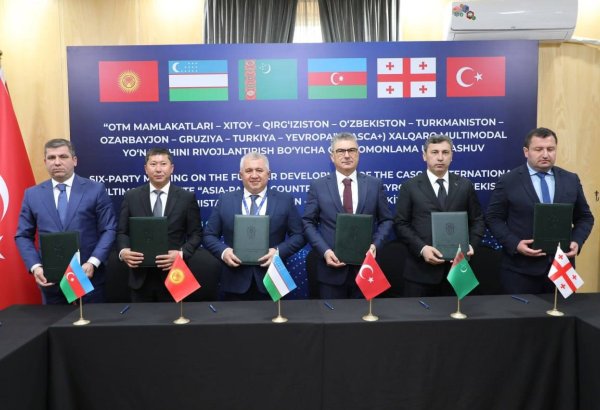
Participants also noted growing interest from European institutions in strengthening transport connectivity with Central Asia, particularly in the context of developing the Trans-Caspian corridor, enhancing supply chain resilience, and expanding cooperation in logistics and customs administration.
For reference, Turkmenistan is strengthening its position as a key transit hub in Eurasia by investing in the modernization of its railway network, highway system, and logistics infrastructure, while the Turkmenbashi International Seaport on the Caspian Sea serves as a central multimodal gateway connecting Central Asia with the South Caucasus and further to international markets.
Cargo flows along the Trans-Caspian multimodal routes have shown steady growth in recent years, reaching over 4.5 million tons in 2024, with around 2.3 million tons handled in the first half of 2025, according to international transport assessments. This expansion is supported by increasing regional trade demand and infrastructure upgrades aimed at improving transit efficiency and reducing logistics bottlenecks along key Eurasian corridors.