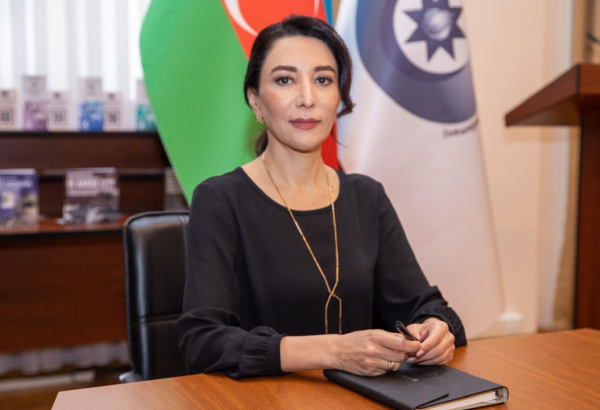
BAKU, Azerbaijan, March 30. Commissioner for Human Rights (Ombudsman) of the Republic of Azerbaijan, Sabina Aliyeva, has issued a statement on the 31 March - Day of Genocide of Azerbaijanis, TurkicWorld reports.
Throughout history, at different times, Azerbaijanis were deliberately subjected to ethnic cleansing and genocide by Armenians, and murdered in a massive way on the basis of their ethnicity and religious background. Since the beginning of the XX century, Armenians had been committed systematic and brutal crimes against the Azerbaijani population in various parts of Azerbaijan, as well as in the present territory of Armenia.
Incidents occurred in March-April of 1918, were one of the manifestations of the most bloody and tragic policy, and carved their place in history as massacres of thousands of innocent people due to their ethnicity and religion.
These incidents left an indelible mark on memories of our people. Massive killings in Baku, Shamakhi, Guba, Garabagh, Zangezur, Iravan, Nakhchivan, Lankaran, Ganja, Goychay, Sheki, Sabirabad, Salyan, Kurdamir, and other regions were an integral part of the policy intended to eliminate historical existence of Azerbaijani population inhabited in those areas.
During the march of 1918 incidents, 110 villages in Shamakhi, over 150 in Garabagh, 115 in the Zangezur Uyesd, 98 in the Gars Governorate, and 167 in the Guba Uyesd had been devastated and burned, and the peaceful and unarmed residents had been massacred with unprecedented cruelty. The mass grave and multiple remains of human beings discovered later in Guba City visually confirm the scope and brutality of massacres committed in that period. These facts are clear signs that the people had been systematically targeted and largely murdered on the basis of their ethnic background, as they were Azerbaijanis.
The archive materials, historical documents, and other reliable sources verify those tragic incidents with indisputable proofs. The testimonies of those who survived and other legal documents comprehensively describe the scope of the massacres, demonstrating that those incidents had not occurred accidentally, but were an integral part of a purposeful policy of ethnic cleansing. The investigations and legal analyses carried out in accordance with the international law substantiated that those crimes contain the elements of a crime of genocide.
Although the systematic killing of the civilian population during the March-April incidents committed in 1918 because of their ethnic origin and religion and those crimes of genocide, unfortunately, have not yet been articulated at the international level.
Heydar Aliyev, the National Leader, issued a Decree on 26 March 1998 that declared 31 March as the Day of Genocide of Azerbaijanis. Subsequently, measures were undertaken to ensure the political and legal evaluation of facts of genocide, investigation of the truth, and its dissemination to the international community.
International recognition of the crimes of genocide committed against Azerbaijanis and restoration of justice is of key importance in terms of preventing the recurrence of such crimes against humanity in the future.
International organizations and United Nations member states should take a firm position on the series of crimes of ethnic cleansing and genocide committed by Armenians against Azerbaijanis and recognize the criminal acts of 1918 as genocide.
Sabina Aliyeva
of the Republic of Azerbaijan
(Ombudsman)
30 March 2026
The statement has been sent to the UN Secretary-General (UNSG), UN Security Council (UNSC), UN Office of the High Commissioner for Human Rights (OHCHR), UN High Commissioner for Refugees (UNHCR), UN Human Rights Council (UNHRC), UN International Children’s Emergency Fund (UNICEF), UN Educational, Scientific, and Cultural Organization (UNESCO), the heads of the European Union (EU), Council of Europe (CoE), Organization for Security and Cooperation in Europe (OSCE), International Ombudsman Institution (IOI) and European Ombudsman Institution (EOI), Asian Ombudsman Association (AOA), Organization of Islamic Cooperation (OIC), and the Association of Ombudsman of member states of this institution (OICOA), Association of Ombudsman and National Human Rights Institutions of Turkic States (TURKOMB), OIC Independent Permanent Human Rights Commission (OIC-IPHRC), European Network of Ombudspersons for Children (ENOC), International Peace Bureau (IPB), ombudspersons and national human rights institutions (NHRIs) of different countries, diplomatic missions of Azerbaijan in foreign countries and the diplomatic missions of foreign countries in Azerbaijan, and diaspora organizations of Azerbaijan.