







BAKU, Azerbaijan, July 29. The State Migration Service of Azerbaijan is considering the possibilities of applying artificial intelligence (AI) both in electronic services and in assessing migration risks, the head of the State Migration Service, Vusal Huseynov, told reporters during the media tour, Trend's correspondent reports from the event.
According to him, before AI application in state bodies, its capabilities and risks must be thoroughly analyzed. "We work with a large volume of personal data. Therefore, the AI application areas must be correctly determined and all risks must be assessed. At the same time, the action plan for the transition to a digital government signed by President Ilham Aliyev also sets tasks for state bodies related to the application of AI," he said.
Huseynov noted that at the initial stage, the most realistic application direction of artificial intelligence may be electronic applications and call centers. "The user asks a question through an electronic resource and, no longer an employee, but AI presents that information in an easily understandable form. I believe that this is an area that can be applied in a short time," the head of the State Migration Service emphasized.
According to him, another important direction is the use of intellectual tools in the processing of migration data, risk assessment, and planning processes. "We have a large amount of information, and artificial intelligence can help us analyze that information, identify trends, and indicate which issues need attention," said Huseynov.
The head of the State Migration Service added that currently, cooperation is being carried out in this direction with relevant state agencies, and the feasibility of the application in terms of technical, financial, and human resources is being assessed.
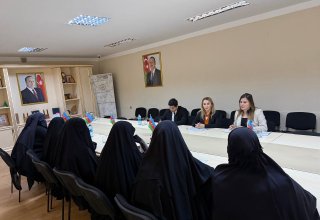
Huseynov also said that the State Migration Service organizes free training courses covering basic knowledge of the Azerbaijani language, culture, and the country in order to integrate foreigners. According to him, the trainings are mainly held online, and when enough participants gather, they are also organized in person.
He noted that the service provides support to asylum seekers and other vulnerable migrants in legal and practical matters, and at the same time contributes to their integration by holding regular meetings with entrepreneurs, higher education institutions, and communities of foreigners living in the country.