
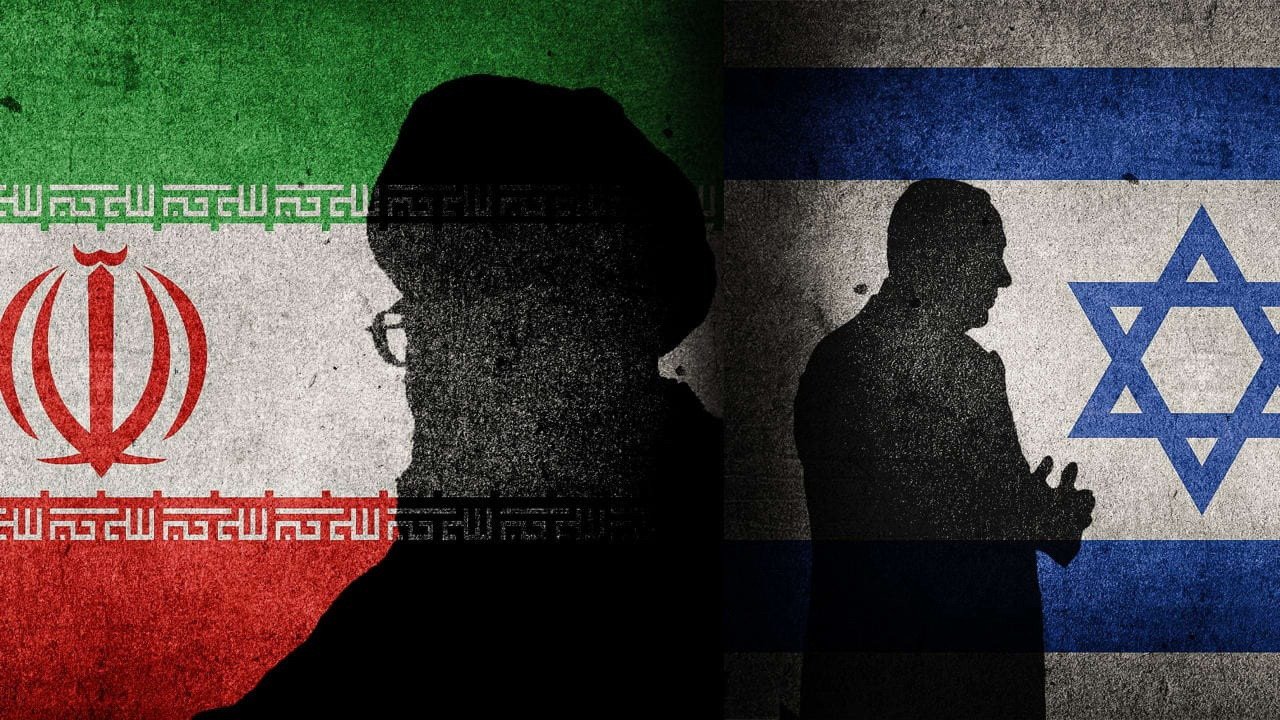
BAKU, Azerbaijan, April 3. What’s unfolding in the Middle East is not merely a war against Iran. It is a struggle over what Iran should become once the fighting stops. That, more than anything else, is the central tension driving today’s regional drama.
For the Gulf states, the preferred outcome is relatively clear: a weakened, constrained, and isolated Iran - stripped of its former reach, yet still intact as a functioning state. Think of a Middle Eastern version of Cuba: rigid, closed, ideologically driven, but ultimately containable - something that can be boxed in, monitored, and gradually edged out of active regional influence.
For Israel, that scenario falls short. What it seeks is not just a diminished Iran, but one stripped of its very capacity to act as a center of power. The ideal outcome for Tel Aviv looks less like Cuba and more like Syria at the height of its civil war: a shattered landscape, a broken regime, a collapsed chain of command, a nullified military, and the disappearance of Iran as a coherent, independent regional actor.
But the Middle East has never been a region that bends easily to external blueprints. And so the most likely outcome may look very different from either vision. Not Cuba. Not Syria. But North Korea - a state even more militarized, more paranoid, and more dangerous, surviving not through openness but by turning its own threat into its primary asset.
That is the central paradox of the current conflict.
Despite differences in tone and tactics, the Gulf states broadly share a common objective: weaken Iran, but don’t push it over the edge. Qatar, Oman, and Kuwait would prefer a swift end to the war. Saudi Arabia, the UAE, and Bahrain are more willing to tolerate prolonged escalation - so long as it meaningfully degrades Tehran’s military capabilities. The tools may differ, the rhetoric may vary, but the strategic goal is the same: Iran should emerge from this war diminished.
Israel operates on a different wavelength. For it, state collapse, fragmentation, even outright chaos are not off the table. If the long-term elimination of the Iranian threat requires the disintegration of the state itself, that is a price many in Israel’s strategic community are prepared to accept. In fact, for some, that outcome is not a side effect - it is the objective.
On paper, this logic has a certain coherence. In practice, it risks unleashing consequences that are anything but controlled. Because in the Middle East, it is far easier to destroy a state than to build a stable order in its place. Libya, Iraq, Syria - these cases should have already taught outside powers a simple lesson: vacuums in this region never remain empty. They are immediately filled by armed networks, warlords, ethnic enclaves, cross-border militias, foreign patrons, and war economies.
Which is why the notion that Iran can be carefully “dismantled” and then managed afterward looks less like a strategy and more like a dangerous illusion.
The endgame will depend not only on external pressure, but on the internal resilience of the Iranian system. So far, that resilience remains intact. Iran’s security apparatus is brutal, centralized, and - at least before the war - showed no clear signs of imminent collapse. There are no liberated zones, no viable alternative centers of power, no unified opposition ready to take control overnight. This is not Syria at the onset of civil war, nor Libya at the moment of revolutionary breakdown.
Which is why predictions of an imminent regime collapse sound more like political wishful thinking than evidence-based analysis.
And this is where the second danger comes into focus. If the regime doesn’t fall but instead retreats into siege mode, it won’t liberalize - it will harden. It will begin to operate like a garrison state. Repression will deepen. Space for compromise will shrink. The economy, bureaucracy, and social life will all shift into survival mode. At that point, external pressure stops functioning as a tool of reform - and starts acting as a factory producing a more closed, more rigid, and ultimately more aggressive Iran.
This Is the North Korean Trap
In a system shaped by siege logic, failure is never blamed on internal decay - it is explained away as the product of external conspiracy. Poverty ceases to be a trigger for reform and instead becomes an argument for further militarization. Sanctions do not erode ideology; they harden it. Isolation does not weaken the regime; it furnishes it with a convenient moral narrative: “We are surrounded by enemies, therefore any dissent at home is betrayal.”
For Israel, this is an extraordinarily dangerous сценарий, even if at first glance it may seem acceptable. Yes, such an Iran would be economically weaker. But it could also become far more irrational when it comes to deterrence, asymmetric retaliation, proxy warfare, and - most critically - nuclear strategy. A state that believes it is not being contained but targeted for destruction reaches a simple conclusion much faster: the only guarantee of survival is to raise the cost of attacking it to the absolute maximum.
Put differently, the longer the war drags on and the harsher the isolation becomes, the stronger Tehran’s incentive to elevate security into an absolute value - one for which everything else can be sacrificed.
For the Gulf states, this outcome is no less alarming. They do not want a collapsed Iran, because collapse would immediately spill instability across the region. But neither do they want a North Korea–style Iran - closed, embittered, heavily militarized, driven by a sense of historical grievance and permanent mobilization. In other words, a state that formally survives but becomes even less predictable.
Here lies one of the central contradictions of the region’s strategic architecture: Israel and the Arab monarchies may find themselves on the same side tactically, but they envision fundamentally different endgames.
For Israel, regional dominance is a baseline objective. For the Gulf states, that same dominance could evolve into a direct threat to their own sovereignty. Arab societies may reject Iranian ambitions, but that does not mean they are prepared to accept long-term Israeli hegemony. This is not a matter of rhetoric - it is a structural conflict of interests.
Which is why the very concept of a “new Middle East,” in which Israel secures permanent strategic supremacy while others simply adapt, appears inherently unstable. Such an order does not resolve tensions - it merely preserves them in a different form.
There is also a particularly sensitive dimension: Iran’s periphery. Kurdish regions, the Baloch southeast, Azerbaijani areas, and Arab Khuzestan. If external actors begin to weaponize ethnic fault lines as a lever of systemic destabilization, the consequences could quickly exceed the original intent. Yes, the temptation is obvious - strike at the center through internal fractures. But recent regional history shows that ethnopolitical detonations rarely remain contained. They trigger chain reactions that take on a life of their own.
For Iran, this raises the risk of fragmentation. For its neighbors, it means prolonged cross-border instability. For outside powers, it risks producing not a managed outcome, but a security black hole.
Another critical weakness in the anti-Iran strategy is the absence of a unified opposition. There is no single center, no nationwide вертикаль, no figure or force capable of rapidly taking control of a country of this scale in the event of regime collapse. The diaspora is fragmented. Ideological lines are incompatible. Ethnic movements operate within entirely different frameworks. Monarchists, nationalists, radical opponents of the regime, regional actors - they may all agree in rejecting the Islamic Republic, but that consensus alone is nowhere near enough to build a new state.
Which leads to a stark conclusion: if the regime is seriously destabilized, the vacuum will almost certainly be filled not by democracy, but by competing centers of power.
This is why the real analytical value of the argument lies not in the surface-level comparisons - Iran as Cuba, Syria, or North Korea - but in a deeper insight: external actors are not debating peace, but the form of Iran’s “managed degradation.” And managed degradation, more often than not, is a myth. In reality, degradation quickly escapes control.
Several conclusions follow.
First, neither Israel nor the Gulf states can be confident that postwar Iran will be weaker in political or psychological terms. It may be poorer - but angrier. Weaker economically - but more dangerous strategically.
Second, the heavier the bet on military attrition without a clear political endgame, the higher the likelihood that Tehran will not capitulate, but instead transition into a hardened siege-state model.
Third, any attempt to play the ethnic card inside Iran is effectively playing with fire - one that can rapidly spread far beyond Iran’s borders.
Fourth, while Israel and the Gulf states are currently aligned by a shared anti-Iran logic, their long-term interests are fundamentally incompatible. For the Arab monarchies, both a strong Iran and an overwhelmingly dominant Israel are unacceptable. Which means the current alignment is inherently limited and temporary.
Fifth, the bleakest outcome of this war is not victory for either side, but the emergence of a new type of instability - prolonged, grinding, militarized, and resistant to any final resolution.
That is why Iran’s future is not being decided solely on the battlefield. It is being shaped by whether external actors can recognize the limits of their own power. So far, there is little evidence that they can. And when, in a major war, every participant begins to believe they are controlling escalation, it usually means only one thing: escalation is already controlling them.