

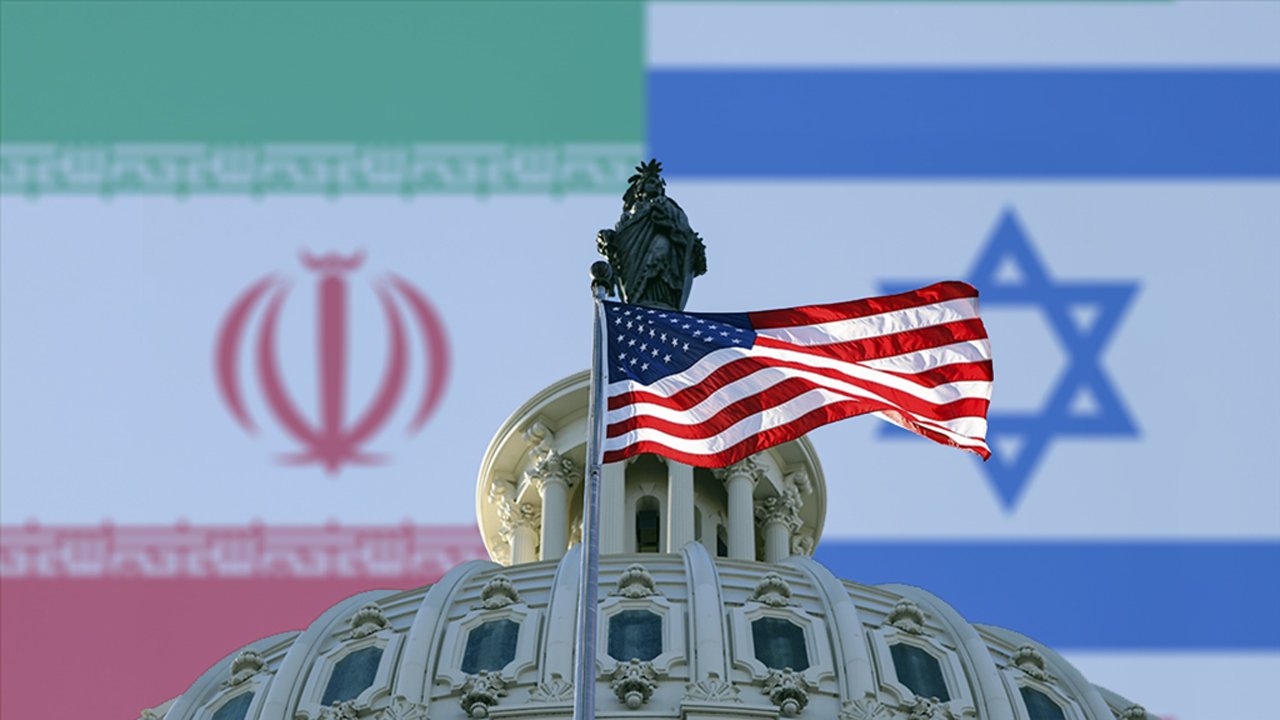
BAKU, Azerbaijan, April 1. For decades, a U.S. ground invasion of Iran was treated as the outer edge of escalation - too costly to launch and too destabilizing to sustain. That assumption is now beginning to erode. As the U.S.-Israeli war against Iran intensifies, what once seemed unthinkable is starting to look increasingly plausible. The question is no longer simply whether a ground invasion is possible, but where it might begin - and whether it could deliver any meaningful strategic gains TurkicWorld reports via bakunetwork.
At first glance, Iran’s periphery appears to offer several entry points, from the Persian Gulf and the Gulf of Oman to the country’s western borderlands. But that is precisely where the central illusion lies. The same geography that makes an invasion conceivable also makes it strategically barren. Iran’s military geography channels outside forces toward a narrow set of coastal nodes, energy hubs, and border corridors that are not pathways to victory, but triggers for broader escalation. What looks like a menu of options is, in reality, a map of consequences.
That logic comes through most clearly in five critical locations: Kharg Island, the Strait of Hormuz, Abu Musa and Greater and Lesser Tunb, the Chabahar–Konarak corridor, and the Abadan–Khorramshahr axis. Each seems to offer access at first blush. None offers a clean road to strategic success.
1. Kharg Island
Kharg Island is one of those rare targets where military temptation aligns almost perfectly with strategic toxicity. On the map, it looks like the ideal objective: small, detached from the depth of Iranian territory, and packed with storage tanks, piers, pipelines, and transfer infrastructure. But that same compactness is exactly what makes it not just vulnerable, but geoeconomically explosive. Roughly 90 percent of Iran’s oil exports move through Kharg. The island sits about 25 to 30 kilometers off Iran’s coast and has the draft needed to handle very large crude carriers that much of the mainland shoreline cannot fully service. Estimates of Kharg’s storage capacity run to roughly 28 to 30 million barrels.
Kharg’s economic role for Iran extends far beyond its function as a terminal. In recent months, Iran has been producing around 3.2 to 3.3 million barrels of oil a day, and when condensate and other liquid hydrocarbons are included, total output has climbed to roughly 4.4 to 4.5 million barrels a day. Even under sanctions and amid regional instability, Iranian exports have held at around 1.1 to 1.5 million barrels a day. That means Kharg remains not a symbolic asset, but the real heart of Iran’s oil machine. A strike on it would not hit the margins. It would hit the central nervous system of the Islamic Republic’s budget, foreign-exchange earnings, and external trade resilience.
But that is where the core paradox begins. The more important Kharg is to Iran, the higher the global price of any attack on it. Iranian oil, despite the sanctions regime, still matters - above all to China. In 2025, China’s average purchases of Iranian crude hovered at roughly 1.3 to 1.4 million barrels a day. More than 80 percent of Iran’s seaborne oil shipments were headed there. That means an attack on Kharg would instantly become more than an Iranian problem. It would turn into a pressure point for the world’s largest commodity importer, for Asian supply chains, and for the entire market in discounted sanctioned crude. In other words, a strike on Kharg would almost automatically transform a local military act into an event with global consequences.
The past several months have already shown that this is not some theoretical construct, but a very practical reality. Any serious damage to Iranian oil infrastructure would almost inevitably raise the prospect of retaliation by Tehran against the energy facilities of other countries in the region. That is the logic of escalation: a strike on Kharg would all but force Iran toward a horizontal expansion of the conflict across the entire energy arc of the Persian Gulf. In that scenario, it would not just be Iranian assets at risk, but the export terminals of neighboring monarchies, port infrastructure, oil-loading facilities, pipeline junctions, and tanker routes.
Markets react to those risks instantly, because they understand one thing: Kharg cannot be separated from the Strait of Hormuz, and Hormuz cannot be separated from the global price of a barrel of oil. Under normal conditions, about 20 million barrels of oil and petroleum products pass through the strait every day. It is one of the world economy’s central energy valves. Any serious disruption there is immediately reflected in oil prices, freight costs, insurance premiums, market expectations, and inflation forecasts. If shipping were disrupted for any meaningful stretch, lost supply would no longer be measured in one or two million barrels a day, but in double digits. Against that backdrop, even partial damage to Kharg could trigger not local turbulence, but a full-scale price shock.
The military logic here is deceptive too. At the tactical level, Kharg looks like a high-yield target: hit a limited number of facilities and inflict maximum economic pain. But at the operational and strategic level, it is close to a trap. Knocking out Kharg’s infrastructure in a serious way could remove as much as 1.5 to 2 million barrels a day from the market. But that would almost automatically activate a cycle of asymmetric retaliation. Iran would not have to answer in kind. It could respond across a much wider regional front: by pressuring shipping, demonstrating its capacity to disrupt Hormuz, striking the energy infrastructure of its adversaries’ allies, activating proxy networks, launching cyberattacks, and ratcheting up naval tensions.
That is the central strategic paradox of Kharg. Its position at the core of Iran’s export architecture creates the false impression of a simple solution: hit the island and quickly paralyze Iran’s economy. In reality, the consequences would be far more dangerous. A strike on Kharg would not contain the conflict; it would blow it open. It would not localize the war; it would push it outward - into the Persian Gulf, Hormuz, Asian import routes, global prices, and the security of the region’s entire energy infrastructure.
Kharg is not just an oil terminal. It is Iran’s economic center of gravity and, at the same time, a geopolitical detonator. Its vulnerability makes it an inviting target. But its importance is exactly what turns any attack on it into a mechanism for internationalizing the conflict. Kharg, then, should be understood not as ordinary infrastructure, but as the trigger for a much larger crisis. What looks at first like a quick military payoff is, in fact, the opening move in a potentially massive international energy shock.
2. The Strait of Hormuz
The Strait of Hormuz remains one of the most dangerous - and, at the same time, one of the most overrated - pieces of military real estate on the map. It is often described as a kind of faucet that can simply be turned off or, conversely, swiftly brought under outside control. In reality, it is no faucet. It is a layered naval, coastal, missile, and logistical system. That is why any serious discussion of “controlling Hormuz” has to begin not with a map of the shipping lane, but with a map of Iran’s coastal infrastructure, its islands, missile positions, small-boat bases, electronic warfare capabilities, and port nodes.
In energy terms, the stakes are enormous. By the latest estimates, roughly 20 to 21 million barrels of oil and petroleum products moved through Hormuz each day on average. That amounts to about one-fifth of global liquids consumption and roughly a quarter of the world’s seaborne oil trade. More important still, the strait is critical not just for oil, but for gas: nearly a fifth of global LNG trade passes through it, above all from Qatar and the UAE. For Asia, this is not just one route among many. It is a vital artery: about 80 percent of the oil moving through Hormuz is bound for Asian markets.
That leads to the central point: Hormuz cannot be treated as an isolated chokepoint. At its narrowest, the strait is only 29 nautical miles wide, but shipping does not use that full span. Traffic is funneled through two corridors roughly two nautical miles wide each - one for inbound movement, one for outbound traffic - with a buffer zone in between. In practical terms, that means total dominance is not required. What matters is the ability to sustain a constant threat over a narrow, predictable, and tightly confined stretch of water. The military logic is straightforward: you do not have to “capture the entire strait” to disrupt its normal functioning; you only need to keep its navigational windows and the infrastructure feeding them under persistent risk.
That is precisely why the idea of quick outside control over Hormuz is so misleading. To guarantee stable and secure passage, it would not be enough to station a few ships or even organize a convoy screen. It would require suppressing Iran’s coastal missile network, neutralizing mobile launchers, clearing the mine threat, reducing the activity of small fast attack craft, defending against drones, and at the same time restoring navigational stability in an environment shaped by jamming and spoofing of satellite signals. In recent months, international bodies have separately flagged major problems with navigational interference in the Hormuz area. That matters. Even in the absence of a direct missile strike, the operating environment itself can become unstable and accident-prone.
Your point that control of the strait would require operations against Bandar Abbas and Qeshm is, in military terms, exactly right. Bandar Abbas is Iran’s main maritime gateway, the key port and naval hub on the northern shore of the strait. Qeshm, the largest Iranian island in the Persian Gulf, lies parallel to the Iranian coast opposite Bandar Abbas and occupies a commanding place in Hormuz’s island geography. In other words, anyone seriously talking about “control of the strait” is in fact talking about the need to act against an entire coastal complex: the port, the island chain, military sites, depots, observation posts, communications links, and logistics. Without that, “control” would not be control at all - just a temporary show of force.
But even that does not exhaust the problem. For decades, Iran has built its Hormuz defense not around the classic model of a large naval showdown, but around the logic of attrition. The essence of that model is asymmetry. It rests on a mix of shore-based anti-ship missiles, naval mines, small boats, drones, submersible and semi-submersible systems, and distributed infrastructure that cannot be knocked out in a single blow. Open military assessments have long stressed that swarms of small boats, a large mine stockpile, and a substantial anti-ship missile arsenal could seriously disrupt traffic through Hormuz. Those capabilities have not disappeared over time. If anything, the current escalation has shown that Tehran retains a meaningful share of its missile-and-drone capacity and the ability to keep pressure on even after strikes on selected targets.
The result is that any attempt to impose outside control over Hormuz almost automatically turns into a war for territory and for the endurance of lines of communication. This is no longer a “limited operation,” but a chain of interconnected campaigns: suppressing coastal defenses, striking infrastructure, securing air superiority, clearing mines, protecting commercial traffic, defending loading ports, and - above all - maintaining a long-term presence in a battlespace where the adversary can keep landing painful pinpoint blows again and again. Any relaxation of pressure quickly restores the threat. The fantasy of a one-off solution does not work here.
The experience of 2026 has driven that home with particular force. After the major escalation began in late February, global oil markets absorbed not a hypothetical shock, but a measurable one. March assessments by international energy bodies recorded export flows through the strait grinding close to a halt, at least 8 million barrels a day of lost regional oil production, and another roughly 2 million barrels a day of condensates and NGLs knocked off the market. More than 3 million barrels a day of refining capacity had already been shut down or placed at risk because of attacks and the inability to move products normally. Against that backdrop, states participating in international energy-security mechanisms agreed to release 400 million barrels from strategic reserves. That step alone speaks volumes. Strategic reserves are not tapped because of localized nerves; they are tapped when the system itself is beginning to fail.
One more point matters here: even countries with bypass routes cannot truly replace Hormuz. Saudi Arabia and the UAE do have pipeline alternatives, but their spare capacity is estimated at only about 3.5 to 5.5 million barrels a day. Given that nearly 20 million barrels a day of oil and petroleum products moved through Hormuz in 2025, the math is unforgiving: those alternatives can offset only part of the lost flow. Which means the idea that “the market will adapt quickly” runs into a hard physical limit - the physics of pipelines, terminals, storage tanks, and port logistics.
The gas segment is especially vulnerable. Oil can be rerouted to a degree and partly replaced. LNG is another matter. Qatar and the UAE remain almost entirely dependent on the strait, and the total LNG volume transiting Hormuz exceeded 110 billion cubic meters a year - about 20 percent of global LNG trade. A prolonged crisis in Hormuz, then, would hit not just commodity prices but power generation, industry, fertilizers, heating, freight costs, and even food inflation through the energy component of production costs. For developing economies carrying heavy debt burdens and limited fiscal cushions, that kind of shock is particularly dangerous.
The market has already reflected all this in stark terms. At the beginning of April 2026, Brent futures were holding above $100 a barrel after the sharp March spike, and consensus forecasts for oil in 2026 had been revised materially upward. OPEC’s March production drop was measured in millions of barrels a day compared with February. These are not abstract percentages in an analyst memo. They are a signal that Hormuz functions as a global inflation transmission belt. The moment sustained military risk appears there, it is not just oil that gets more expensive, but transport, insurance, credit, refining, and the final consumer good.
No less important is the humanitarian dimension, which often disappears from geopolitical writing. More than 20,000 seafarers in the region were affected, and many vessels were effectively trapped inside a risk zone. International maritime bodies were forced to speak not only about freedom of navigation, but about water, fuel, food, crew rotations, and the right of civilian mariners not to become targets. That is a telling marker. When a maritime problem becomes a humanitarian one, the crisis has already moved far beyond the bounds of “managed pressure.”
The broader strategic conclusion follows from all of this. The Strait of Hormuz is not an instrument of simple control, but a mechanism of mutual deterrence through vulnerability. For Iran, it is less an on-off switch than a zone in which it can impose a wildly disproportionate cost on its adversary. For outside powers, it is not a quick corridor seizure, but a potential trap of exhaustion. Any serious operation aimed at establishing durable control over the strait would require not a brief raid, but the suppression of Iran’s entire coastal-island system, including the Bandar Abbas area, Qeshm Island, and the surrounding infrastructure of surveillance, basing, and launch. And after that, it would still require a permanent military, engineering, and convoy presence in an exceptionally volatile environment where one successful strike, one mine, or one episode of navigational chaos could once again freeze the flow.
That is why the idea of a “limited operation” in Hormuz collapses under scrutiny. The opening strike may be limited. The consequences will not be. Those consequences will be regional almost by definition - and, through oil, LNG, insurance, and logistics, global as well. That is the paradox of the strait: geographically it is narrow, but the crisis it generates expands almost instantly to the scale of the world economy.
3. The Three Islands
Abu Musa, Greater Tunb, and Lesser Tunb look like tiny specks on the map at the mouth of the Strait of Hormuz. But in geopolitics, territorial size rarely matches political weight. That is what makes these islands such a near-textbook example of a target whose limited economic value is paired with an outsized symbolic charge. Abu Musa covers about 12.8 square kilometers, Greater Tunb about 10.3, and Lesser Tunb roughly 2. These are not the kinds of territories whose capture changes the operational depth of a front, creates a launchpad for a major offensive, or automatically breaks the defensive architecture of a large state. But they are exactly the kind of places where a strike can instantly turn a local episode into a broader regional crisis.
The dispute over the islands dates back to 1971, when Iranian forces took control of the Tunbs and established positions on Abu Musa on the eve of the UAE’s formation. Since then, the issue has not been frozen so much as institutionalized. Abu Dhabi regards the islands as occupied territory; Tehran sees them as an inseparable part of Iran. That is why any military action around them is read not as a tactical maneuver, but as a blow against sovereignty, historical memory, national prestige, and the legal claims of the parties involved. For Iran, the islands are a matter of principle and a symbol of control over the Persian Gulf. For the UAE, they are a matter of territorial integrity and state legitimacy. In conflicts of this kind, the political effect almost always outweighs the military one.
From a strictly military standpoint, seizing these islands does not in itself open a route into Iran. Even in a hypothetical operation against Abu Musa or the Tunbs, the attacker would gain neither an operational corridor to the Iranian coast nor the ability to automatically suppress Iran’s wider denial-and-maneuver system in the region, nor any guarantee of control over the Strait of Hormuz as a whole. Iran’s military infrastructure in the Persian Gulf is far broader and deeper than these three points alone: it includes the Hormozgan coast, Qeshm, Larak, Bandar Abbas, mobile missile batteries, IRGC naval forces, drones, and shore-based strike systems. The islands may have value as observation posts, signaling positions, or limited tactical footholds, but not as a decisive strategic springboard. That is the paradox: they are easy to politicize, but hard to convert into a decisive military outcome.
The economic and political context surrounding these islands, meanwhile, is enormous, because they sit at the entrance to the world’s most sensitive energy artery. Massive volumes of global oil, petroleum products, and liquefied natural gas flow through the Strait of Hormuz. So even if the islands themselves lack a significant resource base, any military destabilization there would immediately affect not a few square kilometers of land, but insurance rates, freight costs, risk premiums, tanker routing, and global energy expectations.
The political consequences of such an operation would be especially severe because the dispute over the islands давно moved beyond a bilateral quarrel. It has become part of a wider diplomatic confrontation between Iran and a number of Arab Gulf states. Any use of force around Abu Musa, Greater Tunb, and Lesser Tunb would automatically pull not only Iran and the UAE into crisis, but the broader bloc of Gulf Arab monarchies, along with their outside partners. In that kind of setting, a local military episode would almost inevitably generate a wildly disproportionate political shockwave.
That leads to the central analytical conclusion: the islands are tempting precisely because they look like easy targets. But in international politics, an easy target is often the worst bargain. The simpler the object of targeted pressure, the greater the chance that it will fail to produce any operational breakthrough while sharply increasing the political cost of the conflict. Seizing Abu Musa or the Tunbs would not deprive Iran of strategic depth, collapse its mainland military system, or create the conditions for a victorious offensive. What it would do, almost certainly, is register in Tehran as an assault on sovereignty, in Abu Dhabi as a defining moment in the dispute over territorial ownership, and across the Gulf as a warning that the entire maritime corridor could be headed for further destabilization.
The result would be a near-inevitable horizontal expansion of the conflict - through diplomatic ultimatums, naval shows of force, strikes on infrastructure, rising price risk for oil and gas, and the involvement of outside powers. In that sense, Abu Musa, Greater Tunb, and Lesser Tunb are not a strategic prize but a political detonator. Their limited economic and operational value does not change the fact that, symbolically, they are more highly charged than many much larger territories.
That is why trying to play these islands as a cheap victory could end in a very expensive crisis. For any serious military planner, it is a bad trade: minimal real gain, maximum diplomatic fallout, a high risk of regionalizing the conflict, and an almost certain expansion of the consequences far beyond the islands themselves.
4. Chabahar–Konarak
Iran’s southeastern coast - above all the Chabahar area and the Makran shoreline - can indeed look like a more convenient potential entry point than the territory around the Strait of Hormuz. The density of sites commonly associated, in the public imagination, with Iran’s oil heartland is lower here, and the outlet onto the Gulf of Oman seems at first glance to offer a cleaner operational environment. But that apparent accessibility is precisely what makes it deceptive. In strategic terms, Chabahar is not the kind of node whose capture would break Iran’s economic or political resilience. It is an important trade and logistics point, but not the nerve center of Iranian statehood and not the main hub of its hydrocarbon system. India, which has been developing the port, signed a ten-year agreement with Tehran in May 2024 to operate the Shahid Beheshti terminal. According to Indian figures, the port has handled more than 450 vessels, 134,082 TEU in container cargo, and more than 8.7 million tons of bulk and general cargo since 2018. Those are serious numbers for a regional transit project, but they also underscore the limits of its significance: Chabahar matters as a gateway to Afghanistan and Central Asia, not as a critical energy center for Iran.
Viewed through the lens of Iran’s oil infrastructure, the picture becomes even clearer. Almost all Iranian oil exports move not through Chabahar, but through the Kharg, Lavan, and Sirri terminals in the Persian Gulf, while condensate from South Pars goes out through Assaluyeh. In other words, even a successful operation along the Chabahar–Konarak stretch would not strike at the main source of Iran’s export oil revenue. It would not knock out the key valve, sever the main artery, or deprive Tehran of its central energy lever. That is why any claim that this is a more convenient entry point has to be balanced immediately by another point: more convenient does not mean more important. From a military standpoint, an amphibious landing or the seizure of a beachhead in the southeast may be technically easier than a thrust into areas where the main oil terminals and denser coastal defenses are concentrated. But the strategic return would be dramatically smaller.
The central problem with the southeastern axis lies not only in Chabahar’s limited value, but in geography. Chabahar is about 668 kilometers by road from Bandar Abbas and roughly 1,789 kilometers from Tehran; even in a straight line, the capital lies more than 1,429 kilometers away. For a military campaign, that is not just distance on a map. It is a massive logistical funnel. Any landing in that area would leave an invading force far from the political center, far from the main decision-making hubs, and far from the country’s core industrial and administrative infrastructure. Which means an initial tactical success would almost automatically turn into a problem of supply, protection of lines of communication, movement of heavy equipment, air cover, and the defense of an overstretched coastline. The deeper the push toward the northwest or into central Iran, the more expensive every additional kilometer becomes.
What is more, Chabahar itself is not some empty, secure space. Sistan and Baluchistan has long been regarded as one of Iran’s most unstable regions. In April 2024, militants attacked an IRGC headquarters in Chabahar and Rask, killing at least 27 people, including 11 Iranian security personnel; authorities said the attackers failed to seize the headquarters. In July 2025, the province saw another major attack: at least nine people were killed and 22 wounded in an assault on a courthouse in Zahedan. None of that makes the region impassable. But it does reveal its real character: an unstable periphery is not the same thing as easy prey. On the contrary, such an environment creates additional risks for any outside force, from sabotage and rear-area security problems to the need to wage both a military and a counterinsurgency campaign at once. In other words, a landing in southeastern Iran would not eliminate resistance. It would simply change its form.
There is another important layer here. Chabahar is integrated primarily into alternative trade routes that matter to India, Afghanistan, and parts of Central Asian transit. In 2025, Washington first tightened the sanctions regime around the project and then, in October, granted India a six-month waiver to keep operating the port, explicitly tying that decision to trade with Afghanistan and Central Asia. That is telling. Even outside powers view Chabahar first and foremost as a logistical and geoeconomic instrument, not as a key to undermining Iranian statehood. An operation against it - or through it - therefore does not deliver what classical strategy would call a strike against the center of gravity. It can disrupt specific trade channels, complicate regional transport, and generate diplomatic noise. But it does not collapse the country or strip it of the capacity to keep fighting.
That is why the southeastern axis looks attractive only at the most superficial level of analysis. Yes, it appears less saturated, less symbolically loaded, and more directly open to the Gulf of Oman. But on closer inspection, it turns out to be a classic trap of operational convenience. A beachhead taken at Chabahar does not open the way to a quick resolution of the war. It does not sever Iran’s main oil flows, put the capital under immediate threat, paralyze the chief centers of command, or guarantee the unraveling of the internal system. What it does do is almost inevitably pull the attacker into a long and expensive campaign on the periphery of a vast country, where geography favors the defender and every next stage demands greater manpower, greater resources, and greater political will. That is the key conclusion: Iran’s southeastern coast may look more accessible, but precisely because it is peripheral, it offers almost no strategic payoff. Here, a convenient point of entry becomes an inconvenient road to any truly consequential result.
5. Abadan–Khorramshahr
If one examines a hypothetical ground scenario not through the lens of political messaging but through the hard logic of military geography, then the southwestern axis through Abadan and Khorramshahr does indeed look like the most obvious option. It is there that the shortest route runs toward the key areas of Khuzestan - to oil and port infrastructure, and to transport hubs whose significance is not merely tactical but strategic for the Iranian economy as a whole. Historical memory works against illusion here too. In September 1980, Saddam Hussein’s army advanced along this same southern vector, managed to capture Khorramshahr, but failed to take Abadan, and by December 1980 its offensive had bogged down roughly 80 to 120 kilometers inside Iran. Even then, under a completely different regional configuration, this route proved to be not a corridor to victory but a trap of attrition.
But in 2026, the problem with this axis lies not so much in the terrain or even in Iranian defenses as such, but in the political topography of the war. The shortest route on the map runs through the most overloaded strategic space in the Middle East - through Kuwait and Iraq, then via the Basra area toward Khuzestan. And that is where the real fork in the road appears. Iraq today is not an empty transit zone or a pliant piece of territory across which forces can simply be pushed toward the Iranian border. It is a state with formal sovereignty, but also one in which a dense network of armed Shiite formations remains embedded in the political balance, in Iranian influence, and in Iraq’s own security structure. Even official U.S. and international assessments in recent years have stressed that parts of the PMF, or Hashd al-Shaabi, are nominally subordinate to the prime minister but in practice retain autonomy and the capacity for independent armed action.
That leads to the core conclusion: any attempt to use Iraqi territory for a strike into southwestern Iran would almost inevitably turn the conflict into a multilayered war inside a single Shiite belt - from Basra and Iraq’s southern provinces to Khuzestan. And this is not just about direct military resistance. It is about sabotage along supply lines, missile-and-drone pressure, attacks on bases, political mobilization inside Iraq itself, and the collapse of Baghdad’s already fragile internal balance. Even Western reporting in March 2026 noted that, despite efforts by some pro-Iranian Iraqi groups to distance themselves from direct entry into a larger war, they retain the structure, influence channels, and capacity to shift rapidly if faced with the prospect of a ground operation against Iran.
That is why the most direct path is also the most explosive one. It opens not one front, but several at once. First, against Iran. Second, inside Iraq - against forces that would view such transit as an existential challenge. Third, against the energy architecture of the entire Gulf. It is enough to look at what has already happened without any large-scale ground campaign: according to figures from late March 2026, amid the current war and disruptions in the Strait of Hormuz, Iraqi oil production collapsed from roughly 4.3 million barrels a day to 0.8 million, while OPEC’s total output fell to 21.57 million barrels a day in March - the lowest level since June 2020. The sheer fact of such a drop shows how vulnerable Basra, Iraq’s southern export capacity, and the logistics of the Persian Gulf already are even before a full-scale land phase begins.
That also points to an important correction to any talk of a “realistic scenario.” Even in Washington today, officials have publicly stressed that their objectives can be achieved without deploying ground forces. On March 27, 2026, Marco Rubio said outright that the United States could accomplish its aims in Iran without ground troops and expected the campaign to be concluded in weeks, not through a land invasion. At the same time, Western agencies reported that some U.S. allies in the Gulf privately favor continued pressure on Tehran, but even those accounts offer no sign that the region is prepared to painlessly open its territory for a full-scale ground corridor. On the contrary, the very framing of the issue reveals the difference between supporting pressure on Iran and agreeing to become the staging ground for an invasion.
The southwestern vector through Abadan and Khorramshahr may indeed look on the map like the shortest route to Iran’s sensitive points. In reality, though, it is not a short road but a concentrator of regional detonation. It retraces the historical route of 1980, but in an incomparably more complex environment: with autonomous Shiite armed actors in Iraq, with a much denser web of political and ideological ties, with extreme vulnerability in oil infrastructure, and with the risk of the conflict spilling beyond Iran almost immediately. In other words, the most direct route today is at once the most expensive, the most toxic, and the most unpredictable. Its cost is not just military risk, but the transformation of southern Iraq into a new theater of major regional war.