

BAKU, Azerbaijan, April 16. An agreement has been signed to finance the Istanbul North Rail Crossing Project (INRAIL) to strengthen Türkiye’s transport connectivity and develop the Middle Corridor, the World Bank’s Managing Director for Operations, Anna Bjerde, wrote on her X account, TurkicWorld reports.
"Together with Turkish Finance Minister Mehmet Şimşek, we have signed an agreement to finance the Istanbul North Rail Crossing Project (INRAIL), aimed at strengthening Türkiye’s connectivity with Europe, Asia, and the Middle East, as well as supporting over 400,000 higher-paying jobs and creating nearly 100,000 new jobs," the post reads.
In addition, Turkish Finance Minister Mehmet Şimşek shared a post on the social media platform X in which he noted that the INRAIL project is aimed at eliminating one of the key "bottlenecks" of the Middle Corridor, the crossing over the Bosphorus.
According to him, the project aims to increase the railways’ capacity from 3 million to 50 million tons per year: "The project is valued at $8.1 billion, 83% of which is financed by international financial institutions. INRAIL is the third-largest project in the history of the World Bank."
He also noted that the project will create approximately 414,000 higher-paying jobs.
Şimşek added that the signing of the agreement is an expression of mutual trust in Türkiye’s development and partnership, and he expressed his gratitude to the technical teams of all parties for their work.
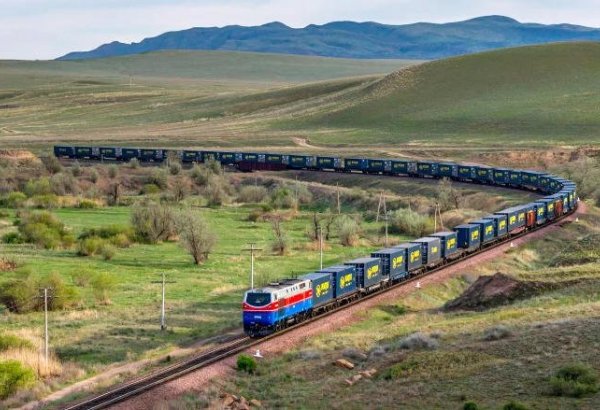
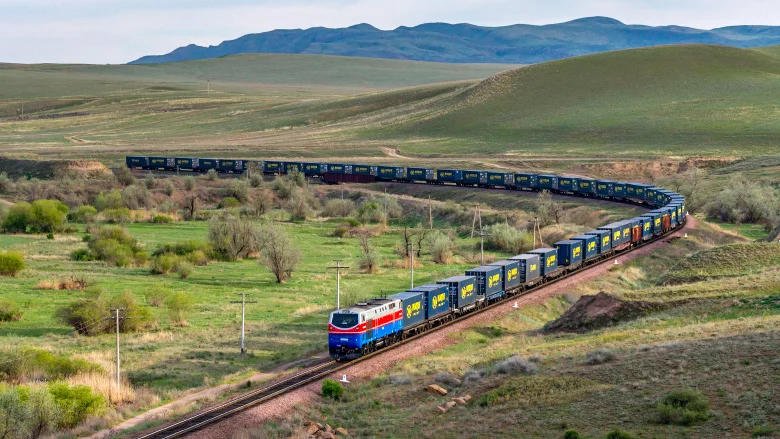
The Middle Corridor is a transport and trade route passing through a number of countries in the region and connecting Asia with Europe. It serves as an alternative to the traditional Northern and Southern Corridors.
The route begins in China and runs through the countries of Central Asia. It then crosses the Caspian Sea, Azerbaijan, Georgia, and Türkiye, before reaching Europe. The Middle Corridor is a land route that bypasses longer sea routes, connecting the eastern regions of Asia, including China, with Europe.