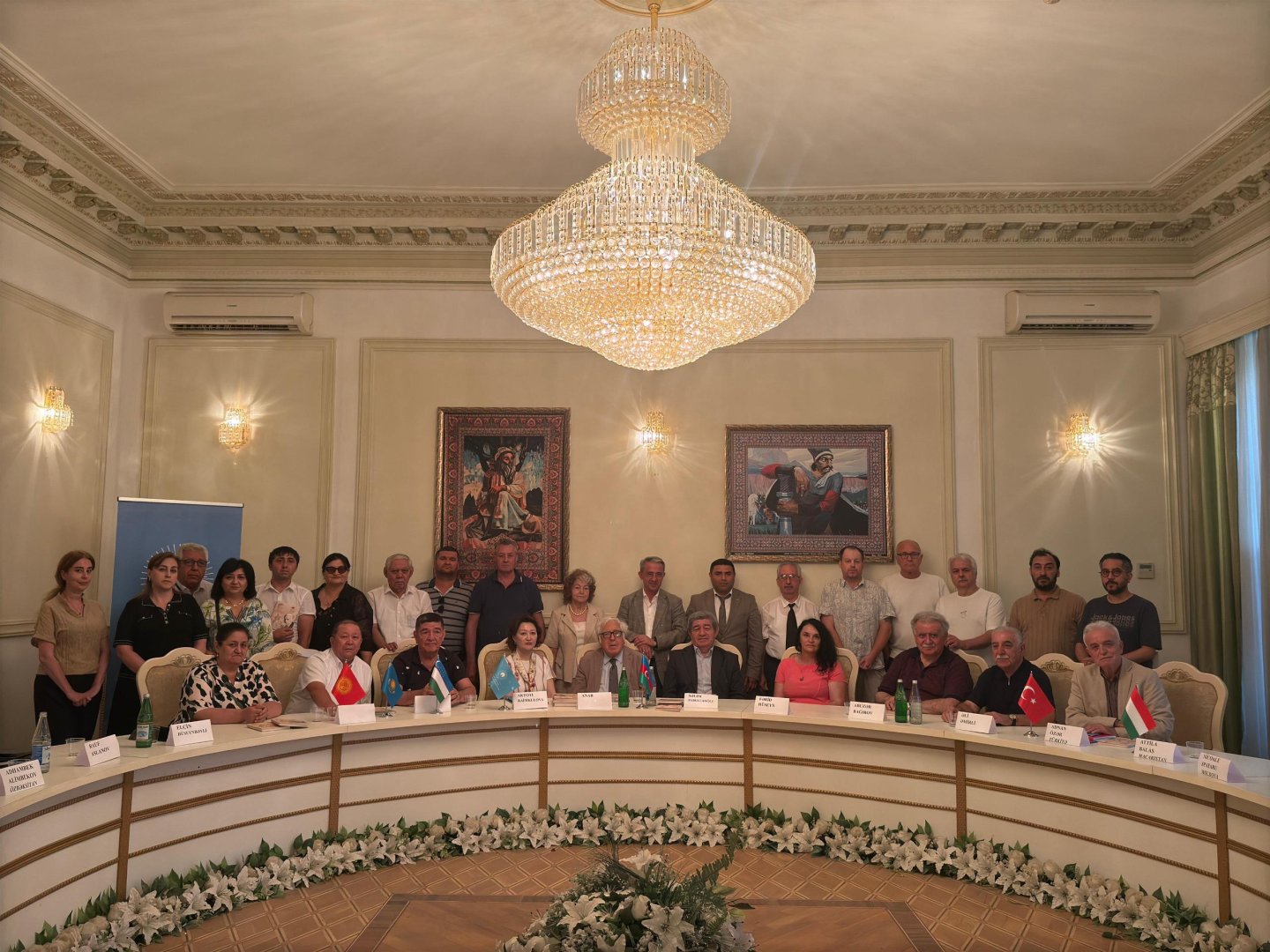
BAKU, Azerbaijan, July 18. On July 17, 2025, a scientific conference and special presentation were held at the “Natavan” club of the Azerbaijan Writers’ Union as part of the 100th anniversary celebration of the National Poet of Azerbaijan, Bakhtiyar Vahabzade, aimed at promoting his literary legacy. The event was jointly organized by the Turkic Culture and Heritage Foundation, the Ministry of Culture of the Republic of Azerbaijan, and the Azerbaijan Writers’ Union, TurkicWorld reports.
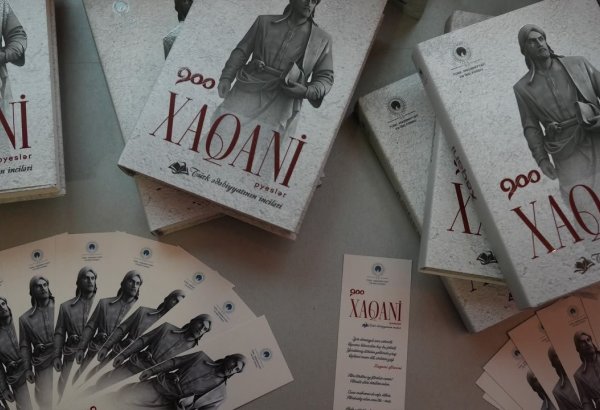
One of the key highlights of the event was the presentation of the book “The Sword That Pierces Us”, published by the Turkic Culture and Heritage Foundation in Azerbaijani and other Turkic languages. This publication serves as a message reminding the public of Bakhtiyar Vahabzade’s literary excellence, as well as his philosophical and national appeals addressed to the Turkic world.
Speakers at the anniversary event included: President of the Turkic Culture and Heritage Foundation Mrs. Aktoty Raimkulova, Chairman of the Azerbaijan Writers’ Union and National Writer Mr. Anar, Honored Art Worker, Professor, and playwright Mr. Ali Amirli.
Among the honored guests and delegates were: Director of the Atatürk Center Mr. Nizami Jafarov (Azerbaijan), laureate of the international “Alash” award Kadırbek Kunıpiyauly (Kazakhstan), poet and translator Adnan Özer (Türkiye), and Doctor of Philology, Professor Adhambek Alimbekov (Uzbekistan), as well as guests from Hungary, Moldova, Belarus, who also delivered presentations.
The conference began with a keynote speech by Aktoty Raimkulova on the topic “Unity of the Turkic World in the Works of Bakhtiyar Vahabzade”. In her address, she emphasized the importance of introducing youth to the common Turkic ideals reflected in the poet’s language, stating that Vahabzade’s work is not only a literary and spiritual treasure of Azerbaijan but also of the entire Turkic world. She noted that such publications help strengthen the cultural and spiritual ties among Turkic peoples.
The speakers touched on significant themes such as the bridges built by the Great Poet in Turkic-language poetry, the role of the mother tongue, and national-spiritual identity.
The conference saw active participation from artists, literary figures, media representatives, young writers, and members of the public. The event served not only to commemorate the poet’s centenary but also to promote shared values within the Turkic literary community and foster mutual scientific and literary dialogue.