

Baku. TurkicWorld:
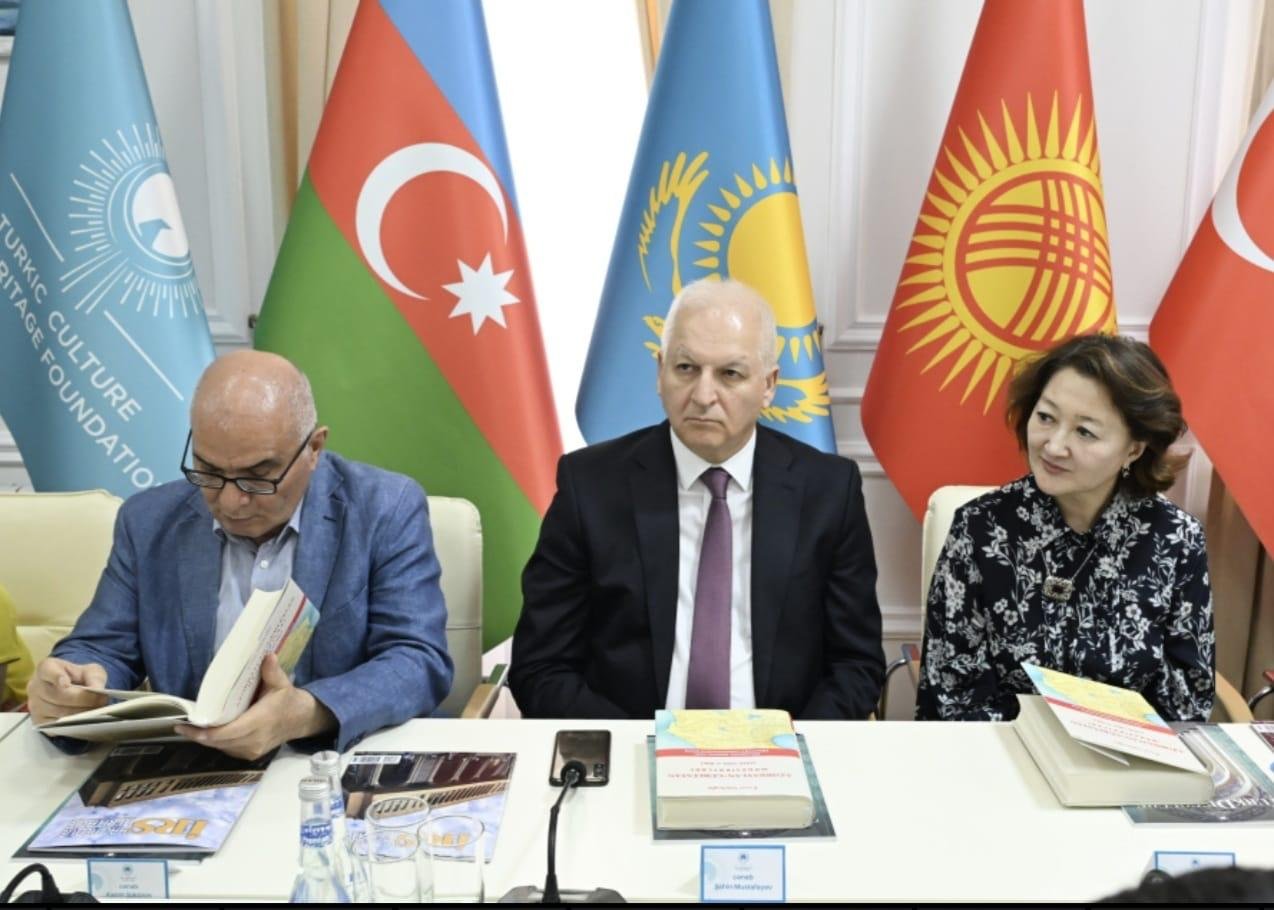
The Turkic Culture and Heritage Foundation hosted the official presentation of the book “Azerbaijani-Georgian Relations (1918-1922): A View Through the Prism of the Activities of Diplomatic Missions” authored by the Head of the Foundation’s Apparatus Fakhri Valehoglu-Hajiyev, TurkicWorld reports.
The event, dedicated to the Professional Day of the Diplomatic Service Staff of the Republic of Azerbaijan, was attended by deputies of the Milli Majlis of the Republic of Azerbaijan, senior officials from the Ministries of Foreign Affairs, Education, and Defense, the State Committee for Work with Diaspora, and the Center for Analysis of International Relations. Also in attendance were the President of the International Turkic Academy Academician Shahin Mustafayev, Deputy Secretary-General of TURKPA, Mr. Saky Sadigov, Azerbaijani ambassadors and consuls general serving abroad, and diplomats from Turkic-speaking countries and Georgia accredited in Azerbaijan. Prominent scholars, cultural figures, and public intellectuals also participated in the event.
In her opening remarks, Professor Aktoty Raimkulova, President of the Turkic Culture and Heritage Foundation, welcomed guests and highlighted the Foundation’s recent achievements, including major international programs and cultural initiatives. Emphasizing the importance of engaging youth, she noted that Turkic Heritage Centers established by the Foundation are currently operating in leading universities in Kazakhstan, Kyrgyzstan, and Uzbekistan, with plans underway to open similar centers in Azerbaijan, Turkiye, Turkmenistan, and Poland. Professor Raimkulova also announced the Foundation’s initiative to launch a digital database dedicated to Turkic cultural and historical heritage.
Speaking about the newly published book, Professor Raimkulova described it as both a valuable historical study and a testament to the deep-rooted cultural and diplomatic ties between Azerbaijan and Georgia. “For centuries, Azerbaijan and Georgia have maintained relations based on mutual respect and strategic cooperation,” she stated, adding that understanding the early diplomatic interactions between the two nations contributes to a broader appreciation of the region’s shared historical and cultural legacy.
At the end of her speech, the President of the Foundation congratulated the Azerbaijani diplomats who participated in the event on their professional holiday.
The author of the book, Mr. Fakhri Valehoglu-Hajiyev, noted in his remarks that one of the core missions of the Turkic Culture and Heritage Foundation is to explore the history of Turkic states and peoples, particularly in the field of diplomacy. In this context, he underscored the significance of studying the Azerbaijan Democratic Republic (ADR), the first secular democratic republic in both the Islamic and Turkic worlds. Examining the ADR’s foreign policy and the activities of its diplomatic missions, he emphasized, is essential to understanding the broader diplomatic heritage of the Turkic world.
Mr. Valehoglu-Hajiyev further explained that the Azerbaijan Socialist Soviet Republic, which succeeded the ADR, was also recognized—albeit formally—as an independent state. Despite this, the diplomatic activities of both republics, as well as the missions of foreign states operating within their territories, have remained largely unexamined in academic literature. He emphasized that the current monograph is a pioneering effort in filling this scholarly gap.
He highlighted that the research is based on a wide range of primary sources, including archival documents and periodicals published in Azerbaijani, Georgian, Russian, and English in key cities such as Baku, Tbilisi, Batumi, Kutaisi, and Akhaltsikhe during the years 1918–1922. This robust source base enabled a comprehensive and well-grounded study of the period’s diplomatic dynamics. Mr. Valehoglu-Hajiyev also expressed his intention to continue his research and proposed the development of a multi-volume book series dedicated to the political and diplomatic activities and structural organization of Azerbaijani diplomatic missions of that era.
Following his speech, the scientific editor of the monograph, Professor Kerim Shukurov, Director of the Institute of History and Ethnology of Azerbaijan National Academy of Science (ANAS), along with other distinguished guests—including Academician Shahin Mustafayev, President of the International Turkic Academy; Member of Parliament Rizvan Nabiyev; Ambassador of Azerbaijan to Turkmenistan Gismet Gozalov; Mr. Raman Mammadov, Head of the Personnel Department at the Ministry of Foreign Affairs; and Professors Bedirkhan Akhmedli, Solmaz Rustamova-Tohidi, and Asif Hajili, as well as Mr. Eljan Imamverdiyev from the Ministry of Defense—praised the publication. They commended the monograph as a valuable contribution to Azerbaijani and Turkic historiography and extended their appreciation to Professor Aktoty Raimkulova, President of the Foundation, for her continued support in preserving and promoting Azerbaijan’s diplomatic legacy. The speakers also emphasized the importance of continuing scholarly efforts in this direction.