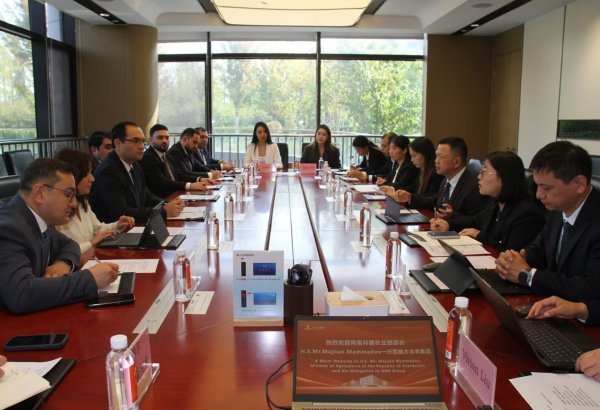
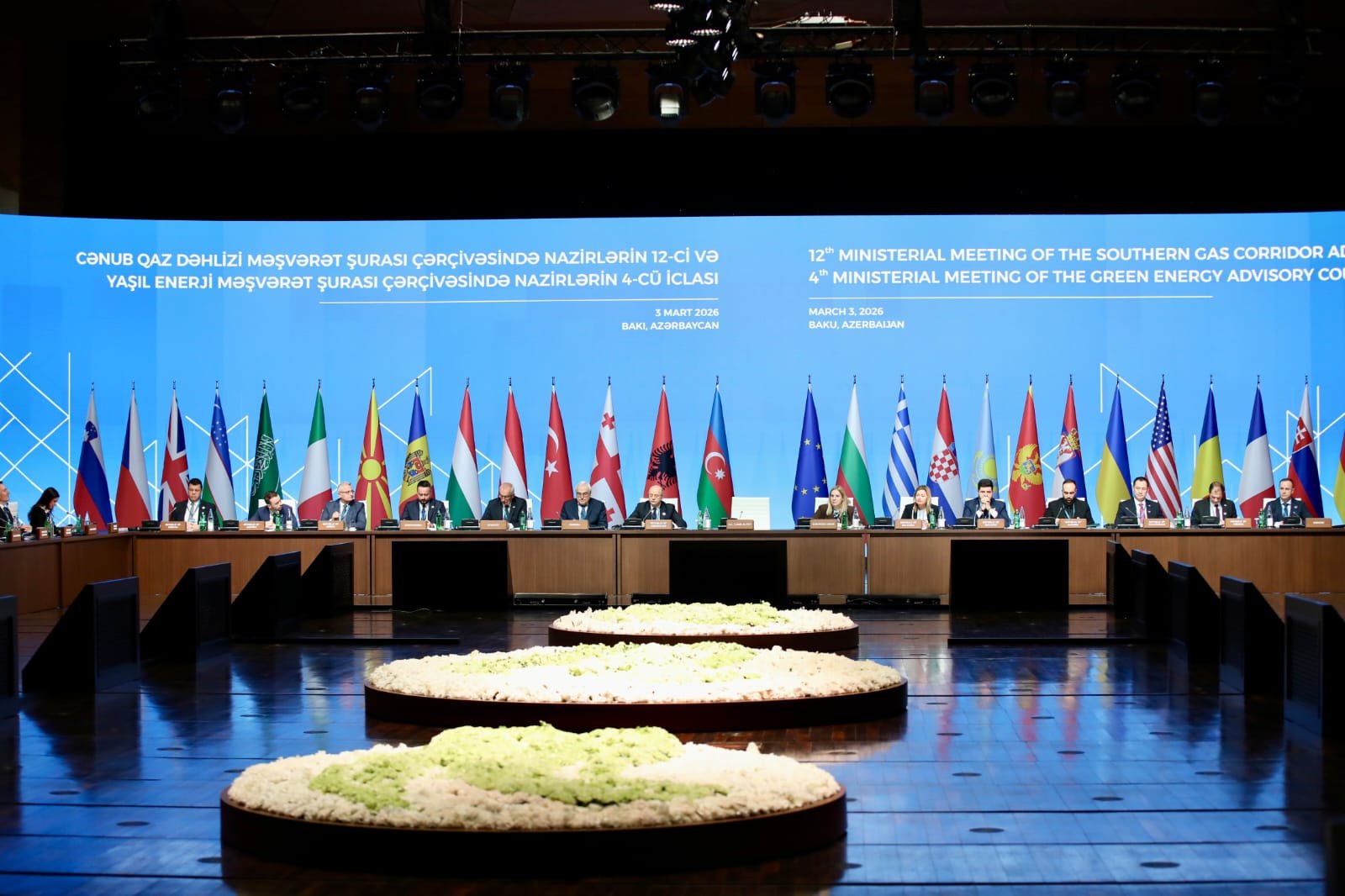
BAKU, Azerbaijan, March 3. Southern Gas Corridor Advisory Council 12th Ministerial Meeting and Green Energy Advisory Council 4th Ministerial Meeting continued with 3 plenary sessions: the Ministerial session, Southern Gas Corridor Session: Sustaining Success and Driving the Next Phase of Development of the Southern Gas Corridor and Green Energy Projects.
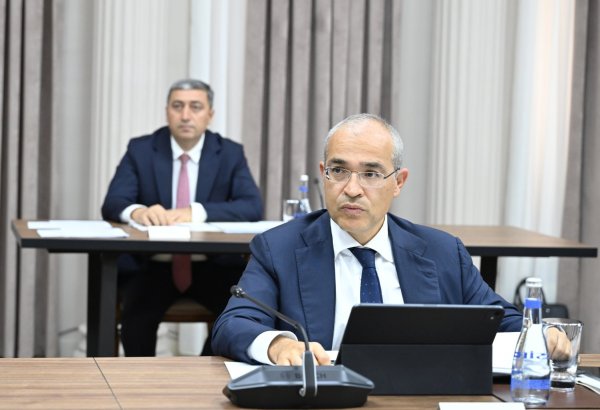
Speaking at the Ministerial Meeting Energy Minister Parviz Shahbazov said that the world was rapidly entering the Age of Electricity, driven by artificial intelligence, data centers, and digitalization. He highlighted that gas would remain a cornerstone of energy security for decades, and that security depended on timely investment and clear policy frameworks. It was noted that Azerbaijan had increased natural gas supplies to Europe by more than 56% since 2021, and the capacity of the Trans-Adriatic Pipeline has been expanded by 1.2 bcm, as well as the expansion of the gas supply network from Southeast Europe to the Middle East and Central Europe were touched upon as positive points. Of the 25.2 bcm of gas exported last year, approximately 51% went to Europe, while Türkiye, Georgia, and Syria accounted for the remaining 49%. "Azerbaijan is a reliable supplier to Europe, and demand for our gas remains strong, however, institutional and financial support for expansion from the demand side is still insufficient. We are advancing four upstream projects for launch between 2026 and 2029, with first non-associated gas from Azeri-Chirag-Gunashli expected this year, alongside four new onshore and offshore exploration efforts. The UAE’s ADNOC (XRG) becoming a shareholder in the Southern Gas Corridor is another great news. Yet despite such positive developments, a substantial increase in volumes to Europe will require a clear, long-term policy framework supported by concrete financial mechanisms",- added the Minister.
The Minister also brought to the attention the current situation related to develop 8 GW of renewable capacity for domestic use, export, and data centers. He also highlighted progress related to the establishment of the Caspian-Black Sea-Europe, Azerbaijan-Türkiye-Europe routes both directly from Nakhchivan and via Armenia, as well as the Trans-Caspian and East-West green energy corridors. It was emphasized that through these interregional energy links and electricity, Azerbaijan will further strengthen its role in the energy security of Europe.
Minister of Economy and Sustainable Development of Georgia Mariam Kvrivishvili said: “Georgia plays a strategic role as a reliable transit country within the Southern Gas Corridor, contributing to the diversification and security of energy supply to regional and European markets. Continued regional cooperation and enhanced connectivity remain the cornerstone of a secure and sustainable energy future. Georgia aims to achieve full self-sufficiency in electricity generation by 2036. This will be driven by substantial investments in renewable energy and transmission infrastructure, including the development of new cross-border interconnections."
Traycho Traykov, Minister of Energy of the Republic of Bulgaria told: "With the commercial operation of the Greece-Bulgaria Interconnector, Bulgaria has effectively become an integral part of the strategic infrastructure of the Southern Gas Corridor, which has proved its crucial role for enhancing energy security and diversification of sources and routes for the European countries. Bulgaria pursues a consistent policy for the development of its gas infrastructure. In this regard, I would like to confirm our commitment to further leverage on the Southern Gas Corridor partnership. All these energy sector challenges, however, require he trusted partnerships such as the ones established under the Southern Gas Corridor and as we witness today, further spill over to the Green energy corridors and zones initiatives. Bulgaria is a country that supports the Green Energy Corridor project from the very beginning.”
Minister of Energy of the Republic of Moldova Dorin Junghietu stated: "Moldova’s strategic priority is the continued integration of its gas market with European infrastructure, enabling competitive cross-border capacity products and access to multiple suppliers, including Caspian volumes delivered through the Southern Gas Corridor system."
Assistant Secretary of State for Economic, Energy and Business Affairs of the U.S. Department of State Caleb Orr said in his speech: "The Southern Gas Corridor is at the heart of our successful partnership in the region and our shared belief that energy security is national security. The United States has supported the Southern Gas Corridor from its inception. We recognize the strategic value of the corridor for linking the Caucasus with Europe. We see great opportunities to work together to realize the full potential of TRIPP and the broader Trans-Caspian Trade Route to increase regional economic integration and expand trade routes for energy, critical minerals, and other products."
Lord John Alderdice, UK Trade Envoy for Azerbaijan and Central Asia told in his online speech: "Azerbaijan is performing its role as a guarantor of regional and European energy security with great professionalism. For more than three decades now, the foundation of the United Kingdom's relationship with Azerbaijan has been energy. The UK sees great promise in working together on green energy corridors and clean power projects that will benefit not just Azerbaijan, but the wider region and European markets."
Zafer Demircan, Deputy Minister of Energy and Natural Resources of the Republic of Türkiye stated: "There is a strong common understanding for the crucial role of Southern Gas Corridor for achieving long term energy supply security. This valuable concept is evolving towards Green Energy Corridor interlinking states in Caucasus and Central Asia with Europe. Türkiye is the most feasible route not only for natural gas transportation but also for electricity transmission. Collaboration and cooperation are the unique tools we can use to strengthen our energy security of supply and increase wealth and welfare of our nations."
Deputy Minister of Energy of the Republic of Kazakhstan Sanzhar Zharkeshov noted: "Kazakhstan highly values its strategic partnership with Azerbaijan in the field of energy and sees substantial potential for elevating this cooperation to a qualitatively new level. In particular, I would like to highlight the agreements reached between Kazakhstan, Azerbaijan, and Uzbekistan regarding a large-scale project for the generation and transmission of green energy. The agreement signed by the Heads of State not only strengthens the resilience of our national energy systems, but also directly contributes to the achievement of our environmental objectives aimed at reducing emissions through the attraction of green investments. Through joint efforts and the development of new routes, we are laying the foundation for strengthening the region’s energy independence and security."
Peter Sztaray, State Secretary for Security Policy and Energy Security, Ministry of Foreign Affairs and Trade of Hungary said that the primary goal of the Hungarian Government was to ensure a stable, sustainable, and climate-neutral energy supply, for which the diversification of import sources and routes is essential. "Hungary considers the further capacity expansion of the Southern Gas Corridor a key project for the diversification of Europe's natural gas supply routes. Our participation in the work of the Advisory Council of the Southern Gas Corridor indicates that we consider Azerbaijan as a strategic partner in energy cooperation and we are actively supporting the capacity expansion of the Southern Gas Corridor. The Green Energy Corridor project is a unique initiative, not only at a regional but also at a global level, and is of key importance for Europe as it has the potential to lead as a progressive example on trans-regional cooperation."
Erlind Sulo, Deputy Minister of Infrastructure and Energy of the Republic of Albania told: "Albania is well-positioned to utilize TAP to access natural gas supply, supporting domestic energy needs and reducing reliance on electricity as a single source of energy, while improving affordability and accessibility for households, businesses, and industries in the country. We have decided to work in two parallel streams in this regard. The first is the revitalization of the Vlora Thermo Plant complemented by the pipeline that connects it to TAP exit point and an LNG floating terminal. The second, is the gasification of one of the major cities in Albania, the city of Korca."
Sasa Kokovic, Acting Assistant Minister for Oil and Gas in the Ministry of Mining and Energy of the Republic of Serbia stated: "With the commissioning of the gas interconnector between Serbia and Bulgaria, Serbia has for the first time gained the opportunity to be supplied with gas from other sources, including gas from Azerbaijan via the Southern Gas Corridor. The Southern Gas Corridor is much more than an infrastructure project. It represents a new energy reality for Europe based on reliable partnerships and mutual trust. Serbia's cooperation with Azerbaijan holds special strategic importance, primarily based on the friendly relations between Presidents Aleksandar Vucic and Ilham Aliyev. The results of the cooperation achieved so far are signed agreements with a focus on natural gas, renewable energy sources, and the exchange of experiences in the application of new technologies. The latest agreement signed on the development, design, construction, and management of a combined-cycle power plant in Serbia on February 15 in Belgrade is precisely the proof and foundation of energy cooperation between the two countries."
Secretary General for Energy and Mineral Resources, Ministry of Environment and Energy of the Hellenic Republic Despoina Paliarouta noted:"The Southern Gas Corridor continues to demonstrate its strategic importance for Europe’s energy security. In a period marked by profound geopolitical upheavals, this corridor has proven to be a reliable diversification route and a stabilizing factor for the broader region. The Southern Gas Corridor should be regarded not only as a diversification route, but also as a potential instrument for decarbonization.”
Artem Nekrasov, First Deputy Energy Minister of Ukraine said:” The capacity of the TANAP and TAP pipelines as well as the commission of new fields in the Caspian region create basis for significant increase of gas supply to Europe. In this system Azerbaijan acts as a reliable supplier of resources. The EU is a key consumer partner and Ukraine can play a role of important infrastructure and logistic hub that's ensures stability and flexibility of Energy flow in Europe. The door of cooperation between the EU, Azerbaijan and Ukraine in a field of natural field has a potential to become one of the key elements in ensuring more sustainable and diversified energy architecture in Europe.”
Vedran Spehar, State Secretary at the Ministry of Economy of the Republic of Croatia told: "The Southern Gas Corridor continues to play an important role in supporting Europe’s energy security and diversification efforts, contributing to greater resilience across the region. Croatia values its constructive energy partnerships, including cooperation with Azerbaijan, which contribute to stable and diversified gas supplies for both national and regional markets. Looking ahead, Croatia recognises the continued relevance of the Southern Gas Corridor within Europe’s evolving energy landscape. As the transition toward a low-carbon future progresses, natural gas will continue to play a stabilising role in ensuring secure and balanced energy systems."
Dino Tutundzic, State Secretary at the Ministry of Energy and Mining of Montenegro noted:"Montenegro currently does not have developed gas infrastructure. Our approach is clear and twofold: in the short term - security of supply and diversification; in the long term - infrastructure compatible with green hydrogen and aligned with EU climate policy. The flagship project in this direction is the Ionian-Adriatic Pipeline (IAP). For Montenegro, the IAP is not just a gas pipeline. It is a future regional energy corridor. It is integration into the European market. And most importantly, we are designing it as H2-ready infrastructure, compatible with green hydrogen transport."
Severin Gruber, Secretary General at the Federal Ministry for Economic Affairs, Energy and Tourism of the Republic of Austria stated in his speech: "Recent experience has shown how important diversification is for strengthening the resilience of our energy system. We welcome Azerbaijan’s intention to stand even more strongly with Europe and Austria as a reliable partner. Austria looks forward to deepening our partnership with Azerbaijan in the energy sector to support secure and affordable energy for our citizens."
Luca Di Gianfrancesco, Ambassador of the Italian Republic to the Republic of Azerbaijan said: "Azerbaijan continues to increase gas exports to Europe through the Southern Gas Corridor (SGC), thereby strengthening energy security across the region and providing a reliable and continuous energy supply. Looking ahead, natural gas will continue to play an important role in supporting the energy transition. The Southern Gas Corridor, and in particular its final extension, the Trans Adriatic Pipeline, whose capacity will also be increased in the coming years, is a strategic infrastructure of primary importance, providing a direct link between the Caspian basin and the European market, enabling secure, flexible, and transparent energy flows."
Gorazd Rencelj, Ambassador Extraordinary and Plenipotentiary of the Republic of Slovenia to Azerbaijan told:"By investing in green energy technologies and infrastructure we are advancing the clean energy transition, reinforcing energy security, and developing our partnership in a future-oriented, sustainable framework."
Goran Nikolovski, Head of Oil and Gas, Ministry of Energy, Mining and Mineral Resources of the Republic of North Macedonia noted:"This Ministerial Meeting reaffirms that regional cooperation is essential for building a stable and diversified energy system. For North Macedonia, access to the Southern Gas Corridor represents a strategic opportunity to strengthen energy security and deepen integration into the European energy architecture. Our objective is clear - through partnership and connectivity, we are building a more secure and sustainable energy future.”
The representatives from SOCAR, bp, Azerbaijan Gas Supply Company Limited (AGSC), TANAP, TAP, ICGB, XRG, TotalEnergies, Asian Development Bank and Boston Consulting Group attended the Southern Gas Corridor Session.
During the Green Energy Projects Session, the representatives from Azerbaijan Renewable Energy Agency, SOCAR Green, Masdar, ACWA POWER, bp, Xlinks, Zhero, CEER, IFC, WB, EBRD, EIB, ADB, AIIB, CECECO delivered presentations on green energy corridors and projects, as well as green energy interconnectors.