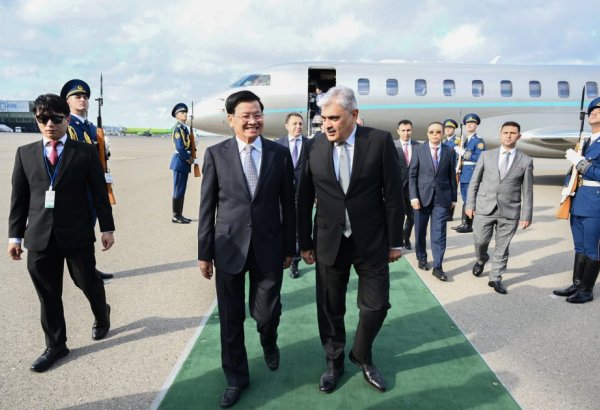



BAKU, Azerbaijan, April 9. Lithuania is interested in advancing cooperation with Azerbaijan in transport and logistics, energy, trade, digitalization, education, and people-to-people contacts, Prime Minister of Lithuania Inga Ruginienė said in an exclusive interview with TurkicWorld, as she visited Baku.
"My visit has several important purposes. First, it is about giving new momentum to Lithuania’s bilateral relations with Azerbaijan and strengthening direct political dialogue at a high level. Our countries marked 30 years of diplomatic relations recently, and this is a good moment to look forward and identify where our cooperation can become more practical, more regular, and more ambitious.
Second, this visit reflects Lithuania’s broader interest in a stable, connected, and economically resilient South Caucasus. Azerbaijan is an important regional actor, and we believe that closer, pragmatic engagement can serve both our bilateral interests and wider European interests. Lithuania is particularly interested in advancing cooperation in transport and logistics, energy, trade, digitalisation, education, and people-to-people contacts. I also hope to exchange views on regional security and on how we can contribute to stability and connectivity in the wider region," she said.
The PM notes that Azerbaijan and Lithuania are discussing concrete ways to strengthen bilateral engagement in areas where both sides see clear mutual benefit – particularly transport, connectivity, energy, economic diversification, education, and business ties.
"In the current environment, practical cooperation matters greatly. Europe is facing a prolonged security crisis caused by Russia’s war against Ukraine, pressure on energy markets, and broader geopolitical fragmentation. In this context, strengthening partnerships with reliable and strategically located countries such as Azerbaijan is important, provided such cooperation is transparent, rules-based, and beneficial to both sides," a Ruginienė noted.
Cooperation in traditional and green energy
The PM pointed out that her country sees strong prospects for broader energy cooperation. Azerbaijan has become an important and reliable energy partner for Europe, especially at a time when the need to diversify supply routes and reduce vulnerabilities remains strategically important.
"For Lithuania, energy security is not an abstract issue – it is directly linked to sovereignty, resilience, and our ability to withstand geopolitical pressure. At the same time, we believe the next phase of cooperation should increasingly include the green transition.
Lithuania is interested not only in traditional energy security, but also in the long-term transformation of Europe’s energy systems. Lithuanian companies can offer experience in solar solutions, clean technologies, digital systems, water management, and other technologies relevant to sustainable infrastructure and energy efficiency. We see value in working with Azerbaijan on both tracks: strengthening energy connectivity today and investing in cleaner, future-oriented solutions for tomorrow. This is particularly relevant in a world where energy security, economic competitiveness, and climate goals are becoming more closely interconnected. In our view, green energy cooperation can become an important additional pillar of Lithuania–Azerbaijan relations," added Ruginienė.
As for mutual support, for Azerbaijan playing a gateway to Central Asia for Lithuania, and Lithuania as a gateway to the Baltic states for Azerbaijan she believes that this is one of the most promising strategic ideas in the two countries' relationship.
"Azerbaijan has an important geographic and political role in connecting Europe with Central Asia and the wider Caspian region. Lithuania, for its part, is well positioned as a gateway to the Baltic region, Northern Europe, and the European Union’s internal market, especially through its transport infrastructure, logistics sector, and the port of Klaipėda. For Lithuania, this is not only about trade in the narrow sense. It is also about building resilient connectivity in a changing geopolitical environment. Russia’s aggression against Ukraine has forced Europe to rethink supply chains, transit routes, and the broader architecture of connectivity across Eurasia. In that context, routes that strengthen links between Europe, the South Caucasus, and Central Asia have growing strategic value. So I see this gateway concept as a practical partnership of mutual benefit. Azerbaijan can help open routes and opportunities further east, while Lithuania can provide access westward into the Baltic and Nordic region and into broader EU markets. If supported by stronger transport links, business contacts, and institutional coordination, this could become a meaningful area of long-term cooperation," said Lithuania's PM.
Broader investment opportunities
Ruginienė believes that there is clear room to expand investment cooperation, because current levels remain below the real potential of the two countries' economies.
"Lithuania is interested in practical sectors where it can offer know-how and where Azerbaijani partners may see value – such as ICT, digital governance, cybersecurity, the food industry, green solutions, tourism, and transport-related services. Lithuanian companies have strong expertise in digitalization, efficient public services, solar technologies, water management, engineering solutions, and high-quality food production, including dairy and other agricultural products. These are areas where there may be opportunities for commercial partnerships, including in reconstruction and development projects where modern infrastructure and sustainable solutions are needed.
At the same time, Lithuania would welcome greater Azerbaijani investment in sectors where our country can offer strategic access and a stable business environment – especially logistics, transport, manufacturing, tourism, and selected innovation sectors. Lithuania can serve as a practical entry point to the EU market. Our interest is not only to increase trade figures, but to build two-way economic ties that are more diversified, more resilient, and less vulnerable to geopolitical shocks. Of course, for any investment partnership to succeed, predictability, transparency, and confidence between institutions and businesses are essential. That is why political dialogue and practical economic cooperation should go hand in hand," she added.
Closer cooperation in logistics, enhancing Middle Corridor
The PM said her country sees strong potential for closer cooperation between the ports of Klaipėda and Baku as part of a broader effort to improve East–West connectivity. Ports are not just infrastructure assets; in today’s geopolitical reality, they are strategic nodes that shape trade patterns, supply-chain resilience, and economic security.
"Lithuania is interested in more active cooperation between port authorities, logistics companies, and transport institutions. This could include closer business-to-business engagement, exchange of expertise, better alignment along multimodal transport chains, and stronger promotion of joint cargo routes. The more efficiently we connect maritime, rail, and road links, the greater the benefits for both sides. For Lithuania, Klaipėda is a key national asset and an important gateway for regional trade. We believe its cooperation with Baku could contribute to the wider connectivity agenda linking the Caspian region with the Baltic Sea. This would not only support bilateral trade but also strengthen alternative routes that are increasingly important for Europe’s economic resilience," said Ruginienė.
The prime minister highlighted Lithuania's support to the Trans-Caspian Transport Route, or the Middle Corridor, "because it has become strategically more important in the current geopolitical situation".
"Europe needs stronger connectivity with Central Asia and beyond, and it also needs routes that reduce dependence on transit corridors affected by Russia’s destabilising role. In that sense, the Middle Corridor is not only an economic project but also part of a broader resilience strategy. We see Azerbaijan as one of the key countries in making this corridor more efficient and competitive. Lithuania’s interest is very practical: we want to contribute to stronger Europe–Asia connectivity, to diversify trade routes, and to create new opportunities for our transport, logistics, and business sectors. We are particularly interested in how our infrastructure, especially Klaipėda port, can be better integrated into these wider networks.
If the Middle Corridor becomes faster, more predictable, and more commercially attractive, both Lithuania and Azerbaijan stand to benefit. Azerbaijan strengthens its role as a regional hub, while Lithuania strengthens its position as an entry point to the Baltic and Northern European markets. In today’s environment, this kind of cooperation is valuable not only economically, but strategically as well," she added.
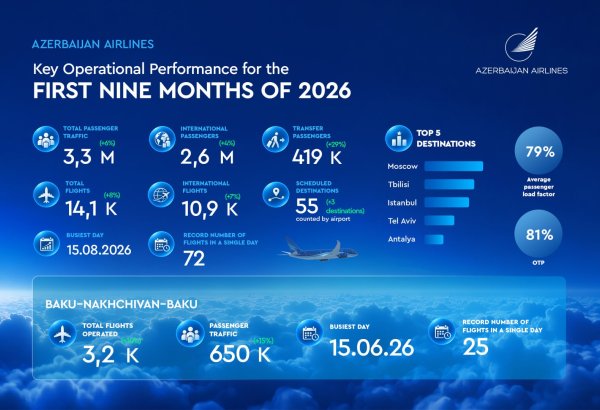
As for the prospects for opening direct flights, Lithuanian PM noted that this would make a real difference.
"They would support business contacts, tourism, academic exchanges, and broader people-to-people ties. Better aviation links would help turn interest into real exchanges and concrete projects. For Lithuania, stronger connectivity with Azerbaijan also fits into a broader objective of building closer ties between Europe and the South Caucasus. Aviation is an important part of that. It is not only about convenience, it is also about making cooperation more regular, more visible, and more commercially viable. Naturally, such decisions depend on market conditions and airline interest, but from a political perspective we see direct connectivity as a positive and forward-looking step. We would welcome discussions that help bring our societies and business communities closer together," Prime Minister Inga Ruginienė concluded.