

How is the resilience of Iran’s authoritarian regime evolving amid the systemic erosion of domestic legitimacy, mounting international pressure, and technological disintermediation - and which factors will determine the likelihood of its collapse in the near term?
Contemporary Iran as a Regime at the Breaking Point
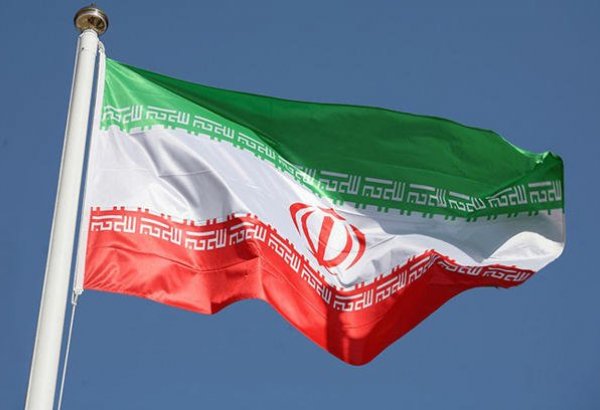
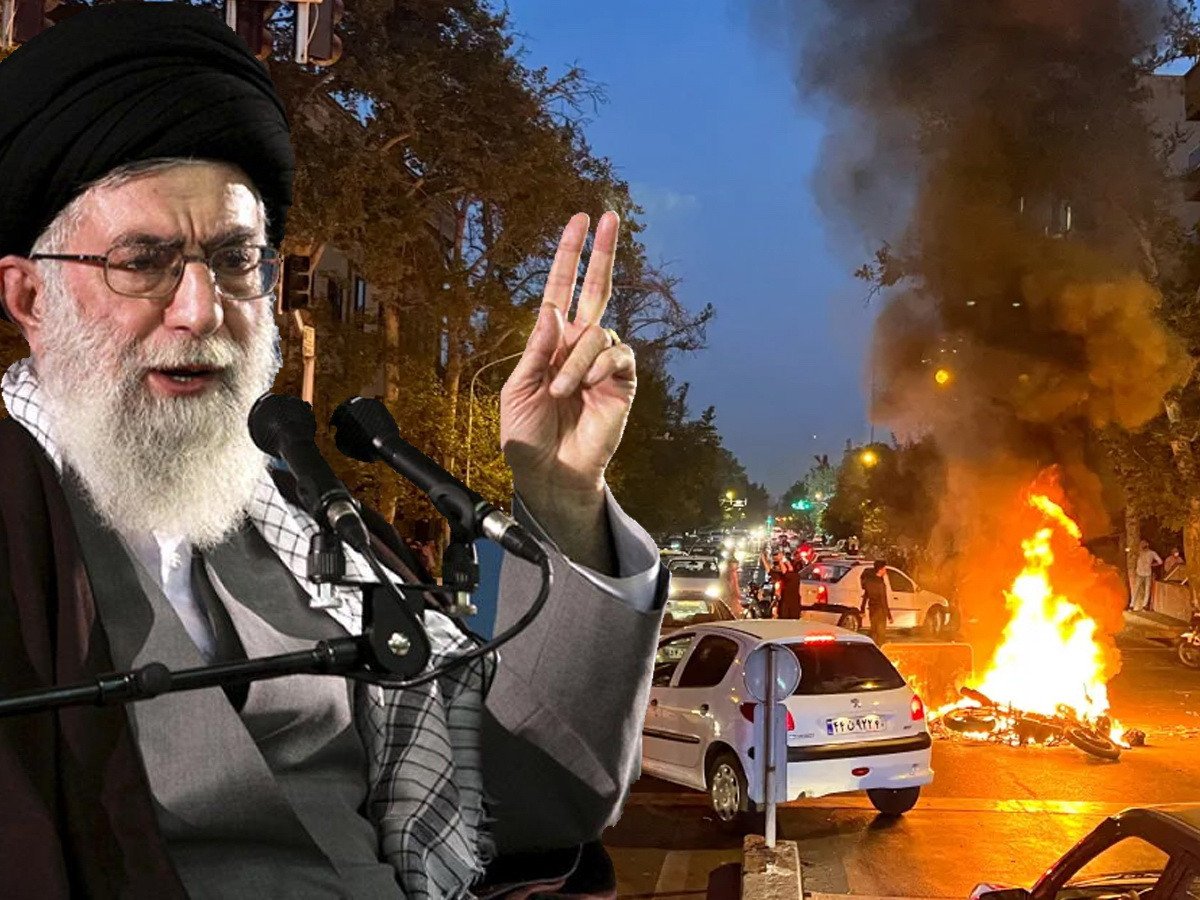
Modern Iran represents a rare case of authoritarian survival: a hybrid system that fuses theocratic legitimation, a militarized bureaucracy, and a corporate–patrimonial economy. Since 1979, the Islamic Republic has built an architecture of power in which a sacred vertical hierarchy and a dense repressive apparatus mutually reinforced one another. By 2026, however, that system has reached a critical juncture. Its structural flaws have converged with the exhaustion of the model of managed stability. The waves of mass protests that began in late 2025 were not merely episodic outbursts of public anger; they were symptoms of a profound breakdown in the social contract between state and society.
The regime of Ayatollah Ali Khamenei is confronting what contemporary political theory describes as cumulative legitimacy depletion: a condition in which a regime’s ideological resources lose their mobilizing force, while repression remains effective only at the cost of ever-escalating violence. This transition - from controlled authoritarianism to entropic violence - marks the final stage of regime degradation before collapse.
How Regimes Die: Slowly, Until It’s Too Late
History shows that authoritarian systems rarely fall because of a single explosion. They collapse from the accumulation of cracks that remain barely visible until the very end. The fall always looks sudden only in retrospect. In reality, the death of an autocracy is not a dramatic rupture but a long decay: power rots from within, loses touch with reality, while society is drained by fear and poverty.
Iran today is a textbook illustration of this logic. The protests of recent weeks, brutally suppressed, look like the beginning of the end. And yet the system constructed since 1979 still holds - for now - on fear, propaganda, and the loyalty of those whose lives are built on the regime’s privileges.
Iran’s economy is disintegrating faster than the Islamist bureaucracy can invent excuses. Food inflation has exceeded 70 percent, the rial has sunk to historic lows, sanctions are tightening again, and oil trade has been reduced to barter and shadow schemes. But the decisive factor is not economics. It is exhaustion: a society that has lost faith in the meaning of a revolution that promised justice and delivered only impoverishment and repression.
The Iranian regime has survived not because it is loved, but because it is feared. The security apparatus - the Islamic Revolutionary Guard Corps and the Basij militia - has become the core of the state, displacing civilian authority. The IRGC is not merely an army; it is a corporation that controls business, energy, media, and ideology. Hundreds of thousands of fighters, tens of billions of dollars in opaque revenues, and total personal dependence on Khamenei make it the principal guarantor of the status quo.
The Basij serve as a street-level battering ram. Their role is to suppress the fear of the minority with the fear of the majority. When Tehran burned with protests in 2009, it was the Basij who broke students’ bones. In January 2026, the pattern repeated - with the same script but without illusions. Protesters are killed not to save Islam, but to save those who enriched themselves in its name.
Tehran today is not seeking victory; it is seeking a pause. Talks with Washington are not an attempt at reconciliation but tactical maneuvering. U.S. President Donald Trump has intensified pressure, imposing 25 percent tariffs on countries trading with Iran, yet once again runs up against the China factor: Beijing continues to buy Iranian oil and has no intention of complying with someone else’s sanctions.
Iranians, worn down by inflation and isolation, long ago stopped believing in either Trump or Khamenei. But the regime needs only one thing: time. Even the illusion of negotiations offers breathing room to stabilize the domestic front while elites quietly calculate who will defect first if power begins to sink.
Today the IRGC is not only a fighting force but a pillar of the internal economy. It builds, owns, supplies, and invests. Its commanders are part of a new aristocracy: families living in guarded enclaves, children studying in London and Toronto, incomes detached from the collapsing rial. This elite will not allow the system to fall until it is convinced that collapse is unavoidable.
The protesters have no leader, no structure, no common language - only fatigue and rage. Reza Pahlavi, the son of the last shah, is trying to position himself as a national symbol, but for a generation raised under revolutionary slogans he is an outsider. His name evokes not nostalgia but trauma.
In Tehran, the fate of Bashar al-Assad is studied closely. Once he seemed eternal: backed by Moscow and Tehran, readmitted to the Arab fold, forgiven even by those who saw Aleppo in ruins. Yet the end came not from an external enemy but from internal collapse. In late 2024, under the blows of united rebel forces, his power disintegrated in a matter of days. A week later, Assad was already in exile.
Iranians also remember 2011, when the Tunisian army refused to shoot its own citizens - and when the same happened in Egypt. Authoritarian regimes fall not when they are hated, but when they are no longer feared - and when their own soldiers begin to hesitate.
Iran stands at that threshold now. It is not yet dead, but it is no longer alive. All the markers of late-stage authoritarianism are present: the oligarchization of the security services, ideological burnout, social apathy, international isolation, economic collapse.
The finale is a matter of time. Like all regimes that exist outside historical logic, its end will come not from revolution but from internal exsanguination. First gradually. Then suddenly.
Structural Resilience and the Logic of Violence
The key factor behind the survival of Iran’s Islamic theocracy remains the institutional tandem of the Islamic Revolutionary Guard Corps and its subsidiary, the Basij militia. These organizations function not only as armed forces but as a parallel economic and ideological system embedded at every level of governance. In the language of comparative politics, Iran embodies a model of militarized corporate authoritarianism, where the army and security services evolve into a social class - the carrier and beneficiary of the regime.
By controlling up to 40 percent of the national economy, from infrastructure contracts to oil exports, the IRGC has effectively become a politico-economic conglomerate. Its loyalty is guaranteed by corporate self-interest: regime collapse would mean not just loss of power, but the destruction of accumulated capital and clientelist networks. Iran’s repressive machine thus operates less from ideology than from the instinct of corporate self-preservation.
Yet the effectiveness of violence in authoritarian systems has limits. As the experiences of Syria, Libya, and Egypt demonstrate, repression can delay but not prevent systemic breakdown once moral and symbolic control over society is lost. In Iran, that moment is approaching. When state violence becomes the sole instrument of rule, it ceases to be political and turns criminal.
Protest Dynamics and the Loss of Communication Control
Despite total internet shutdowns and blanket media control, protest activity in Iran has shown remarkable adaptability. Technological disintermediation - enabled by satellite communications, including Starlink - has shattered the state’s monopoly on information and allowed new horizontal networks of coordination to emerge. This fundamentally alters the balance of power between state and society: violence becomes visible, and the inability to conceal crimes renders them strategically counterproductive.
A repression system built on the invisibility of violence is colliding with a new phenomenon: the digital transparency of resistance. Even with limited internet access, visual evidence of repression spreads instantly beyond Iran’s borders, generating a boomerang effect in which domestic violence turns into an international political crisis.
In this sense, digital technologies function as a new form of strategic weapon for the weak, compensating for the absence of centralized leadership and formal organizational structures within the protest movement.
Economic Entropy and the Collapse of Institutional Trust
Iran’s economic model is in a state of profound systemic decay. The convergence of international sanctions, chronic inflation - food prices rising by more than 70 percent - the collapse of the rial, and the corrupt privatization of state assets has destroyed the basic economic bargain between the authorities and the population. In the language of economic sociology, the regime has entered a phase of negative fiscal legitimacy: the state is no longer capable of performing even minimal redistributive functions.
The core problem is institutional delegitimation. Neither parliament, nor the judiciary, nor religious bodies are any longer perceived as arbiters of justice. Iran’s social structure has undergone radical fragmentation: class-based and ethnic groups - Kurds, Azeris, Baluch - act autonomously yet synchronously, producing a mosaic-style revolution that requires no centralized leadership.
External Vectors of Pressure: Trump’s Strategy and the Logic of Coercion
The response of U.S. President Donald Trump’s administration marks a return to a doctrine of coercive pressure through economic and informational escalation. The imposition of 25 percent tariffs on countries doing business with Iran represents an unprecedented use of secondary sanctions in the form of trade blackmail. In the White House’s strategic logic, this is a tool for systematically isolating Tehran without direct military intervention.
More important, however, is Trump’s use of strategic ambiguity - deliberate uncertainty about the scale and form of potential American support for protesters. This ambiguity creates a psychological pressure effect: Tehran is forced to expend resources countering hypothetical threats. The result is a hybrid war of attrition in which political pressure, digital mobilization, and economic sanctions operate in synergy.
The Transformation of the Authoritarian Core: A Mechanism of Self-Destruction
The Islamic Republic has entered a phase in which systemic stability is determined not by the mobilization of loyalists, but by the regime’s ability to discipline its own bureaucracy. For any mature authoritarian system, the critical moment arrives when internal manageability begins to erode. As violence escalates, demoralization spreads through the lower ranks of the Revolutionary Guards, the police, and the civil service. The longer the cycle of repression continues, the greater the risk of fragmentation within the command hierarchy.
This pattern has been empirically observed in Egypt (2011), Sudan (2019), and Syria (2024): coercive apparatuses ultimately splinter into factions oriented not toward the leader, but toward their own survival. In Iran, this outcome is especially likely given the parasitic structure of the elite, where political power is inseparable from access to economic rents.
When authority becomes a means of material survival rather than ideological vocation, its erosion accelerates in avalanche fashion. This is why analysts at the Hudson Institute, in a January report, aptly described Iran as “a dying regime with nuclear muscles.” Its militarized core retains the capacity to strike, but has already lost internal cohesion and ideological unity.
Scenarios of Collapse: Three Trajectories
According to RAND’s systemic typology, three plausible scenarios now confront Iran:
A controlled authoritarian transition: limited liberalization under the sponsorship of part of the elite, sacrificing the upper tier of power in order to preserve the state. Probability: low, given that the institution of the supreme leader allows no duality of authority.
Revolutionary collapse: a mass uprising accompanied by the defection of loyal security structures to the side of society. This scenario could be triggered by a combination of internal protest and an external shock, such as U.S. or Israeli strikes on Revolutionary Guard command centers. Probability: medium, but rising.
Degradational survival: a model of “creeping disintegration” without formal regime change, in which the center loses control over regions while the economic and political system persists by inertia. Probability: high in the short term, but unsustainable beyond a two-year horizon.
The system has thus lost its capacity for adaptation. Its stability is dynamically negative: the more resources are consumed to retain power, the faster the foundations of its reproduction erode.
International Alignments: From Regional Stabilization to Strategic Revision
The positions of external actors in Iran’s crisis reflect a clash between two paradigms: a realist one (the United States and Israel) and a defensive one (the European Union and Saudi Arabia).
Washington operates within a logic of coercion toward disintegration, treating Iran not as a negotiating partner but as a systemic threat. Europe, by contrast, remains bound by normative realism - its diplomatic culture ill-suited to situations where moral imperatives and security concerns converge.
The call by Israeli Foreign Minister Gideon Sa’ar to designate the Revolutionary Guards as a terrorist organization was not merely a diplomatic gesture, but a test of Europe’s political agency. If Brussels continues to evade this decision, it will forfeit any claim to strategic autonomy and resign itself to the role of passive observer in the geopolitical transformation of the Middle East.
The Geo-Economics of Sanctions and the End of Oil Rent
Trump’s decision to impose 25 percent tariffs on trade with countries cooperating with Iran marks the first instance of a global rent blockade. Unlike traditional embargoes, this measure does not target Iran directly, but its external channels of capital reproduction - above all China, India, and Türkiye.
This represents a new form of pressure that RAND defines as sanction extraterritoriality. Its impact is not immediate, but cumulative. By constricting trade flows, it undermines parallel financing structures, including the quasi-state funds of the Revolutionary Guards. As oil rent ceases to function as a stable source of budget revenue, Iran’s economy enters a phase of monetary self-destruction: money multiplies, but its purchasing power approaches zero.
The result is a vicious internal cycle. Higher inflation fuels social anger; social anger provokes harsher repression; repression deepens international isolation. Each turn of the spiral accelerates the next.
The Region’s Military-Political Architecture and a New Strategic Axis
Iran’s crisis is becoming a catalyst for a reconfiguration of Middle Eastern security architecture. Against the backdrop of regime crises in both Syria and Iran, and Saudi Arabia’s gradual pivot toward pragmatic neutrality, a new triangle - Washington, Jerusalem, and Ankara - is taking shape, with the potential to serve as the core of a post-Iranian regional order.
Turkey, despite its caution, is already positioning itself as a mediator and balancer. Ankara has no interest in the total collapse of Iranian statehood, but it does see the weakening of the ayatollahs’ regime as an opportunity to reengineer regional transport and energy corridors. In this sense, Iran’s fall would not produce chaos, but rather a new kind of structural rationalization - one in which any power vacuum is filled by coalitions of technological, energy, and military hubs, not by the ideological blocs of the past.
The Political Psychology of Fear: Resource and Poison
The central paradox of Iran’s Islamic theocracy is that it rests not on faith, but on fear. Yet fear is a finite resource. It cannot be exploited indefinitely without losing its potency. Death ceases to intimidate when the fallen become heroes; repression stops working when it turns routine and mass-scale.
Research on political behavior in authoritarian societies (including studies by Carnegie and CSIS) shows that fear remains effective only as long as individuals are isolated. Once technology links people into horizontal networks, fear erodes rapidly. That is precisely what is happening in Iran today: digital socialization is overpowering the logic of theocratic isolation.
The Probability of Systemic Collapse
Based on current macroeconomic and socio-political indicators, several predictive thresholds stand out:
Inflation at 70–75 percent (according to IMF data and independent estimates), signaling a systemic breakdown of monetary circulation.
A budget deficit exceeding 10 percent of GDP, pushing the state toward a quasi-default condition.
An exchange rate of roughly 650,000 rials to the dollar, effectively marking the loss of monetary sovereignty.
Sustained protest activity in more than 30 cities.
Elite fragmentation, with widening rifts between the clerical establishment and the Revolutionary Guards.
Taken together, these variables point to an 80 percent probability of a revolutionary-collapse scenario within a 12–18 month horizon. Even under conditions of partial stabilization, the regime has already lost its strategic future, as analysts at the Hudson Institute have noted.
Post-Theocratic Transition: Engineering the Future
The “Iran Prosperity Project,” unveiled by Reza Pahlavi, signals the emergence of a conceptual framework for post-revolutionary governance. From a political science perspective, it represents an attempt to construct a civic technocracy akin to the transition models of Eastern Europe in the 1990s.
The principal challenge is the absence of institutional continuity. The fall of the Khamenei system will leave behind neither a functioning bureaucracy nor an army capable of maintaining public order. A hybrid transition therefore appears likely, involving external observers, international missions, and technological companies - primarily American - to provide infrastructural stability during the interim.
Epilogue: The Logic of Disintegration
Authoritarian systems do not die from external blows. They collapse from internal entropy - when power itself ceases to believe in its own purpose. Iran’s crisis is not a rebellion against a regime; it is a collective rejection of the meaning that regime once claimed to embody.
As one Iranian journalist put it, “A government that shoots its own people can no longer be a government.”
Khamenei’s historical end may be protracted, but it is irreversible. And the longer it drags on, the more destructive its consequences will be - not only for Iran, but for the very idea of the Islamic Republic as a viable form of political existence.