






BAKU, Azerbaijan, August 29. Kazakhstan's Government has reviewed a draft law on the republican budget for 2027-2029, with total spending planned at 30.2 trillion tenge (about $63.6 billion) in 2027.
This was announced by the press service of the Kazakh government, following a cabinet meeting chaired by Prime Minister Olzhas Bektanov and dedicated to the country’s socioeconomic development forecast.
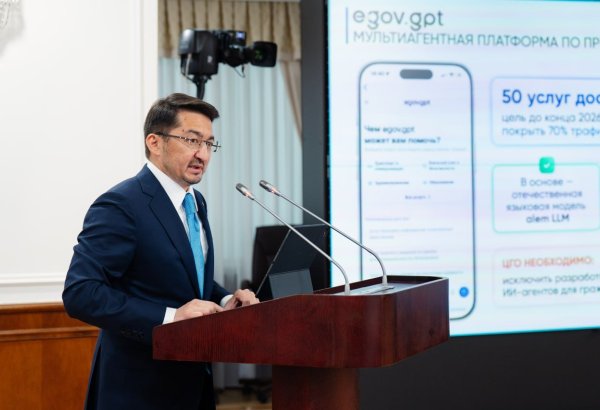
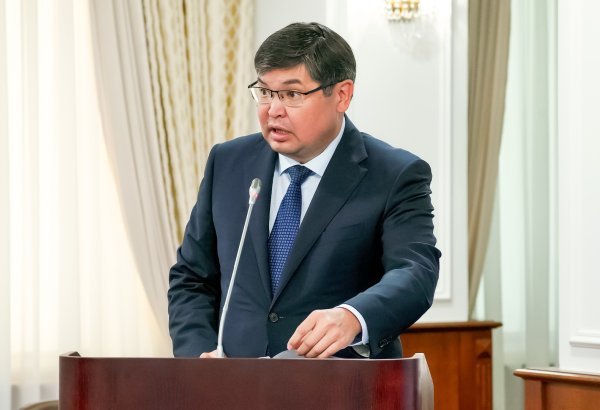
According to the information, the draft budget was presented by Finance Minister Madi Takiyev and prepared based on the country's socio-economic development forecast.
Republican budget revenues are projected at 25.6 trillion tenge ($53.9 billion) in 2027, equivalent to 12.9% of GDP.
The guaranteed transfer from the National Fund is set at 2.4 trillion tenge ($5.1 billion), while the targeted transfer is planned at 2 trillion tenge ($4.2 billion). The targeted transfer will be used exclusively to finance critical facilities and infrastructure projects of national importance.
The budget deficit is projected at 2.3% of GDP in 2027. Total republican budget expenditures will amount to 30.2 trillion tenge, up by 2.5 trillion tenge ($5.3 billion) compared with the current year's plan.
"An important feature of the budget drafting process was not simply to ensure an increase in spending, but to improve the return on every tenge of budget funds, directing resources primarily toward fulfilling state obligations, developing the economy and regions, and building human capital," Takiyev said.
He added that spending on administrative government bodies was planned based on the principles of efficiency and effectiveness, avoiding unjustified increases in administrative costs while maintaining the balance of the republican budget.
The social sector remains the key budget priority. A total of 10.5 trillion tenge ($22.1 billion), or 34.9% of total expenditures, is allocated to social spending in 2027.
The draft budget takes into account the indexation of social payments and changes in the number of recipients. An additional 739 billion tenge ($1.6 billion) is allocated to maintain the necessary level of social support.
A total of 3.8 trillion tenge ($8 billion) is allocated to the real sector of the economy, accounting for 12.9% of total expenditures and representing an increase of 507 billion tenge ($1.1 billion) from the current year's plan.
The increase is linked to the continuation of major infrastructure projects. Taking into account development budgets of local executive bodies, total support for the real sector will reach about 7 trillion tenge ($14.7 billion).
Funding for the security and defense sector is planned at 3.3 trillion tenge ($7 billion), an increase of 257 billion tenge ($541 million) compared with the current plan.
Meanwhile, 787 billion tenge ($1.7 billion) is allocated for the operation of administrative government bodies. The optimization of spending was carried out without creating risks to the performance of their assigned functions.
The draft law also incorporates systemic changes related to institutional reforms, including financing for the activities of the Kurultai and the Kazakhstan People's Council.
Overall, the proposed budget combines increased spending on social commitments and infrastructure with measures aimed at improving spending efficiency and maintaining fiscal stability.
According to TurkicWorld's analysis, the budget structure shows that the government is continuing to rely on public investment to support economic growth, particularly through infrastructure and the real sector. This approach is likely to have a wider economic impact by supporting construction, transport, utilities and industrial capacity, while also improving the conditions for private investment. The emphasis on social spending, meanwhile, indicates that maintaining household incomes and social stability remains an important part of the government's economic policy.
At the same time, the budget highlights the challenge of financing ambitious development plans while maintaining fiscal stability. The continued use of National Fund transfers provides the government with resources for major projects, but also shows that oil-related revenues remain an important component of public finances. The focus on improving the return on budget spending and limiting administrative costs therefore suggests an effort to ensure that higher public expenditure translates into longer-term economic capacity rather than simply increasing current consumption. The effectiveness of this approach will largely depend on whether infrastructure investment and support for the real sector generate stronger non-oil growth and gradually expand the government's domestic revenue base.