

BAKU, Azerbaijan, December 21. Slovak companies can contribute to post-conflict demining, followed by reconstruction and infrastructure digitalization on Azerbaijan’s liberated territories, Filip Šandor, Vice-Chairman of EXPORT ANALYTICA, a Slovak analytical platform created by the Council of Slovak Exporters, said in an interview with TurkicWorld.
“The post-conflict environment has created clear and tangible opportunities for cooperation, and interest from Slovak companies is already evident,” Šandor noted. “Reconstruction is not a new field for Slovakia, as similar efforts are already under way in Ukraine”.
In Azerbaijan, attention is focused in particular on logistics and construction, as the region is expected to develop into an important junction of international transport corridors. “Beyond equipment, Slovak companies can contribute to post-conflict demining, followed by reconstruction and infrastructure digitalization, which are essential for developing new transport corridors and energy links,” he added.
Slovak engagement has moved beyond political declarations to practical cooperation through a pilot “smart village” project in Karabakh. “This initial involvement is seen as the starting point of longer-term cooperation, especially as Azerbaijan plans to develop more such smart villages in the coming years,” Šandor said.
From the perspective of export diversification, Azerbaijan represents a highly attractive and dynamic partner market for Slovak exporters. “The country has demonstrated remarkable macroeconomic performance, with GDP growth exceeding 4% in 2024. At the same time, Slovakia is seeking to diversify its export destinations, which are currently heavily EU-oriented, around 85%. Mutual trade between the two countries nevertheless remains very low, pointing to significant untapped potential,” he explained.
Currently, the automotive sector accounts for roughly 85% of Slovak exports to Azerbaijan, but Šandor highlighted opportunities in other segments, particularly energy-related equipment. “Central-heating boilers and meters for gas, liquids, and electricity represent significant potential for export growth,” he said.
Šandor emphasized the potential for energy and defence cooperation. “In energy, rising demand and infrastructure modernisation in Azerbaijan create opportunities for Slovak companies in the field of renewable energy technologies, and also in upgrading energy facilities and supplying complete technological solutions for energy and industrial projects”.
On defence cooperation, he said, “Azerbaijan and Slovakia agreed last year to establish joint ventures in the defence industry, including plans to relocate part of the production directly to Azerbaijan and act as partners jointly seeking to market these products abroad. Currently, Slovak defence exports are growing exponentially, making such cooperation strategically and economically beneficial for both sides”. Cooperation is also developing between armed forces in the areas of military education, training, and exercises.
Beyond defence, cooperation is expanding in ICT and other high value-added sectors, including smart city solutions, security and air-traffic management systems, industrial equipment, logistics, automation, and smart manufacturing. Šandor also noted opportunities in water management, medical and pharmaceutical technologies, food processing and agribusiness, transport, education, and tourism, offering broad scope for export diversification and sustainable long-term cooperation.
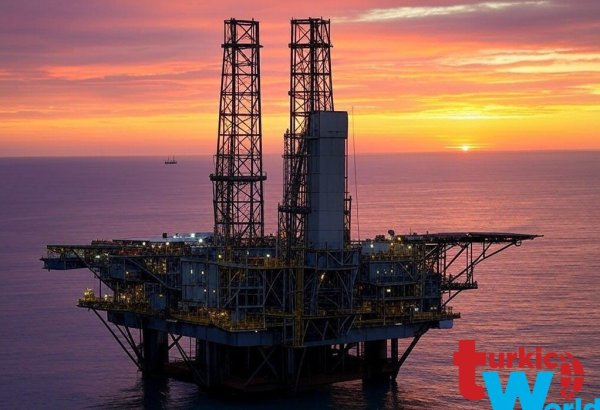
From a geoeconomic and security perspective, Šandor highlighted Azerbaijan’s role in diversifying natural gas supplies and transit routes. “For Azerbaijan, oil accounted for roughly 99% of its total exports to Slovakia in 2024,” he said. “As highlighted by the Slovak Prime Minister, this role has become even more important in the context of RePowerEU, which aims to end imports of Russian gas to the EU by 2027. Although Slovakia, together with Hungary, has expressed reservations about this approach, the policy would ultimately apply to all EU member states. Azerbaijani gas therefore represents one of the realistic alternatives for meeting heavy natural gas demand in whole Central Europe, as all V4 countries rely on natural gas, which accounts for about 15–30% of total supply and 15–27% of final consumption”.
Šandor also underlined opportunities in green energy. “Azerbaijan plans to significantly increase the share of alternative and renewable energy sources in its primary energy consumption across all sectors, in line with its socio-economic development priorities up to 2030. The country is actively expanding its renewable energy capacity, opening space for cooperation in green energy technologies and energy efficiency solutions. Given this, Slovakia has strong and growing capabilities in heat pump production. This positions Slovak companies well to supply equipment and know-how for heating decarbonization, alongside technologies for energy efficiency,” he said.
He noted that central-heating boilers and meters for gas, liquids, and electricity, which together account for approximately 7% of Slovakia’s exports to Azerbaijan, are directly linked to modernization and digitalization of energy networks. “At the same time, Azerbaijan’s state-led modernization of electricity grids, heating networks, and its investment in renewable energy solar and hydropower projects create further opportunities for Slovak companies,” Šandor added.
Although Slovakia has long declared its intention to strengthen relations with the South Caucasus, particularly in the economic sphere, mutual trade has remained limited, with the region accounting on average for only about 0.01% of total Slovak imports over the past 30 years. “However, in recent years, relations with Azerbaijan can be described as the most intensive in our history,” Šandor concluded.