BAKU, Azerbaijan, April 9.
Missiles struck the systems that keep the modern Gulf in motion. What held, according to Badr Jafar, Special Envoy of the UAE Minister of Foreign Affairs for Business and Philanthropy, was a social contract built on trust, contribution and a shared expectation that this place would endure, TurkicWorld reports.
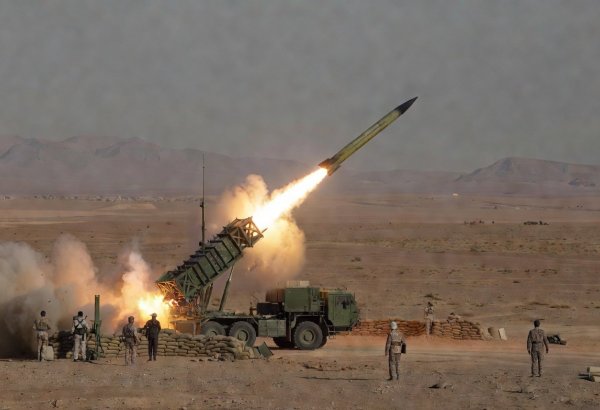
The first sounds came in the early afternoon of February 28. Low thuds rolled across Abu Dhabi, then Dubai, interceptions lighting the sky in brief, silent flashes. Iran’s retaliatory barrages, launched in response to the US-Israeli campaign that had begun earlier that month, sought out aviation corridors, port facilities, and the discreet data centres that now underpin so much of the world’s trade and computation.
Across the Gulf, the escalation unfolded with unusual breadth. For the first time, all six GCC states faced direct or indirect strikes, targeting US-linked assets, energy infrastructure and urban centres, pulling the region’s interconnected economies into the same moment of risk.
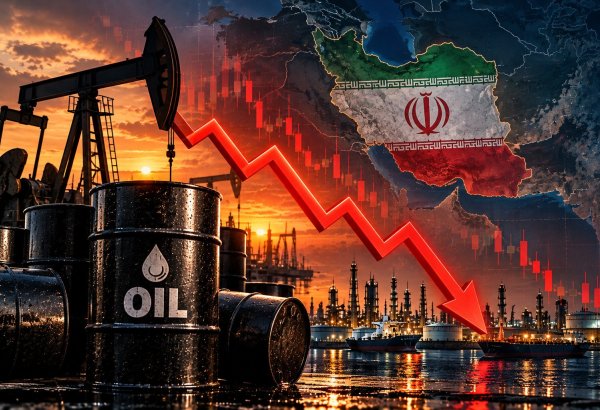
The Strait of Hormuz, that narrow passage through which flows a fifth of the planet’s seaborne oil and a substantial share of Qatar’s liquefied natural gas, became suddenly contested. For the United Arab Emirates (UAE), a nation whose modern identity rests on the free passage of people, capital, goods and ideas, the moment carried something closer to an existential weight.
The shock was not confined to one market. From Riyadh’s diplomatic quarter to energy sites in eastern Saudi Arabia, and from Kuwait to Qatar, the disruption exposed just how tightly coupled the Gulf’s security and economic systems have become.
In those early days, the disruption felt intimate. Phone screens glowed in darkened bedrooms, alerts arriving in waves. Group chats accelerated into a shared, restless vigilance. Windows trembled faintly, even in the most soundproofed apartments. People listened for the next sound, the low rumble of another successful interception, the sharp crack that followed, the silence that might mean something worse.
And yet, the city did not empty.
Across the region, governments moved quickly to reassure markets and populations, emphasising continuity of operations. But nowhere was that continuity more visible than in the UAE, where the system resumed almost immediately.
Monday came and offices reopened, banks processed transactions without interruption and ports, after a brief recalibration, moved cargo again. The choreography of daily life – work, movement, consumption – reassembled itself with remarkable speed.
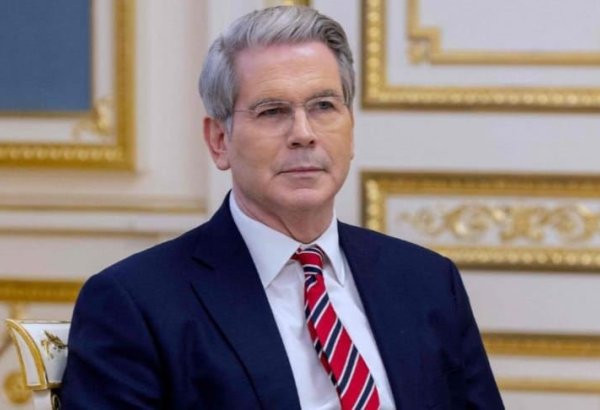
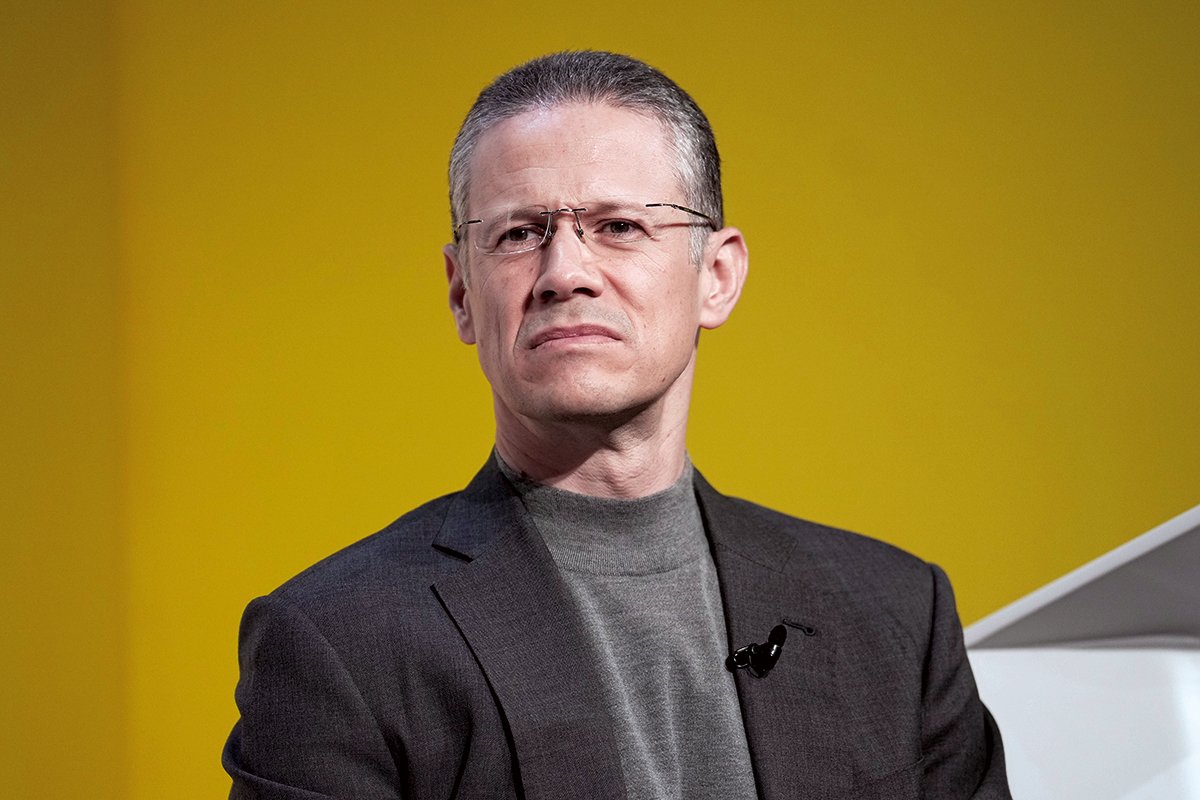
Three weeks later, Badr Jafar spoke to Arabian Business about what had happened. Jafar, special envoy to the UAE Minister of Foreign Affairs for business and philanthropy, is a calm, measured man who chooses his words with care. He does not speak of victory or defeat, but of an idea under strain.
“What is under attack is not just infrastructure,” he says, “but an idea.”
He expands on it deliberately:
“The idea is that an open, globally connected economy – built on the free movement of people, capital, and trade – can thrive in a contested region. Not just survive, but become essential to the global system.”
And then, more pointedly, he reframes the moment:
“The idea under attack is that connectivity, diversity, and institutional depth can be sources of strength rather than fragility.”
The targets themselves told the story. Strikes on aviation infrastructure, port facilities, data centres that supported artificial intelligence ambitions across three continents – these were not random acts of vengeance but attempts to sever the connective tissue of an economy that has spent more than 50 years demonstrating that openness and ambition are compatible with stability.
The UAE has grown from a $40 billion economy in 1980 to more than $500 billion today. It has absorbed the shocks of the Iran-Iraq war, the tanker war, the Iraqi invasion of Kuwait, the oil price collapse, the global financial crisis, the Arab Spring and a global pandemic. Each time, the predictions of fragility proved premature.
“Each crisis produced breathless predictions,” says Jafar. “Each time, the UAE absorbed the shock, adapted and accelerated.”
He continues, placing emphasis on intent rather than luck:
“That track record is not a coincidence. It is the product of deliberate structural choices – and those choices are more deeply embedded today than at any previous moment of stress,” he says.
“The UAE has spent fifty years building the case that openness and security are not opposites. The response to this crisis has only made that case stronger.”
Openness, he concedes, does bring exposure.
“When you are a global hub, you are visible, and visibility attracts pressure. We have felt that directly in the disruption to aviation, to tourism bookings, and to the daily routines of millions of people. I will not minimise any of that,” he says.
Yet he returns, consistently, to the same underlying logic:
“A diversified, connected economy absorbs shocks far better than a closed one.”
The data reinforces the point. Non-oil sectors now generate over 77 per cent of GDP. In 2025, financial services grew by 9 per cent, construction by 8.7 per cent, and manufacturing by 6.9 per cent. Foreign direct investment reached $45.6 billion last year, placing the UAE among the top ten globally. Thirty-five economic partnership agreements now connect it to high-growth markets. Non-oil trade exceeded AED 1.3 trillion.
Behind those figures lies institutional depth. Sovereign wealth funds managing approximately $2.5 trillion in assets, Central bank reserves exceeding AED 1 trillion and a deeply capitalised banking system.
“These data points are not representative of a fragile system,” Jafar notes. “The opposite, in fact.”
Yet the defining feature is not scale, but design.
When the Strait of Hormuz faced sustained interference, seaborne cargo was redirected to the UAE’s east coast. Khorfakkan Commercial Terminal pivoted within days and Etihad Rail was activated. A logistics system built with redundancy in mind absorbed the pressure.
“That kind of operational agility is not improvisation,” Jafar says.