
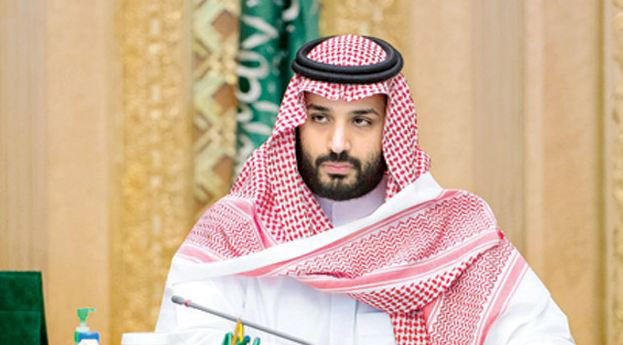
BAKU, Azerbaijan, March 14. Nine years have passed since the royal decree issued by the Custodian of the Two Holy Mosques, King Salman bin Abdulaziz, appointing Prince Mohammed bin Salman as crown prince TurkicWorld reports via aawsat.
The prince’s presence in a leadership role that reflects the pulse and ambitions of Saudi youth, alongside the guidance of the king, helped launch a domestic vision that accelerated economic and social development while strengthening Saudi Arabia’s position as a leading actor in addressing the region’s shifting landscape, in addition to expanding its global reach and influence.
Fundamental transformations
Over the years, the Kingdom has witnessed turning points marked by positive developments and fundamental transformations. These were not merely superficial changes, but efforts to shape new directions that redefine the concept of success in the 21st century. The objective extended beyond change within Saudi Arabia itself to efforts aimed at shifting the broader region from conflict toward development.
Among the latest manifestations of that approach has been work to calm several regional conflicts and create opportunities for peace. In parallel, Saudi Arabia has become an influential international destination on the global map, according to numerous studies, commentaries, and research addressing major international issues and regional transformations.
As a result, the Kingdom has hosted dozens of summits and hundreds of high-level meetings on key global issues, particularly political ones. The king and crown prince have also met a large number of world leaders, with nearly 120 visits recorded in recent years.
From an early stage, the Saudi crown prince led a drive to expand the Kingdom’s engagement with the world on multiple fronts, including economic and cultural ties. Political openness has also emerged as a defining feature of recent years, reaching levels not previously seen in Saudi Arabia or the wider region.
Many observers say that Riyadh’s policies under the leadership of Crown Prince Mohammed bin Salman in recent years have strengthened the Kingdom’s role in complex international issues and helped bring various parties to the negotiating table, including through efforts to promote peace through dialogue.
International standing
Over the past decade, Saudi Arabia has been the only Middle Eastern country to host the leaders of the United States, China and Russia within a span of just a few months, despite intensifying geopolitical tensions worldwide.
This period has been marked by a series of global crises, from the war in Ukraine and trade and economic disputes to the war in Gaza and tensions across the Middle East. The developments have positioned Saudi Arabia as a key actor influencing international policies, reflected in the scale, number and level of diplomatic visits and consultations with the Kingdom, particularly since the outbreak of the war in Gaza, as well as the international summits and meetings held on Saudi soil aimed at achieving peace.
International mediation
Saudi diplomacy has also played an active role in recent years. Under the direction of Crown Prince Mohammed bin Salman, who also serves as prime minister, the Kingdom hosted US-Ukrainian talks as part of efforts to address the crisis, drawing on its balanced relations with various parties.
These efforts also included meetings in Diriyah and Jeddah last year involving the United States, Russia and Ukraine. The initiatives reflect an increasingly international orientation in Saudi foreign policy centered on peace efforts, ceasefires and ending wars, including continued mediation initiatives and promoting dialogue as a primary solution during the Russia-Ukraine crisis.
Saudi Arabia has also directed the provision of multiple forms of humanitarian assistance and relief support, as well as mediation efforts aimed at securing the release of prisoners.
Commenting on those efforts, Michael Mitchell, a regional spokesperson for the US State Department, previously told Asharq Al-Awsat that the world had become closer than ever to reaching a ceasefire between Russia and Ukraine following negotiations hosted by Saudi Arabia. He expressed Washington’s appreciation for the Kingdom’s role in advancing ongoing diplomatic efforts and hosting key talks, while reaffirming the US commitment to working with all relevant parties to achieve lasting peace in Ukraine.
The Palestinian issue
The Palestinian issue has witnessed diplomatic momentum described as unprecedented in decades. In recent months and years, Saudi Arabia has pushed many countries to recognize a Palestinian state, bringing the total number of recognizing states to 149, according to the Palestinian Foreign Ministry.
The Saudi crown prince has also reiterated the Kingdom’s position that normalization with Israel would not proceed without the establishment of a Palestinian state. Saudi Arabia has hosted Arab and Islamic countries in Riyadh on two consecutive occasions to unify positions and increase pressure on the international community.
The Kingdom also chaired the committee formed by the summit, led an international coalition supporting the two-state solution, and presided over an international conference on the issue in New York.
In remarks previously made to Asharq Al-Awsat, Palestinian Prime Minister Mohammad Mustafa praised what he described as “Saudi Arabia’s firm positions, which contributed to shaping international consensus toward recognizing a Palestinian state and providing all possible support, given that its realization within the framework of a two-state solution represents the foundation of peace, security and stability in the Middle East.”
Supporting Syria’s recovery
The Kingdom began expanding its support for Syria after it announced in late December 2025 that a Saudi delegation led by an adviser to the Royal Court had visited Damascus and met with Ahmad Al-Sharaa, then the “leader of the new administration” and now Syria's president.
Saudi air and land bridges continued to deliver aid to the Syrian people, alongside humanitarian, medical and development projects. By the end of last year, those projects had increased by more than 100 percent compared with 2024, reaching more than 103 initiatives with a total cost approaching $100 million.
Saudi Arabia also welcomed Syrian President Ahmad Al-Sharaa three times during the year. The Kingdom pushed for the lifting of US sanctions on Syria, which the US president announced from Riyadh in May at the request of Crown Prince Mohammed bin Salman.
Additional support included paying roughly $15 million in Syrian debt to the World Bank and covering part of Syrian government employees’ salaries through a joint initiative with Qatar and the United Nations.
Regional initiatives
Saudi diplomatic initiatives have also extended to multiple regional crises. These include efforts to end the Yemeni crisis and hosting Yemeni parties, including southern groups, while facilitating the first consultative meeting on the southern issue and providing a framework for dialogue on the matter this year.
Saudi Arabia also supported evacuation operations in Sudan, hosted the Jeddah platform on Sudan, and continued humanitarian assistance. More recently, high-level Saudi-US discussions led by the Saudi crown prince and the US president have focused on efforts to resolve the Sudanese crisis.
Summits and consensus
Alongside its expanding regional and international role, Saudi Arabia has also played a significant role on the Arab and Islamic fronts during the nine years since Crown Prince Mohammed bin Salman assumed his position.
Under his direction, the Kingdom hosted seven Arab and Islamic summits between 2018 and 2024. These included the Dhahran Arab Summit in April 2018, the Makkah Summit in Support of Jordan in June 2018, the Emergency Arab Summit in Makkah in May 2019, the Arab-China Summit in December 2022, the Jeddah Arab Summit in May 2023, the Joint Arab-Islamic Extraordinary Summit in November 2023, and a follow-up summit in November 2024.
Last year, Saudi Arabia also strengthened its defense and strategic capabilities through a defense agreement with Pakistan stipulating that any attack on either country would be considered an attack on both. The Kingdom also signed a defense agreement with Washington during a historic visit to the United States in November 2025, in addition to expanding cooperation with major international powers including China, Russia and European countries.
“A great dawn” in relations with the United States
US President Donald Trump praised the leadership of the Saudi crown prince, saying, “The Saudi crown prince best represents our strong allies,” and adding that “a great dawn” awaits the Middle East.
Trump also described Saudi Arabia as “the heart and center of the world,” and said Riyadh was on track to become a global business hub.
During the crown prince’s visit to Washington late last year, the two countries signed a wide-ranging package of agreements that included a strategic defense agreement, the Kingdom’s second defense agreement signed in 2025, along with a package of defense sales, cooperation in civilian nuclear energy, a strategic partnership in artificial intelligence, a framework for securing supply chains for uranium and minerals, and measures to accelerate investment.
The US president also announced the designation of Saudi Arabia as a major non-NATO ally and praised Saudi negotiating capabilities, describing the Saudis as “great negotiators.”