






BAKU, Azerbaijan, March 17. The cost of urban infrastructure and the management of rapid megacity growth will be among the key topics of the World Urban Forum (WUF13), which will be held in Baku on May 17-22, 2026. Against this backdrop, the New Tashkent project in Uzbekistan is seen as one of the largest examples of building a new urban center amid accelerating urbanization and increasing pressure on existing capital infrastructure.
According to official forecasts, Tashkent’s population may grow by about 25% by 2035 and approach 4 million people, which would secure its status as the largest city in Central Asia. The expansion of the capital is already accompanied by rising pressure on transport systems, utilities, energy supply, and the housing market, limiting the possibilities for further development within existing infrastructure and making the creation of a new urban center more necessary.
Data from Uzbekistan’s National Statistics Committee show that urbanization in the country continues to accelerate. By mid-2025, more than 19.3 million people, or about 51% of the population, lived in urban areas, while around 18.6 million lived in rural areas. Tashkent remains the main center of attraction. With an official population of about 3.1 million, the actual number of people in the capital may be 30–35% higher on a daily basis due to students and internal migration, increasing pressure on roads, housing, energy, and social infrastructure.
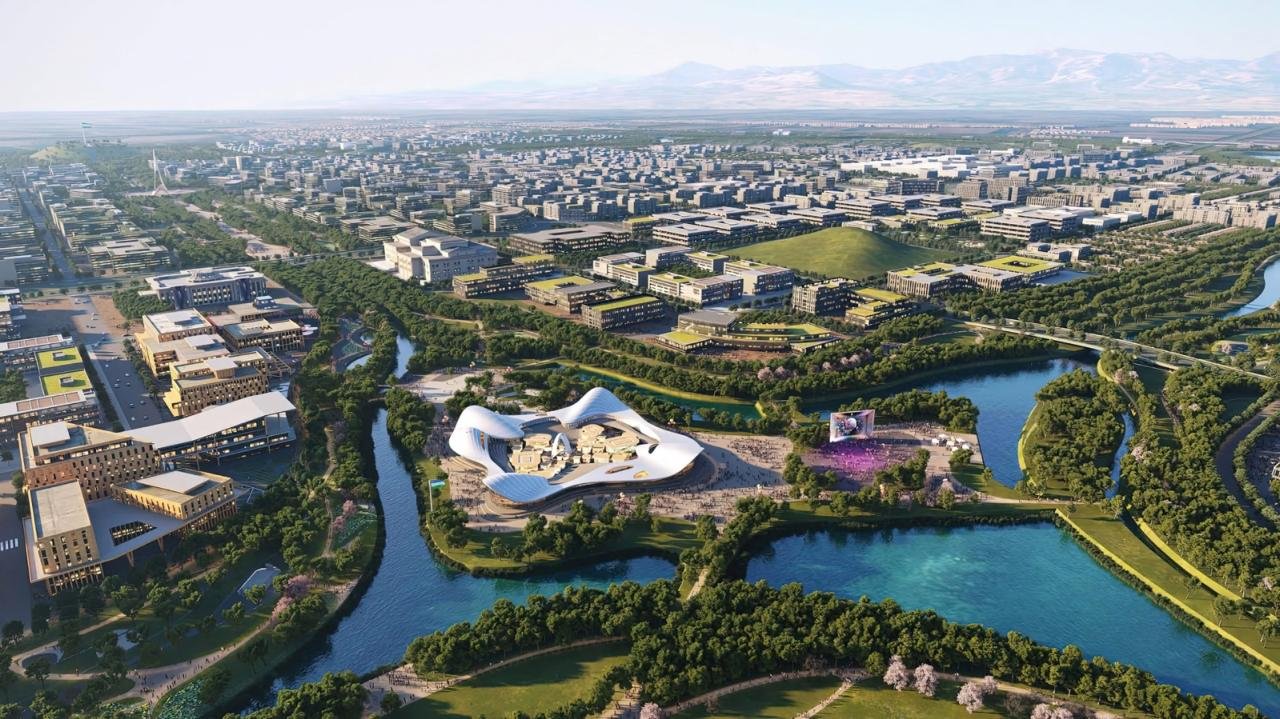
In these conditions, the authorities are implementing the New Tashkent project, which is expected to form a new administrative and business core of the capital and ensure a transition to a polycentric model of urban development. About 19,700 hectares have been allocated for the project, with the first phase covering around 6,000 hectares, while in the long term the new city is designed for approximately 2 million residents. The scale of construction requires the creation of new transport, utility, and energy infrastructure, making the project significantly more expensive than expanding existing urban areas.
The financial burden is further increased by the fact that the project largely relies on investment. The updated master plan of Tashkent includes dozens of major projects worth more than $16 billion in total, while agreements worth billions of dollars have already been signed for several facilities in New Tashkent. Authorities expect that the development of new districts will increase the gross regional product of the capital and create hundreds of thousands of jobs, but such projects require long-term financing and a stable inflow of capital. The speed of approvals, access to land plots, and connection to infrastructure directly affect investor interest and construction timelines. Since the project depends on private and foreign investment, reducing administrative barriers becomes a factor not only of reform but also of overall project cost.
Another risk is rising prices in the construction sector. Higher costs of materials, energy resources, and utilities increase the price of infrastructure projects, especially when roads, networks, power systems, and housing are built simultaneously. The longer the construction cycle, the higher the risk of exceeding initial estimates.
According to UN estimates, about 68% of the world’s population will live in cities by 2050, and many countries are moving toward building new urban centers instead of expanding overloaded megacities. Issues of financing urbanization, attracting investment, and reducing infrastructure costs will be central themes of WUF13 in Baku, where large-scale projects such as New Tashkent are viewed as part of the global trend toward planned urban development.
The scale of New Tashkent makes it not only one of the most ambitious projects in the region, but also a test of the country’s ability to manage urbanization, investment, and infrastructure costs at the same time. The success of the project will depend on whether Uzbekistan can contain rising expenses, maintain investor interest, and ensure development rates that match the capital’s demographic growth.