






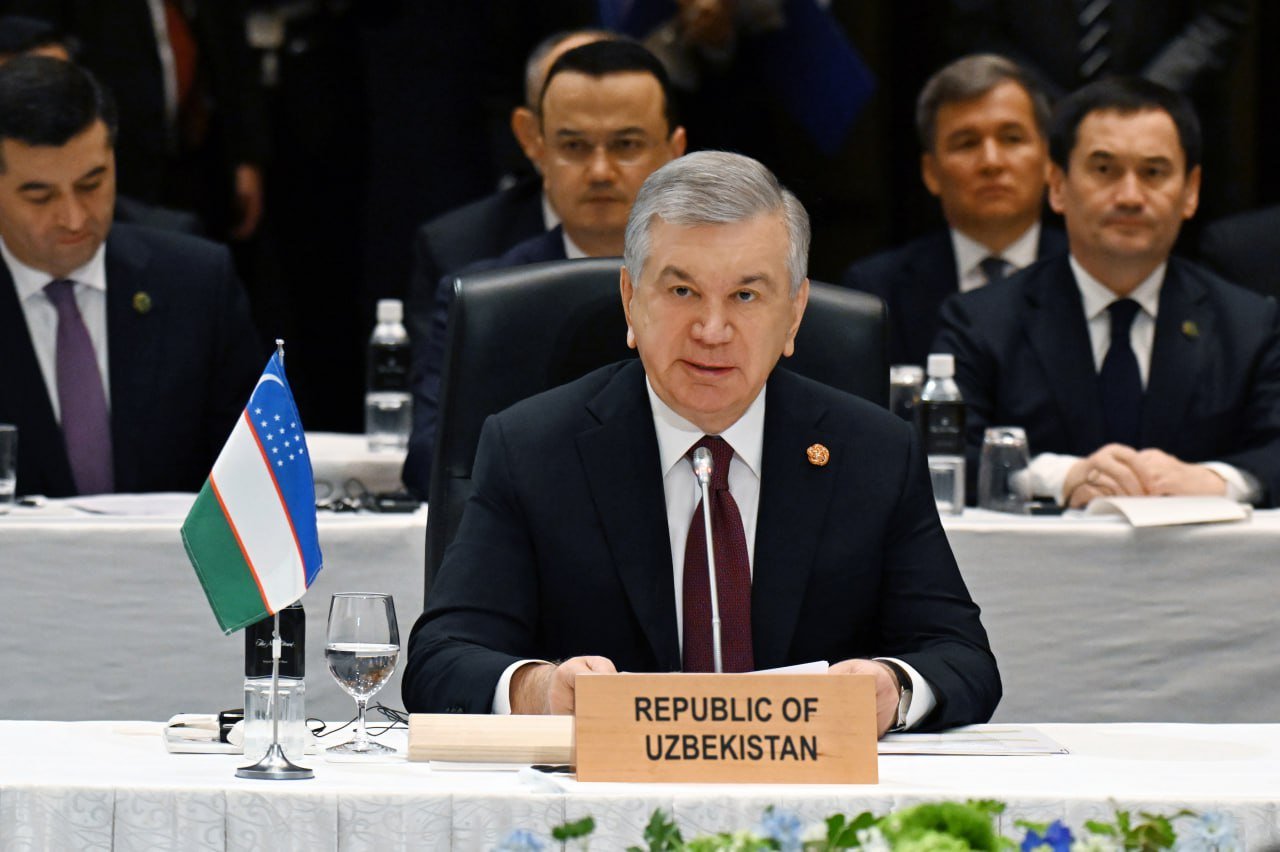
BAKU, Azerbaijan, December 20. President of Uzbekistan Shavkat Mirziyoyev proposed joint development of concrete projects between Central Asia and Japan for energy transition and renewable energy, including efficient thermal power plants, solar and wind facilities, cogeneration technologies, emission reduction and carbon capture systems, and announced plans to establish a regional center in Tashkent for training specialists in renewable energy, TurkicWorld reports via the president’s press service.
The statement was made on December 20 at the inaugural “Central Asia + Japan” Summit in Tokyo. Uzbekistan’s President Shavkat Mirziyoyev highlighted Japan’s leadership in achieving net-zero carbon emissions and outlined Uzbekistan’s own aims to reduce carbon emissions by 50% by 2035 and increase the share of green energy in total generation to 54% by 2030.
He emphasized the importance of strengthening cooperation under the regional “Green Agenda for Central Asia,” aligned with Japan’s “Green Transformation” initiative. Uzbekistan suggested launching a joint program to improve air quality in the region, adopting advanced monitoring, filtration, and emission reduction solutions, as well as a joint action plan to combat climate change, protect the environment, address ecological issues in the Aral Sea region, and implement water-saving technologies.
Additionally, President Mirziyoyev put forth a proposition for the establishment of an innovative meeting paradigm within the dialogue framework, specifically targeting the leadership of environmental agencies to bolster synergistic efforts in regional environmental stewardship.
Mirziyoyev is currently on an official visit to Japan, which runs from December 18 through 20. During this visit, he will participate in the inaugural summit of the Heads of State of the Central Asia + Japan Dialogue. The summit will explore avenues for cooperation in several critical areas, including the green economy, sustainable development, regional interconnectivity, fostering partnerships, and advancing human capital development.