

Bakı,TurkicWorld
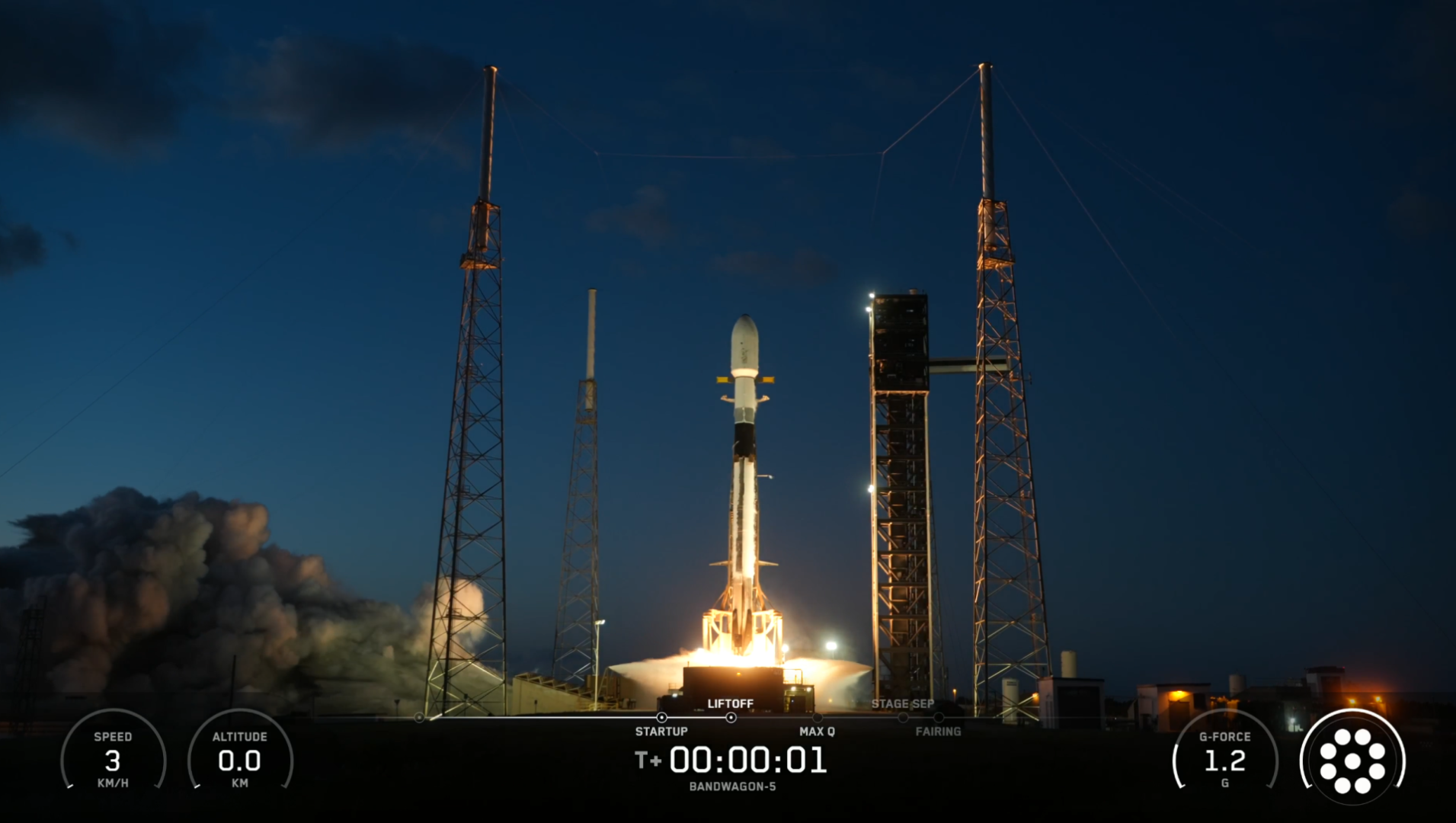
FRG-100D4, the sixth test satellite developed by Fergani Space entirely with indigenous means, has reached space. The 160 kg next-generation indigenous satellite, equipped with communications and navigation capabilities, settled into its orbit and began its mission. Fergani Space Technologies, founded by Baykar Chairman and CTO Selçuk Bayraktar, launched FRG-100D4, its sixth test satellite developed with indigenous engineering capability, into space from Cape Canaveral Space Force Station in the United States at 2:04 p.m. (Türkiye time) on October 20, 2026. Launched as part of SpaceX's Bandwagon-5 mission, the satellite successfully separated from the launch vehicle approximately 63 minutes after launch, at 3:07 p.m. (Türkiye time), and settled into its target orbit at an altitude of 590 km. NEW INDIGENOUS HARDWARE ON THE SATELLITE Compared to the satellites previously launched by Fergani, FRG-100D4 represents a significant development with the technological innovations it incorporates. Critical components developed entirely indigenously in-house at Fergani were used on the satellite, such as a reaction wheel, magnetorquer, magnetometer, IMU, GNSS receiver, steerable solar panels, battery pack, regenerative modem, and phased-array antenna. In addition, the satellite houses an AI-assisted computer for advanced missions. Validating in space this indigenous avionics equipment developed by Fergani engineers, and building space heritage for these technologies, is important for Türkiye's full independence in space technologies. A NEW PHASE IN THE ULUĞ BEY SATELLITE CONSTELLATION PROJECT FRG-100D4, the satellite with the highest power generation capacity developed by Fergani, marks a very important stage in terms of the localization of equipment and subsystems. With a mass of 160 kg, the FRG-100D4 satellite was launched into space today, with its higher localization-rate equipment and enhanced navigation and broadband communications payloads, as the most important step toward realizing the Uluğ Bey Satellite Constellation System. Fergani Space aims to complete the Uluğ Bey Satellite Constellation System, which will consist of more than 200 satellites, entirely with its own resources within the next five years. Once this satellite constellation system is in place, Türkiye will have its own independent navigation and communications network and will be able to share this critical capability with friendly and kindred nations. While the constellation satellites are being completed, development work on the indigenous launch vehicle is also continuing. SIX SPACECRAFT IN TWO YEARS Fergani Space, which has launched its sixth satellite into space with FRG-100D4, continues to consolidate its role in space through the work carried out since early 2025. Fergani's space journey began with the launch of FGN-100-D1, the first satellite in the series, in January 2025, and FGN-100-D2 subsequently took its place in orbit on November 2, 2025. This was followed on November 28, 2025, by the launch of the Orbital Transfer Vehicle (FGN-TUG-S01), equipped with a hybrid propulsion system. FGN-TUG-S01, which performed its first orbit-raising maneuver in space with its innovative hybrid engine technology and successfully deployed the FRG-10D1 CubeSat it carried, marked an important step for Türkiye's in-space logistics capability. FGN-100-D3, the fifth spacecraft developed by Fergani, was launched into space on March 29, 2026.