BAKU, Azerbaijan, December 19. In recent years, Azerbaijan has been actively strengthening its position on the international stage, demonstrating a commitment to expanding economic, political, and cultural ties. Particular attention has been paid to the Middle East and the Persian Gulf, where Azerbaijan has established itself as a reliable partner and important regional player, TurkicWorld reports via AZERTAC.
The focus is not only on energy cooperation, but also on joint initiatives in technology, transport, tourism, and education, as well as the development of strategic partnerships that will open new horizons for cooperation. In this context, President Ilham Aliyev's visits to the United Arab Emirates, the launch of strategic programs, and participation in international events such as the Future Games 2025 take on particular significance. They demonstrate not only the personal diplomatic ties between the leaders but also Azerbaijan's broader strategy to strengthen its role in global politics, economics, and regional security.
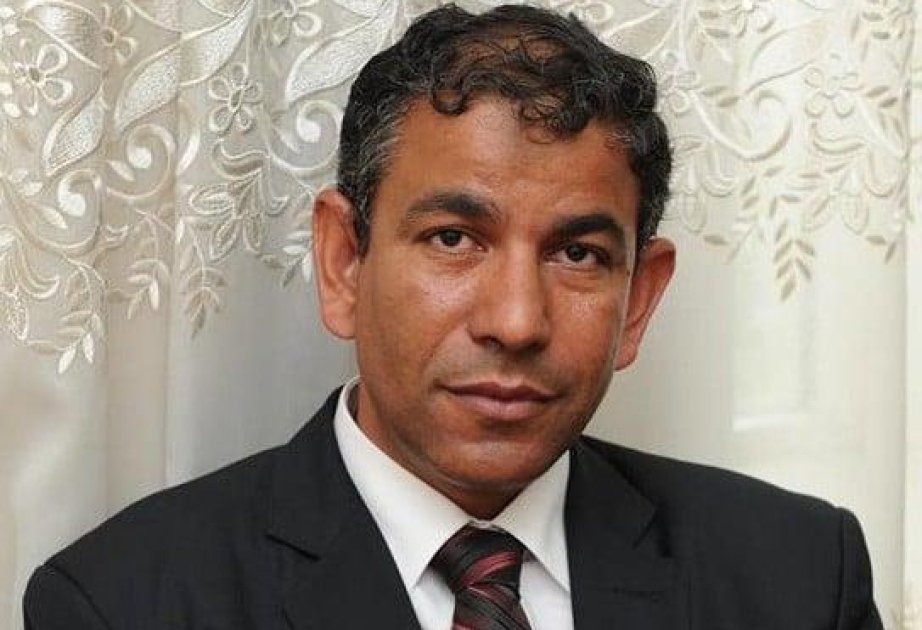
TurkicWorld presents interview with Egyptian expert and researcher on Central Asian and Caucasus issues, Ahmed Abdoh Tarabeik.
-How do you assess the importance of Azerbaijani President Ilham Aliyev's visit to the United Arab Emirates in the current regional and global context? Does this visit signal a deepening of the strategic dialogue between Baku and Abu Dhabi?
-Relations between Azerbaijan and the United Arab Emirates have witnessed increasing growth in recent years. This growth in cooperation reflects Azerbaijan's proactive efforts to strengthen its ties on both the regional and international stages. With its economic, political, cultural, and military weight, Azerbaijan has gained significant respect in the Middle East and the Gulf region. The UAE is a regionally active country, and therefore, the rapprochement between Azerbaijan and the UAE contributes significantly to the development of Arab-Azerbaijani relations.
With the development of relations between Azerbaijan and the UAE, the two countries took significant steps to enhance their ties by establishing a comprehensive strategic partnership last September. This partnership is expected to actively, effectively, and robustly develop cooperation between the two countries in various fields. On the other hand, the increased frequency of visits between the two countries' presidents, to and from Baku and Abu Dhabi, strongly reflects the close relationship between Presidents Ilham Aliyev and Mohammed bin Zayed. These visits are now occurring at close intervals, demonstrating the importance of consultation and discussion between the two countries on various regional and international issues.
-Why are relations between Azerbaijan and the United Arab Emirates particularly important at present? What geopolitical factors contribute to this?
-During President Ilham Aliyev's visit to Abu Dhabi in September 2025, President Aliyev and Mohammed bin Zayed announced the launch of a comprehensive strategic partnership aimed at elevating bilateral relations to broader horizons of cooperation and joint action, serving mutual interests and strengthening the development priorities of both countries. The two presidents witnessed the signing of a number of memoranda of understanding covering the fields of transport, energy, tourism, media, justice, and labor, in addition to container ship construction and the establishment of the UAE-Azerbaijan Business Council. A cooperation agreement was also signed between Abu Dhabi Holding and Azerbaijan Investment Holding, along with exploring opportunities in renewable energy projects and developing AI-based educational solutions. A memorandum of understanding was also signed regarding the implementation of Azerbaijan's Artificial Intelligence Strategy 2025-2028.
Azerbaijan and the Gulf States, and the Arab world in general, and the UAE in particular, share many strategic and vital interests. These include common political and economic areas such as energy, artificial intelligence, tourism, modern technologies, and the digital economy, peace in the Middle East and the Caucasus, and coordination within international organizations.
-Can we speak of forming a sustainable political partnership between Azerbaijan and -the leading Gulf States?
-There is a significant similarity between Azerbaijan and the Gulf States in their economic structures. Both rely on oil and natural gas as the backbone of their economies. Furthermore, Azerbaijan and the Gulf States share similar orientations and a continuous effort to shift from an oil- and gas-dependent economic model to green energy, diversification through tourism, modern technologies, the digital economy, and other sectors. Azerbaijan and the United Arab Emirates launched a comprehensive strategic partnership last September. This partnership is expected to enhance relations between Azerbaijan and the other member states of the Gulf Cooperation Council (GCC), particularly given existing agreements between the UAE and other GCC countries that grant Azerbaijan, as a strategic partner of the UAE, the same status as other GCC members. Furthermore, this strategic partnership between Azerbaijan and the UAE is likely to encourage other GCC member states, especially Saudi Arabia, Qatar, and Oman, to establish similar strategic partnerships with Azerbaijan.
-How is Azerbaijan perceived in the Arab world today- as an energy partner, a transit hub, or an independent geopolitical player?
-Azerbaijan has strong historical ties with the Arab world, and these relations have developed further since Azerbaijan's independence from the Soviet Union in 1991. Azerbaijan has sought to restore its ties and its Eastern Islamic identity, leading to close cooperation between Azerbaijan and Arab states within international organizations, most notably the United Nations and the Organization of Islamic Cooperation (OIC). This proactive approach has earned Azerbaijan the trust of major Islamic countries and its membership in the D-8 group. President Ilham Aliyev participated in the group's summit in Cairo in December 2014, aiming to strengthen economic and trade cooperation among member states (Bangladesh, Egypt, Indonesia, Iran, Malaysia, Nigeria, Pakistan, and Türkiye), thus expanding the prospects for development and exchange among developing Islamic countries. Following the 2020 Garabagh War and the liberation of its territories, Azerbaijan entered a new phase in its modern history. The world began to view Azerbaijan as a powerful nation capable of achieving its national interests, promoting peace in the Caucasus, and playing an active and influential regional role. Azerbaijan has become a key player in the energy sector, thanks to the giant SOCAR company, which now competes with global energy companies. SOCAR has begun to establish relationships beyond the Caucasus region, signing a partnership and cooperation agreement with the East Mediterranean Gas Company. This agreement positions SOCAR as an active partner in the gas sector of a crucial region of the world, both in terms of production and consumption, given that Azerbaijan is the world's largest energy market.
Azerbaijan's active role in Africa has also become prominent in recent years, encompassing political, economic, and even military spheres. Azerbaijan signed a military cooperation agreement with Djibouti in the field of military manufacturing. Djibouti is a key country in East Africa, particularly due to its strategic location in the Horn of Africa at the Bab el-Mandeb Strait, between the Red Sea and the Indian Ocean. This highlights Azerbaijan's significant geopolitical role not only in the Caucasus region but also in the Middle East and Africa.
-Is the presence of the leaders of Azerbaijan and the United Arab Emirates at the opening ceremony of the Future Games 2025 a symbolic gesture or an element of a well-thought-out soft power strategy? To what extent have international sporting and technological events become a diplomatic tool for countries in the Middle East and Eurasia?
-Presidents and leaders participate in sporting, technological, and other globally popular events as a sign of appreciation and respect for the host and organizing countries. It also demonstrates the bonds of friendship, appreciation, and respect that exist between leaders, transcending routine official relations and protocols. Therefore, President Ilham Aliyev's acceptance of the invitation from UAE President Mohammed bin Zayed to participate in the opening ceremony of the Future Games 2025 is a testament to the strong friendship and respect between the two leaders. These positive relations have a significant positive impact on all aspects of cooperation between the two countries. On the other hand, these major sporting events have had a significant impact on bolstering a country's economic relations. We witnessed the positive impact of Azerbaijan's hosting of such large-scale events when it organized the European Games ten years ago in 2015, and the Islamic Solidarity Games in 2017. These events significantly enhanced Azerbaijan's soft power, promoted its tourist destinations and attractions, and encouraged investment across various economic sectors. In recent years, Azerbaijan has been actively striving to become a key player on the regional and international stage. Tourism, economy, energy, sports, and industry are among the most important tools for promoting Azerbaijan politically, economically, and even militarily.