

Islam El Mansy PhD researcher specializing in international affairs /Future for Advanced Research and Studies (FARAS)
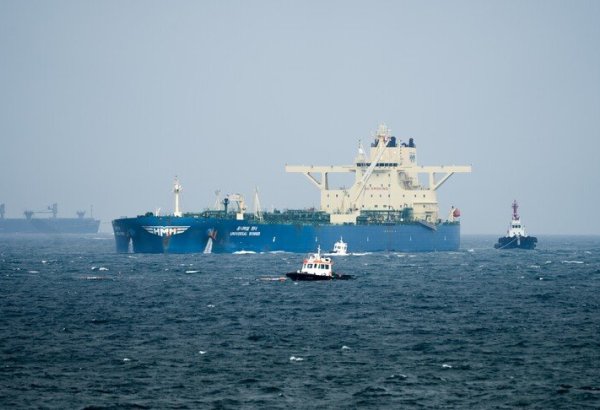
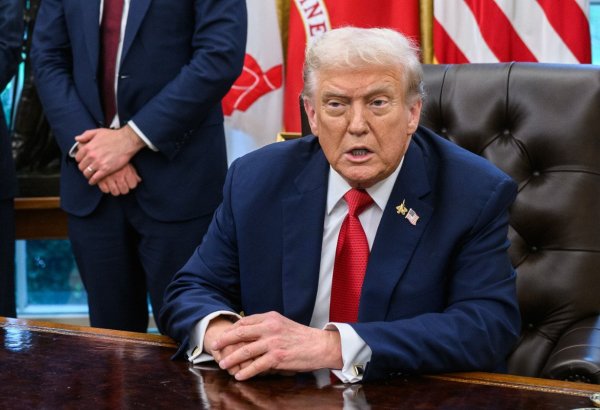
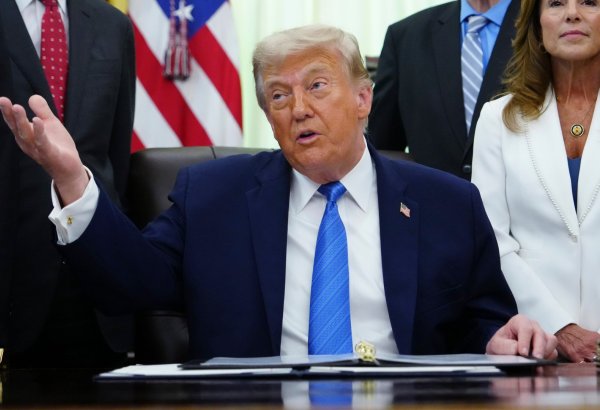
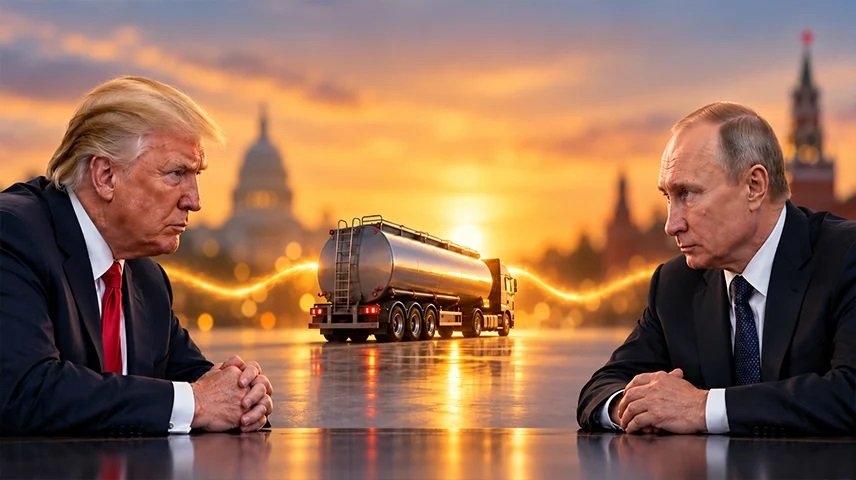
Less than a month after signing legislation that expanded sanctions on Russia to curb the resources financing its war in Ukraine, U.S. President Donald Trump announced on October 9, 2026, that he had reached an agreement with Russian President Vladimir Putin to increase diesel supplies to American and global markets. According to Trump, Russia would immediately supply more than 300,000 tons of diesel, followed by 500,000 tons in November, a further one million tons immediately afterward, and another three million tons shortly thereafter. On October 16, he went further, issuing an executive order exempting Russia from a range of sanctions and tariffs stipulated in the very legislation he had signed in September.
Washington’s shift in stance toward Moscow has raised questions about the deal’s significance and motives, its implications for the United States, Russia, and other international actors, and the course it is likely to take.
What the Deal Signals:
The diesel deal, and the developments surrounding it, carry several political and strategic signals, the most notable of which are the following:
1. Eroding credibility of U.S. commitments to allies: The deal can be read as a sign that the administration is placing its immediate economic interests ahead of some of its commitments to traditional allies. Although the agreement is limited in scope, its political implications extend well beyond energy and may shake European and Ukrainian confidence in the consistency of Washington’s stance toward Moscow.
Nor are the potential repercussions confined to Europe. Allies in Asia and elsewhere may also begin to reassess how firmly Washington will stand by its commitments in a crisis. The deal also shows how heavily domestic concerns, energy markets, and relations with Russia weigh in the Trump administration’s calculations. It comes, moreover, on the heels of the temporary suspension of some sanctions on Russian oil exports in March 2026, after war broke out with Iran.
2. Diminishing effectiveness of sanctions: The deal exposes the limits of economic sanctions as an instrument of pressure and deterrence, revealing Washington’s willingness to bend certain restrictions when they collide with its direct economic interests. Sanctions may thus shift from a fixed pressure tool into a bargaining chip governed by cost-benefit calculations, which could weaken their future capacity to isolate geopolitical adversaries or compel them to change course.
3. Growing weight of personal ties in international decision-making: The deal underscores the role of the personal relationship between Trump and Putin in opening direct channels of communication. In this respect, it is consistent with the administration’s tendency to handle international issues through personal contacts, sometimes at the expense of traditional institutional channels.
Washington’s Motives:
Several motives lie behind the U.S. decision to conclude the diesel deal with Russia, chief among them:
1. Easing energy prices ahead of the midterm elections: President Trump is seeking to reverse the Republican Party’s declining popularity ahead of the congressional midterm elections on November 3, which will determine whether the party retains control of both chambers. All House seats and roughly one-third of Senate seats are up for election, and polls suggest Republicans could lose their majority in one of them.
Trump hopes to sway voters by showing that he can tackle high fuel prices, one of the most pressing cost-of-living concerns. On October 12, the average U.S. retail price of diesel stood at about $6.18 per gallon, compared with roughly $3.50 before the fuel crisis triggered by the war with Iran. Polls also show that most Americans disapprove of his economic policies.
2. Tactical de-escalation with Moscow: Through the deal, Washington seeks to build understanding with Moscow and use bilateral contacts to advance negotiations on a number of issues. According to Reuters, Trump’s envoys told Ukrainian officials that the agreement allowing Russian diesel exports was part of an effort to bring Russia back to the trilateral talks and soften its negotiating position.
Any resulting understandings may extend beyond Ukraine to other issues the administration wants to resolve, such as Iran. Along these lines, Kirill Dmitriev, the Russian president’s special representative for investment and economic cooperation, said the diesel agreement could pave the way for broader economic cooperation between Moscow and Washington.
3. Diverting attention from the Strait of Hormuz crisis: Trump may also be trying to play down the role that tensions in the Strait of Hormuz and the war with Iran, a war that faces opposition at home, have played in driving up fuel prices. At the same time, he appears to be shifting part of the blame for market turmoil onto Ukrainian attacks on Russian energy facilities.
Trump has argued that Ukrainian strikes are pushing up global fuel prices, even though numerous estimates point to the war with Iran as the main driver of the steep increase. A BBC analysis published on October 12 found that while the conflict in Ukraine had significantly reduced global diesel exports, the drop in Middle Eastern supplies caused by the war with Iran had a greater impact.
Moscow’s Objectives:
Russia, for its part, is pursuing several aims through the diesel agreement with the Trump administration:
1. Undermining the credibility of sanctions: Coming shortly after the U.S. sanctions legislation was enacted, the deal opens a potential breach in the Western system of restrictions on Russia. Moscow can exploit it to show that global markets, the United States included, find it hard to do without Russian energy.
The move may also encourage other international actors to follow Washington’s lead and loosen their adherence to restrictions on dealing with Russia. Against this backdrop, Moscow is seeking to turn its refining capacity into political leverage, casting the agreement as a diplomatic breakthrough it can use to weaken efforts to isolate it and to highlight the limits of Western sanctions.
2. Deepening rifts within the Western camp: Moscow is well aware that a separate deal with Washington is likely to anger European allies and sharpen Western disagreements over how to handle Russia, playing into Putin’s efforts to exploit differences between the United States and the European Union and to deepen divisions within NATO. Indeed, European officials criticized Washington soon after the deal was announced, citing its potential consequences for sanctions policy and Western support for Ukraine.
3. Easing Russia’s refined-fuel crisis: Moscow may use the agreement to relieve pressure on its refined products sector, including diesel, which has been strained by repeated Ukrainian attacks on refineries. If the understandings tied to the deal are implemented, particularly limits on strikes against Russian energy facilities, Moscow may be able to restart some idle refineries and shield others from fresh attacks.
Drone attacks have deepened the fuel crisis inside Russia, prompting the authorities to restrict gasoline and diesel exports and even to import some petroleum products to ease shortages over the summer, when domestic consumption usually rises. Despite repair efforts, the continued attacks have reduced available supplies.
4. Securing quick revenue: The deal could bring additional revenue into the Russian treasury at a time of mounting economic pressure from the war in Ukraine and the Western sanctions that accompanied it. Before attacks on refineries escalated in 2024, Russia was able to export around 100,000 tons of diesel a day, a measure of how much the sector matters to its revenues.
Following the agreement, diesel loadings resumed at the Baltic port of Primorsk. Deputy Prime Minister Alexander Novak announced that Russia, having partially lifted its ban on diesel exports on October 10, would be able to raise exports to between 3 million and 3.5 million tons per month by the end of the year.
Far-Reaching Repercussions:
The agreement between Washington and Moscow could carry political and economic repercussions at home and abroad, most notably:
1. Domestic backlash in the United States: The agreement drew criticism from Democrats and from some Republican hawks on Russia. Senate Democratic Leader Chuck Schumer and Democratic Senators Jeanne Shaheen and Elizabeth Warren described Trump’s announcement as a “betrayal.” On October 11, a bipartisan group of lawmakers issued a statement recalling that Congress had banned Russian energy imports in 2022 to keep American money from financing Russia’s war on Ukraine.
Democratic Senator Richard Blumenthal accused Trump of making Americans complicit in funding the war, pointing to the Russia and Iran Sanctions Act of 2026. Signed by Trump on September 18 and rooted in an initiative by the late Republican Senator Lindsey Graham, the law authorizes broader sanctions on Moscow.
2. Friction between Washington and its allies: The agreement heightened European fears that Washington is softening its stance on Moscow and added to tensions in U.S.-Ukrainian relations. Ukrainian President Volodymyr Zelensky called the deal a “weak decision” by the United States and “a gift to Putin.” Trump, in turn, criticized Zelensky, saying he could have ended the war many times and that Ukrainians needed to elect a new president. The exchange points to widening differences between the two sides over the conduct of the war and the terms of a settlement.
3. Domestic gains for Putin: The agreement may give Moscow a respite from Ukrainian attacks on its refineries, especially given the Trump administration’s pressure on Kyiv to stop targeting Russian energy facilities. While it may bring no direct military gains, it could help ease economic and social pressures and bolster public confidence in the Russian state’s ability to manage crises and secure international understandings that serve its interests.
4. Limited impact on global energy markets: Expecting the deal to transform global energy markets would be an overstatement, given how small the announced volumes are relative to U.S. and global demand. Its direct effect on prices is therefore likely to remain modest, particularly if supply disruptions from the Middle East persist.
Possible Scenarios:
Three main scenarios can be envisaged for the future of the U.S.-Russian diesel deal:
1. The deal holds and de-escalation broadens: Under this scenario, U.S. pressure succeeds in getting Kyiv to halt strikes on Russian refineries, diesel shipments flow regularly, and price pressures ease as a result. Facing criticism and legal objections, Trump has since clarified that other countries, rather than the United States itself, would buy Russian diesel under the agreement so as not to violate U.S. sanctions. The statement amounts to a revision, or at least a clarification, of his earlier remarks.
Washington’s threats to withhold intelligence or weapons from Ukraine if it keeps striking Russian refineries can be read as an attempt to shape energy market expectations. The administration does not necessarily intend to follow through; the aim may instead be to convince markets that steps to secure stable supplies are imminent, thereby helping to calm prices.
Even so, this scenario faces several obstacles, most notably the limited size of the deal and Putin’s insistence on his demands in Ukraine. Kyiv, for its part, refuses to cede more territory, although freezing the conflict along current front lines could form the basis of a political understanding, however difficult to achieve.
2. The deal collapses: Here, persistent political and military disputes, along with legal hurdles, prevent the agreement from being implemented. On October 11, Trump announced that Russia and Ukraine had agreed to a ceasefire covering energy facilities. The very next day, however, Russian forces struck Ukrainian energy infrastructure, and disagreements over the terms and implementation of the truce persisted, casting doubt on the prospects for broader understandings between the two sides.
The deal could also face legal challenges in the United States, where opposition to it in Congress cuts across party lines. Republican Senator Thom Tillis has argued that Trump may have violated a 2022 law banning imports of Russian oil and other energy products. Meanwhile, Republican Representative Brian Fitzpatrick is preparing to introduce a House bill, the “Ronald Reagan Peace Through Strength Act,” that would completely bar Russian crude oil, refined products, liquefied natural gas, and coal from entering the United States.
3. Partial implementation: In this scenario, Russia continues to export limited quantities of diesel without delivering all the announced volumes or having any tangible effect on global energy prices. Several factors make this outcome plausible: Russia’s refining capacity has been reduced by Ukrainian attacks, technical and logistical constraints persist, and political and legal disputes over easing sanctions continue in the United States.
Although some Russian shipments have resumed since the agreement, the scale of implementation will depend on Moscow’s ability to raise output and exports, on how the U.S. administration responds to legislative pressure and allied objections, and on developments in the war in Ukraine. Along this path, both sides could secure limited political and economic gains without necessarily reaching a broader understanding on Ukraine.
In conclusion, while the Trump–Putin diesel deal is expected to have only a modest economic impact, it highlights challenges to the credibility of U.S. commitments to allies, as domestic electoral calculations and energy market stability have taken precedence over some of Washington’s priorities toward Ukraine and Europe. The deal has also laid bare the gap between Congress’s hardline legislative approach and the White House’s pragmatic executive conduct, fueling political disputes at home and tensions with allies. Russia, meanwhile, has sought to leverage its energy capabilities to achieve a diplomatic breakthrough that eases the pressure of international isolation and gives its home front some economic and political breathing room.
Ultimately, the deal’s practical value will hinge on three factors: Russia’s technical capacity to deliver the agreed supplies while some of its energy facilities remain out of action; the extent to which U.S. lawmakers and European allies manage to obstruct or narrow the agreement; and the effect of the ongoing war in Ukraine and regional tensions on its prospects.