

Determining the fate of persons missing as a result of conflicts and ensuring the right to the truth for their families and society as a whole are among the fundamental requirements of international law. The United Nations (UN) established 30 August as the International Day of the Victims of Enforced Disappearances with the aim of drawing the attention of the international community to this issue and commemorating the thousands of missing and unidentified persons who lost their lives during wars and military operations, as well as those who were detained and held in unacknowledged places or subjected to extrajudicial killing.
The 1949 Geneva Conventions for the Protection of Victims of War, Additional Protocols, thereto and the UN International Convention for the Protection of All Persons from Enforced Disappearance set forth the obligations to take effective measures towards clarifying the fate of missing persons, keeping their families informed and uncovering the truth. The recovery and dignified burial of the remains, ensuring the rights of families to know the truth, and informing society about the events that have occurred are essential concepts of international humanitarian law (IHL).
For Azerbaijan, having endured the severe consequences of armed conflicts for many years, the issue of missing persons remains highly relevant to this day. The policy of aggression pursued for more than 30 years, as well as the First and Second Karabakh Wars resulted in thousands of families deprived of their right to know the fate of their missing loved ones, and this uncertainty has caused them prolonged emotional, psychological, and social suffering.
According to official data provided by the State Commission of the Republic of Azerbaijan on Prisoners of War, Hostages, and Missing Persons, more than 4,000 Azerbaijani citizens were registered as missing as the result of the First Karabakh War. In the period following the Second Karabakh War and the local anti-terror operation, systematic search, exhumation, forensic examination, and identification activities were carried out by the State in 32 mass graves which were found in the liberated territories. Through Forensic-DNA matching, the identities of 328 individuals have been established, while the remains of 250 individuals have been handed over to their families for burial. Efforts in this regard are currently ongoing.
Despite the conclusion of the aforementioned armed conflicts and the measures taken towards establishing peace between the two States, the fact that the fate of 3,682 Azerbaijani citizens still remains unknown once again demonstrates the need to strengthen international humanitarian cooperation in this area through more practical, prompt, and results-oriented measures. As time passes, the loss or deterioration of material evidence, the decreasing number of witnesses, and the limited availability of information complicate the process of clarifying the fate of missing persons.
Considering the ongoing peace agenda in the region, international humanitarian institutions, within their respective mandates, and the States formerly parties to the conflict, in accordance with their obligations under international law, should intensify their efforts to address this humanitarian issue by sharing information on mass graves, expanding cooperation in the fields of DNA analysis and forensic examination, and ascertaining the fate of missing persons.
I call upon international and regional organizations working in the field of human rights, as well as national human rights institutions, to approach this issue, which constitutes a humanitarian obligation of States under IHL, with particular attention to intensify efforts to ascertain the fate of missing persons and to engage in cooperation aimed at achieving practical results.
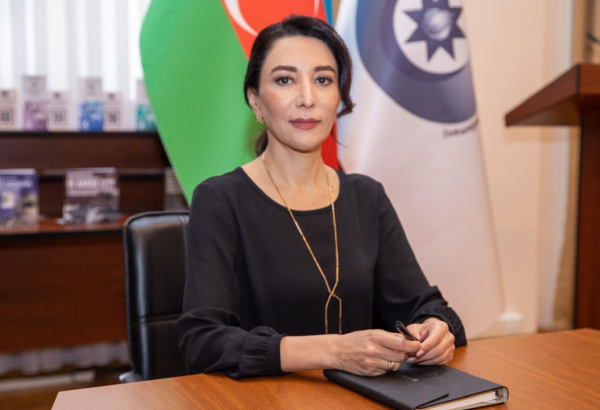
Sabina Aliyeva
The Commissioner for Human Rights
(Ombudsman)
of the Republic of Azerbaijan
29 August 2026
The Statement has been sent to the Secretary-General of the United Nations, the United Nations Security Council, the United Nations High Commissioner for Human Rights, the United Nations High Commissioner for Refugees, the United Nations Human Rights Council, the heads of UNICEF, UNESCO, the European Union, the Council of Europe and the OSCE, the International Ombudsman Institute and the European Ombudsman Institute, the Asian Ombudsman Association, the Organization of Islamic Cooperation and the Association of Ombudsmen of its Member States, the Association of Ombudsmen and National Human Rights Institutions of the Turkic States, the Independent Permanent Human Rights Commission of the Organization of Islamic Cooperation, the European Network of Ombudspersons for Children, the International Peace Bureau, ombudspersons and national human rights institutions of various countries, the embassies of the Republic of Azerbaijan abroad and the embassies of foreign countries in the Republic of Azerbaijan, as well as Azerbaijani diaspora organizations.