






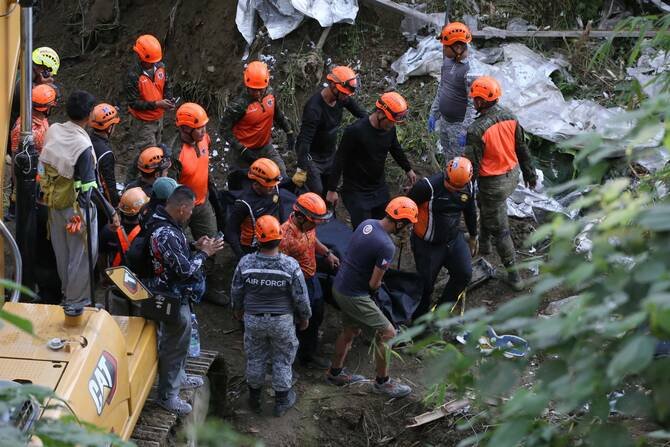
BAKU, Azerbaijan, January 11. Rescuers raced against time on Sunday to find dozens of people still missing after a deadly landfill collapse in the central Philippines, TurkicWorld reports via Arab News.
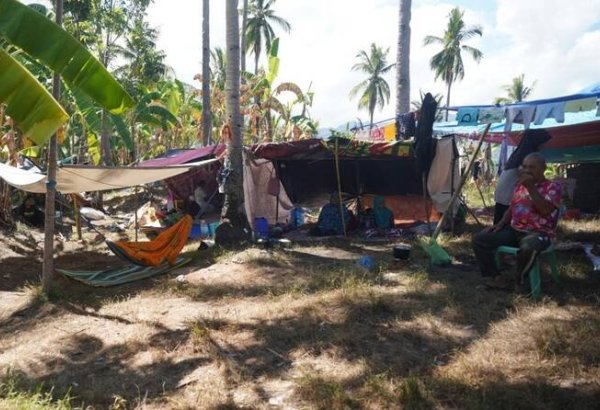
A huge mound of garbage at the 15-hectare Binaliw open landfill in Cebu City collapsed suddenly on Thursday afternoon, burying more than 100 workers and nearby structures and underneath.
The Cebu City Disaster Risk Reduction and Management Office told Arab News that as of Sunday, at least six people were dead, while 30 remained under the debris.
Only light equipment was brought to the site, and rescuers were combing through the high piles of decomposing waste manually.
“The recovery operations are ongoing. Heavy equipment cannot yet be brought into the area because the site is still unstable, and moving any structure or beam could cause the garbage mound to collapse again,” the agency said.
“We’re still hoping that there are survivors.”
While the cause of the landfill collapse remains unclear, the local government in Cebu said factors such as rain softening the soil and September’s earthquake shifting rock formations contributed to the disaster.
For environmentalists, however, it was not unexpected.
Jesse Baring, a Cebu City-based chemical engineer and environmental advocate, said it was an “accident waiting to happen.” As he compared a few months of drone imagery, he told Arab News he had observed a “big lapse on the part of the operator, as they have stockpiled the garbage as if it were on a flat land.”
Greenpeace Philippines said in a statement that the incident painted a “grim picture” of the Philippines’ “broken waste management system” and compared it to the Payatas tragedy in July 2000, when more than 200 residents died after a massive garbage dump collapsed at the Payatas dumpsite in Quezon City.
“The Ecological Solid Waste Management Act of 2000 (Republic Act No. 9003) — a law passed after the Payatas tragedy — was primarily designed to ensure waste prevention through source reduction and segregation, but enforcement has been inconsistent,” Greenpeace said.
Since 2019, when the landfill was opened, it received 600 tons of waste every day, according to data from the Movement for a Livable Cebu, which called for an independent investigation into the landfill disaster and a review of local government waste management plans.
“The residents of Barangay Binaliw have long complained and endured the stench, flies, untreated wastewater leachate, deep well water contamination and other health issues,” said Joel Lee, MLC’s executive director.
“Unless we take decisive action, we are bound to face worse consequences.”