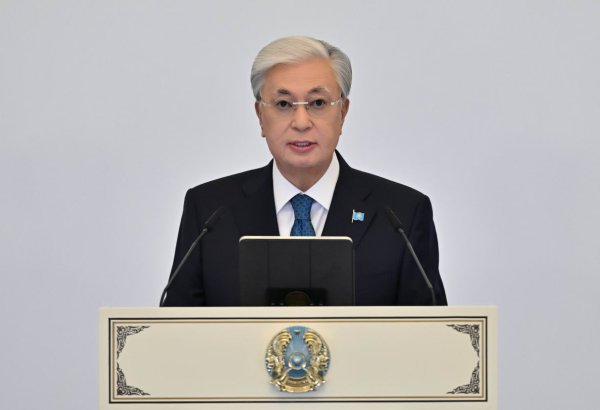







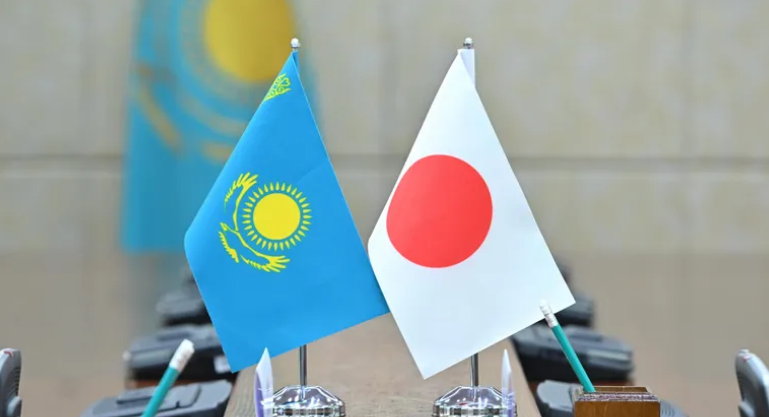
BAKU, Azerbaijan, December 17. On December 18-19, Kazakhstan’s President Kassym-Jomart Tokayev will visit Tokyo on an official visit. This will be the first visit of a head of state to Japan since 2016 and an important signal of a new phase in bilateral relations. Tokayev will also participate in the first "Central Asia + Japan" summit. Within the frame of the global "green" transition, reshaping supply chains, and growing attention to Central Asia, the dialogue between Astana and Tokyo acquires particular significance.
Japan remains one of Kazakhstan's key economic partners and is among the top ten largest investors in the country. The total volume of Japanese investments is estimated at approximately $9 billion. According to the Committee for State Revenues of the Ministry of Finance of Kazakhstan, trade turnover between the two countries in 2024 amounted to $1.8 billion. Kazakhstan’s export to Japan reached $506 million, while imports of Japanese products into Kazakhstan totaled about $1.3 billion.
Kazakhstan mainly exports metals and metal products to Japan, primarily ferroalloys, which account for over 50% of exports. Other exported goods include oil, coal, and other types of solid fuel, chemical industry products, and plant-based goods. In turn, Japan exports automobiles, trucks, special machinery, medical equipment, as well as tires and rubber products to Kazakhstan.
Over 60 Japanese companies are registered in Kazakhstan, operating in oil and gas, petrochemicals, metallurgy, mining, finance, logistics, telecommunications, medicine, agriculture, and other sectors. Large Japanese corporations, including Mitsubishi Corporation, which has been operating in Kazakhstan for over 30 years, are interested in introducing green technologies and new investment projects.
Astana, for its part, is counting on an influx of Japanese investments and technologies to develop renewable energy and modernize infrastructure. Kazakh officials have repeatedly emphasized the importance of technological partnerships with Japan.
In August 2025, Kazakhstan’s Ministry of Industry and Infrastructure Development and Japan’s Organization for Metals and Energy Security (JOGMEC) reached an agreement to further expand bilateral investment cooperation in areas such as geological exploration, mining and processing of minerals, technology transfer, value chain development for mineral resources, investment opportunities, and professional information exchange.
The visit of Japan’s Foreign Minister, Takeshi Iwai, to Astana in August 2025 gave an additional boost to bilateral relations. During a meeting with Japan’s Foreign Minister, then-Deputy Prime Minister and Foreign Minister of Kazakhstan, Murat Nurtleu, particularly emphasized the importance of developing cooperation within the "Central Asia + Japan" format.
Astana's intensifying cooperation with Japan is occurring against the backdrop of growing interest in Central Asia from major global players. The region is attracting attention due to its resources, investment potential, and its important role in international logistics. Kazakhstan plays a key role as one of the main transit countries between Asia and Europe as part of the Middle Corridor. Japan has expressed interest in supporting digitalization projects at the Aktau port.
The growing importance of Central Asia is also reflected in the development of multilateral formats. In June 2025, Astana hosted the Second "Central Asia - China" summit, while the first summit between the region and the European Union took place in April. In October, the second "Central Asia - Russia" summit was held in Dushanbe, and in early November 2025, the C5+1 summit with the participation of the United States took place.
The idea of holding the "Central Asia + Japan" summit was first proposed in 2004, and the summit was initially scheduled for 2024, but had to be canceled due to the threat of a mega earthquake in Japan. Finally, the meeting will take place and will be a historic event: Japan will join countries that have traditionally shown interest in Central Asia. This will be an important signal that Tokyo sees the region as a long-term strategic partner.
Overall, the cooperation between Kazakhstan and Japan continues to evolve, reaching a new level. It covers not only trade and investment but also long-term partnerships in technology, natural resources, and sustainable development, making it a significant element in both regional and global agendas.