






BAKU, Azerbaijan, December 20. The paradox of our modern world is that the global fight against poverty — one of humanity’s oldest and most pressing challenges — has, in the 21st century, been led not by Europe with its social-state system, nor by the U.S. with its liberal redistribution model, but by Asia. Specifically, China has delivered the world’s first fully institutionalized anti-poverty strategy — a blend of state control, market vitality, and cultural discipline.
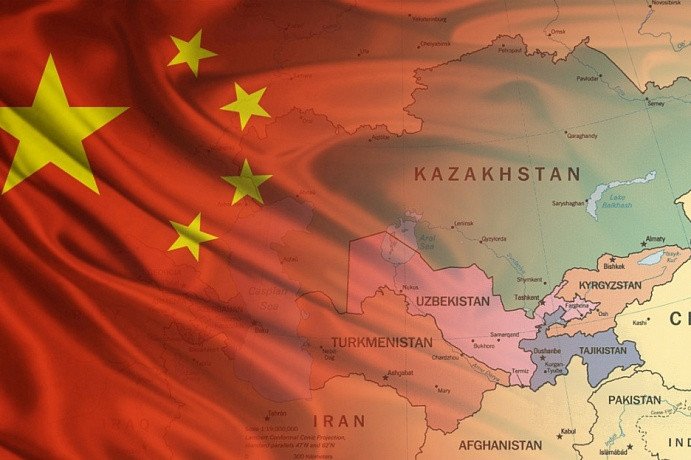
Today, Uzbekistan, Kazakhstan, Tajikistan, and Turkmenistan — each in its own way — are testing whether that experience can be adapted to their realities. The stakes go far beyond GDP growth or living standards. At the heart of the issue is a fundamental question: can a Central Asian state build a welfare society without compromising its political identity or surrendering economic sovereignty?
China has shown that poverty is not destiny — it is manageable. But is its success a universal template, or the product of a unique mix of demography, centralized authoritarianism, and centuries of bureaucratic tradition? In a region where public life hinges on balancing tradition, market dynamics, and political stability, the answer is anything but straightforward.
The Chinese Modernization Code: Discipline as Ideology
While the West built capitalism on individual incentives, China crafted its version — “state capitalism” — on collective mobilization. Deng Xiaoping's defining principle was clear: “To get rich is patriotic.” It wasn't about income equality; it was about equal opportunity within a tightly managed hierarchy.
China’s war on poverty was never framed as charity. It was a political strategy — a way to anchor the Communist Party’s legitimacy in tangible economic results. Unlike the West, where welfare is a function of redistribution, China turned it into a mechanism for social control and guided modernization.
By the mid-2020s, China had lifted more than 850 million people out of poverty. Around 70% of development spending went into infrastructure, education, and job creation — what Beijing called productive investment, as opposed to consumptive subsidies.
Five pillars defined China’s institutional design:
Centralized command with vertical accountability — directives from Beijing reached down to the village level and were non-negotiable.
Layered financing — national, provincial, and local funds worked in coordination.
Data-driven oversight — digital systems tracked progress in real time.
Enforced responsibility — officials faced consequences not just professionally, but personally.
Cultural legitimacy of labor — Confucian ideals of duty and collective success were revived and repurposed.
In short, China’s anti-poverty campaign was a civilizational reform: modernization meant discipline, and discipline became development.
China’s Economic Architecture: Three Waves of Reform
Development economists divide China’s poverty eradication effort into three distinct reform waves:
Agrarian phase (1978–1993): Dismantling communes in favor of household responsibility contracts. Rural incomes nearly quadrupled, with over 120 million people moving out of poverty.
Industrial-infrastructure phase (1994–2010): Roads, dams, and processing plants generated more than 70 million non-farm jobs, accelerating rural-to-urban transition.
Innovation-digital phase (2011–2021): Platforms like Alipay and WeChat Pay became tools for micro-lending, insurance, and welfare delivery — particularly in poor and remote areas.
Crucially, Beijing targeted inequality of access, not just inequality of income. Investments flowed into rural universities, women’s empowerment programs, and strategic internal migration.
Between 2013 and 2020, multidimensional poverty — covering health, education, housing, and access to services — plummeted from 31% to 1%.
Can Central Asia Follow Suit? Four Countries, Four Contexts
Uzbekistan: Institutional Experimentation
Since 2017, under President Shavkat Mirziyoyev, Uzbekistan has become a testing ground for adapting China’s approach. Programs like “From Poverty to Prosperity” and “100 Steps to Well-being” borrow heavily from the Chinese playbook: integrated development, job creation, and social entrepreneurship.
But unlike Beijing’s command model, Tashkent aims to strike a balance between centralization and liberalization. China relied on administrative orders; Uzbekistan emphasizes digital governance and inclusive economics. Case in point: “Inson” service centers operate as one-stop hubs — similar to China’s mass service centers, but with more democratic features.
Challenges remain: weaker enforcement capacity, smaller public budgets, and external debt pressure. Still, Uzbekistan stands out for one key asset — institutional readiness to learn.
Kazakhstan: Pragmatism Without Doctrine
Kazakhstan has chosen a path of selective adaptation — borrowing China’s pragmatism without adopting its ideological frame. The national “Unity and Development” program sets a target of reducing poverty to 5% by 2030. But rather than mobilizing society en masse, the strategy leans on expanding the middle class.
Kazakhstan’s social fabric — marked by strong urbanization, high labor migration, and individualization — is closer to Eastern Europe than to China. It can’t implement direct control. What it imports from Beijing is the infrastructure logic, not the political centralism.
The reform style is liberal, technocratic, and driven by performance metrics — not political obedience.
Tajikistan and Turkmenistan: Between Potential and Dependency
Tajikistan: Fighting Poverty Without Industrialization
Tajikistan remains the poorest country in Central Asia, with around 26% of its population living below the poverty line. Over a third of its GDP is generated by remittances from migrant workers, mainly in Russia. This makes Tajikistan’s economic model exogenous — heavily dependent on external labor markets and foreign currency inflows.
In contrast, China’s model was built on endogenous growth: expanding domestic production, infrastructure, and internal markets. Tajikistan lacks such a base — neither industrial nor financial. Even flagship energy projects like the Rogun Dam do not generate mass employment, but rather deepen dependence on foreign contractors and loans.
Still, China’s success remains appealing to Dushanbe. Beijing has been investing in Tajik agriculture and infrastructure — particularly roads linking Tajikistan with Xinjiang. These projects echo the “Belt and Road” approach, where infrastructure serves not just logistics but social integration.
Yet this raises a critical question: can a state whose legitimacy depends on foreign aid truly become a credible agent of a model that demands internal discipline? So far, the answer is no. In Tajikistan, the Chinese approach is seen less as a management system and more as a source of funds. In this relationship, Beijing isn’t a model — it’s a donor.
Turkmenistan: Authoritarianism Without Reform
At first glance, Turkmenistan appears closer to China than any other country in the region: strong centralized power, state control over resources, a personality cult — all reminiscent of China’s early socialist modernization. But behind the surface, structural inertia dominates.
Unlike China, Turkmenistan never built a market economy under state guidance — it built a state without a market. Natural gas revenues create the illusion of prosperity, but they fail to foster social mobility. The country lives in a state of stagnation, where poverty reduction means redistribution, not development.
The limitations here are institutional, not ideological. Turkmenistan lacks a dynamic entrepreneurial sector, a functioning system of local governance, and transparent statistical reporting. The Chinese model requires a managed society — not a closed one. And that is the fundamental difference.
Central Asia’s Take on China: Three Levels of Transferability
Macro Level: Institutional Reform and the State’s Role
At the macro level, adapting China’s experience means creating a hybrid form of state capitalism — one that blends political control with market efficiency. Uzbekistan and Kazakhstan are already moving in this direction: developing sovereign development holdings, digital platforms for social policy, and long-term planning agencies.
The critical success factor is coordination — between ministries, between central and regional governments — mirroring China’s Leading Group on Poverty Reduction. Uzbekistan has introduced a similar mechanism: its National Agency for Social Protection is already taking shape as a central hub for reform implementation.
Meso Level: Infrastructure, Digitalization, Entrepreneurship
China redefined infrastructure as a vehicle for social cohesion. In its logic, every kilometer of road served a purpose — linking markets to villages, factories to universities, and rural communities to the wider world.
Central Asia is trying to replicate this: from Kazakhstan’s “Nurly Zhol” to Uzbekistan’s Tashkent–Andijan–Osh–Irkeshtam corridor. But success requires integrated planning — where infrastructure, finance, education, and jobs work as one system.
That level of integration is still missing. Often in Central Asia, new roads bring more debt than employment. China resolved this by localizing supply chains and fostering small businesses along infrastructure corridors.
Uzbekistan is taking similar steps — building industrial zones and backing microbusinesses. Kazakhstan, meanwhile, is advancing its “Digital Kazakhstan” program, emphasizing e-governance and smart cities. These are fragments of the Chinese model — adapted for more open economies.
Micro Level: Cultural and Labor Transformation
At the micro level, China’s model rests on a deep-rooted work ethic born of collectivism and survival. In China, the worker doesn’t resist the system — he is part of it. In Central Asia, by contrast, local identity, family, and community often take precedence over the state.
This creates a sociological barrier. You can replicate Chinese institutions, but not its discipline overnight. That said, the barrier isn’t insurmountable. A new generation of entrepreneurs is emerging in Uzbekistan and Kazakhstan — focused less on survival, more on growth.
Risks of Applying the Chinese Model in Central Asia
Every attempt to borrow from Beijing’s playbook comes with three major risks:
Debt Dependency
Countries partnering closely with China face the risk of falling into a debt trap. Today, Chinese loans account for over 40% of Tajikistan’s external debt and more than 50% of Kyrgyzstan’s.
Political Asymmetry
China is not exporting a governance model — it’s expanding its economic sphere of influence. For Beijing, poverty reduction in Central Asia is part of a broader narrative: shared prosperity under Chinese leadership.
Cultural Incompatibility
The success of the Chinese model hinges on the legitimacy of the Party and a strong collective identity. In Central Asia, political culture is shaped by Islamic traditions and local customs. Here, discipline is often seen not as a civic duty — but as coercion.
Bottom Line: Copy-pasting the Chinese model risks leading not to transformation, but to performative reforms. What Central Asia needs is selective adaptation — Chinese experience without Chinese political architecture.
Central Asia 2035: Between Beijing, Brussels, and Washington
By 2035, Central Asia will face a decisive strategic crossroads — choosing between China’s development blueprint, the West’s liberal market paradigm, or the emergence of its own Eurasian model. This trajectory will be shaped less by geopolitical allegiance and more by whether regional elites can institutionalize growth rather than merely manage it.
Scenario 1: The China Drift — Managed Prosperity with Strings Attached
In this path, Uzbekistan and Kazakhstan gradually embrace a hybrid model of state capitalism. Strategic sectors remain under centralized control, while the private sector becomes a development tool. Here, China is not a donor — it’s the institutional architect: digitized governance, social credit systems, integration into yuan‑based financial infrastructure.
The benefits are clear — stability, predictability, and rising investment flows. But the risks are steep: erosion of political autonomy and deepening reliance on China’s logistical and economic ecosystem. Long term, this could slide into a form of neo‑economic vassalage, where Central Asian states become satellite economies in Beijing’s orbit.
Scenario 2: Western Consolidation — Liberalization with Debt
This scenario sees closer ties with the EU and U.S., expansion of market institutions, stronger property rights, and financial transparency. But past experience — particularly from the 1990s and early 2000s — shows that liberalization without institutional discipline breeds oligarchy, not prosperity.
More importantly, the Western model doesn’t address Central Asia’s core vulnerabilities: entrenched structural poverty, agricultural dependence, and demographic pressure. Western aid programs tend to fund reforms — they don’t build roads.
The outcome? Rising external debt, dependence on grants, and sluggish GDP growth. This could lead to an Eastern European paradox: political liberalization without economic dynamism.
Scenario 3: Regional Synthesis — A New Central Asian Model
The third — and most likely — path is the emergence of a homegrown development model that blends Chinese-style institutionalism, Western technological openness, and Islamic social values. Call it Eurasian pragmatism: strong state leadership, socially conscious capitalism, smart protectionism, and regional integration.
Signs of this model are already visible. Uzbekistan and Kazakhstan are building digital states, fostering entrepreneurship, and shifting toward export-oriented, non-resource sectors. By 2035, this scenario positions the region not as a dependent periphery — but as a bridge between China and Europe, rooted in its own identity.
Avoiding the "China Miracle" Trap
China’s example is valuable not as a blueprint, but as a method — a way to manage development with intent. Central Asia can adopt three core principles of China’s modernization while avoiding its authoritarian and debt-based pitfalls:
Long-term strategic planning — 15–20 year roadmaps, not election-cycle improvisation.
Integrated social and economic policy — poverty reduction as part of industrial strategy, not just budgetary welfare.
Institutional discipline — personal accountability, project monitoring, and digitized management systems.
But to borrow wisely, the region must retain cultural flexibility and local identity. China’s success isn’t just in numbers — it lies in a worldview that fuses ancient values with cutting-edge technology. Central Asia has its own tradition of collectivism — more spiritual than utilitarian. Where China enforces discipline through pressure, Central Asia can build performance through trust.
Conclusion: China as a Mirror, Not a Map
China’s war on poverty is more than a success story — it’s a masterclass in statecraft where economic policy becomes an extension of civilizational thought. For Central Asia, the real value lies not in imitation, but reflection — not a roadmap, but a mirror.
Uzbekistan, Kazakhstan, Tajikistan, and Turkmenistan can use China’s experience as a catalyst for rethinking their own development paths. But those paths must be grounded in regional realities: cultural codes, social structures, and the delicate balance between state authority and personal freedom.
The key takeaway is simple: China proved that poverty is defeated not with subsidies, but with strategy. Central Asia can walk its own path — if it fuses political will with institutional innovation. Not by copying Beijing, but by learning from its long-game mindset.
Forecast to 2035
According to projections from major multilateral institutions, Central Asia’s combined GDP could grow by over 60% by 2035 — assuming stable investment and full rollout of Belt and Road infrastructure projects. But quality will matter more than speed.
If the region embraces China’s methodology of goal-setting — long-term planning, human capital investment, and localized tech adaptation — it can evolve from an emerging economy into a regional middle power with its own strategic agency.