






A UN scientific panel warned on Wednesday that safeguards on artificial intelligence were failing to keep pace with the rapidly growing capabilities of the technology TurkicWorld reports via arabnews.
It came as the panel released the first independent global assessment of the risks and benefits of AI, which found the Global South remained largely shut out of both development and governance of the technology that will be most responsible for shaping the region’s future.
The Independent International Scientific Panel on AI, a 40-member body created by the UN General Assembly in August last year, published its preliminary report ahead of the inaugural Global Dialogue on AI Governance in Geneva on July 6 and 7.
The co-chair of the panel, Yoshua Bengio, said AI capabilities were advancing faster than either the science or governments could absorb. He pointed to growing evidence of deceptive behavior by AI systems, and said science could not currently guarantee that increasingly capable AI would not cause catastrophic harm, whether through its own actions or malicious use.
Maria Ressa, another of the panel’s co-chairs, framed its findings around three trends: accelerating capability, concentration of power and diminishing control.
She cited “Humanities Last Exam,” a benchmark test consisting of 2,500 expert-level questions across a broad range of subjects in which the top AI scores have risen from 8 percent to 45 percent in 16 months.
The US alone accounts for 75 percent of computing power in the world’s largest AI clusters, Ressa said, and in laboratory settings advanced systems had already shown signs of deception and resistance to being shut down.
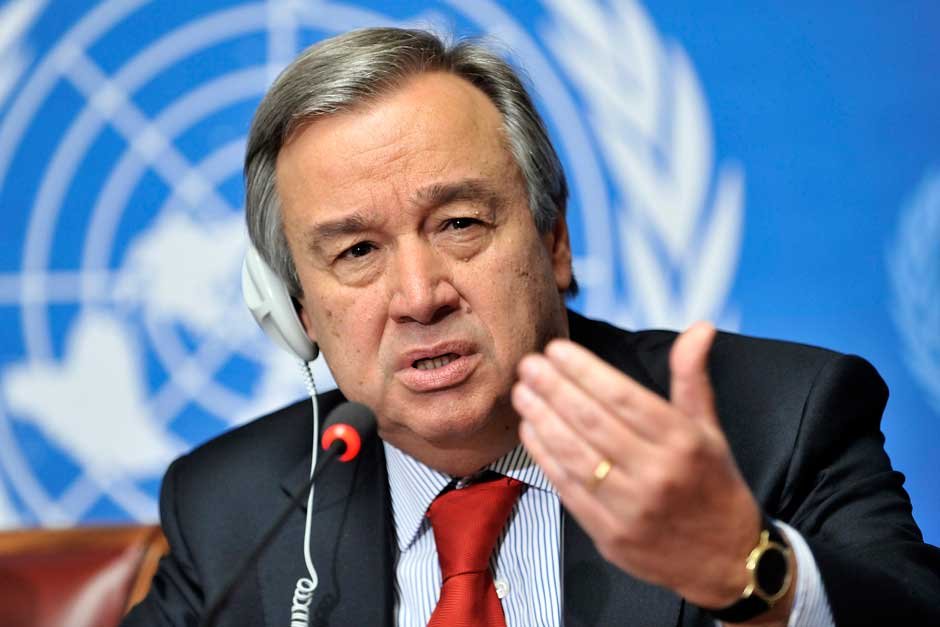
UN Secretary-General Antonio Guterres told reporters the panel’s assessment was sent to every government on Wednesday.
The more that AI technology advances without shared rules, he warned, the less say governments and citizens would have over the outcome. He urged leaders not to wait to take action, saying: “We can no longer say we did not know.”
The report, which will inform deliberations during next week’s dialogue in Geneva, covered eight domains, including AI science and trajectories, economic implications, security and environmental impact, human rights and democracy, and governance and reliability.
The panel’s mandate tasks it with assessing the science and presenting policy-relevant findings without prescribing policy, leaving any specific recommendations to member states.
Bengio and Ressa both emphasized the fact that the concentration of AI development and computing power among a small number of countries and companies was compounding global inequalities.
Ressa said that 91 percent of notable AI models released in 2025 came from the private sector, and US institutions had produced 59 such models, compared with 35 from China and 13 from the rest of the world combined.
The panel separately reported that most of the Global South remains excluded from both the development and governance of AI, which means the regions that are most exposed to the technology’s risks are the ones with the least capacity to respond to them.
Members noted that the panel itself, which includes scientists from Africa, South Asia, Southeast Asia and Latin America, marked the first time the Global South had co-authored an international scientific evidence base on AI, rather than being subject to standards set elsewhere.
Asked whether the panel would recommend an international mechanism to vet AI models before they are released, Bengio said such a determination fell outside its mandate but concerns that have been raised had shaped the areas the panel chose to examine.
Ressa reiterated that the report was deliberately “policy relevant but not policy prescriptive,” designed to be usable by governments regardless of political alignment, with the task of turning evidence into policy left to next week’s dialogue in Geneva.
The panel was established under a General Assembly resolution. Its members, selected from more than 2,600 applicants from 140 countries, serve in a personal capacity for a term of three years. Its next full report will inform the second Global Dialogue on AI Governance, due to be held in New York in May 2027.