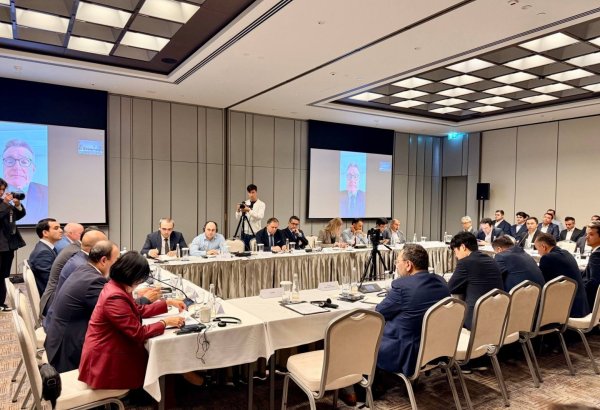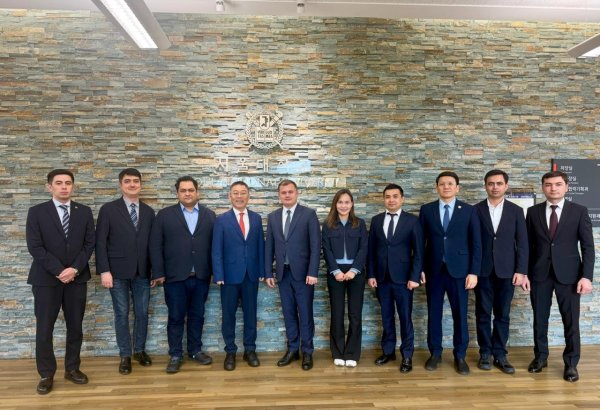





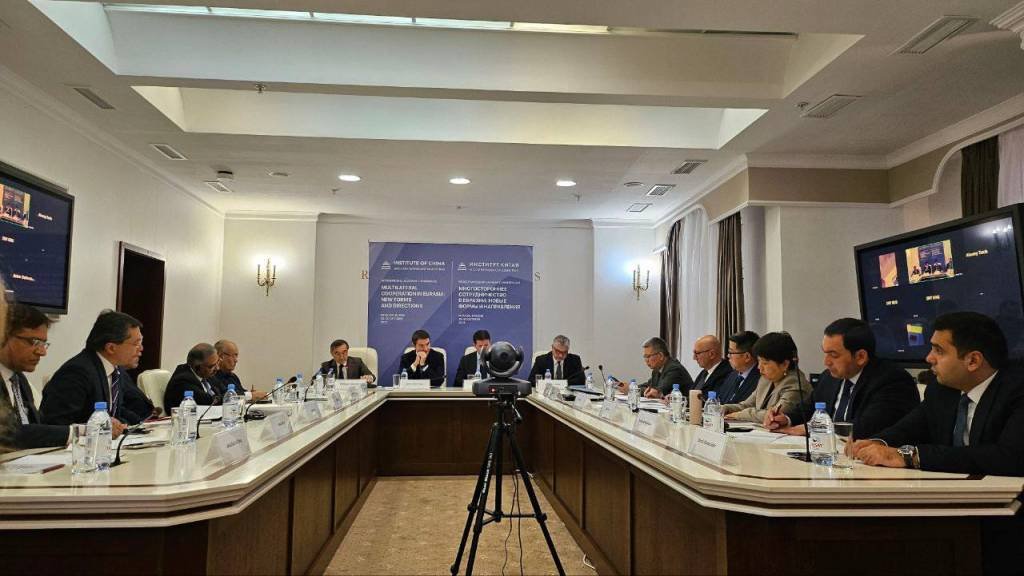
BAKU, Azerbaijan, October 31. On October 29-30, the international conference “Multilateral Cooperation in Eurasia: New Forms and Directions” was held in Moscow. It was organized by the Institute of China and Contemporary Asia of the Russian Academy of Sciences.
Representatives of government agencies, leading scientific centers from Russia, Belarus, countries of Central, South, and Southeast Asia, the Middle East, and international organizations took part in the event, TurkicWorld reports.
The forum became a platform for open, constructive discussion of key security and development issues in Eurasia. Central to the debate was the prospects for forming a Greater Eurasian Partnership based on the principles of equality, good neighborliness, consensus, and the peaceful resolution of differences.
SCO: Adapting to a new reality
In the context of discussing new forms of interaction in Eurasia, conference participants focused on the role of the Shanghai Cooperation Organization. Over two decades, the SCO has become the largest regional organization, uniting countries from Asia, Europe, and Africa, accounting for over 40% of the planet’s population, a quarter of global GDP, and over 15% of international trade. The combined GDP of the ten SCO members in 2024 was estimated at $25 trillion.
In the context of the deteriorating international situation, the Organization faces internal and external challenges, including geopolitical confrontation, a lack of trust, and the escalation of sanctions.
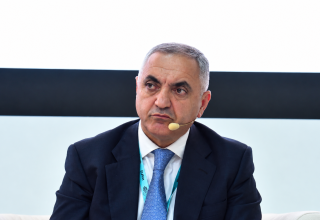
According to Bakhtiyor Mustafayev, Deputy Director of the Institute for Strategic and Regional Studies under the President of the Republic of Uzbekistan (ISRS), the SCO can become a stabilizing factor for Eurasia, but to do so, it must transform and adapt to the changing international environment.
Among the priority areas for further development, the expert noted strengthening cooperation in security and sustainable development, thorough preparation of new members for accession, modernization of the Secretariat, and maintaining commitment to the Charter’s fundamental principles, such as mutual trust, equality, and joint development.
From words to action: Institutional strengthening of security
Conference participants supported the decisions of the recent summit in Tianjin to establish an Anti-Drug Center in Dushanbe and a Universal Center for Countering Security Threats in Tashkent, based on the Regional Anti-Terrorism Structure, and noted the importance of empowering these structures with real authority and resources.
Given that the number of victims of terrorist organizations increased by 11% in 2024, reaching 4,200 people, the event participants emphasized the importance of developing a unified approach to combating terrorism and extremism.
Afghanistan as a space of opportunity
A separate panel of discussions was devoted to Afghanistan. Experts emphasized the importance of building constructive cooperation and actively supporting Afghanistan’s socioeconomic recovery.
In this context, the timeliness of the initiative by President of the Republic of Uzbekistan Shavkat Mirziyoyev to resume the work of the SCO – Afghanistan Contact Group was particularly noted. Participants assessed this proposal as an essential step toward ensuring long-term peace in Afghanistan and strengthening regional stability.
Cyber threats as a new security front
Digital security was also a key topic at the conference. As noted, global damage from cybercrime in 2024 reached $9.5 trillion and could rise to $10.5 trillion by the end of 2025. Experts agreed that such large-scale threats require systematic and coordinated action at the international level.
In this context, the importance of creating a unified SCO digital security platform to protect critical infrastructure, exchange information on cyber incidents, and train cybersecurity specialists was noted.
Overall, the conference’s results demonstrated a growing desire among Eurasian countries to strengthen multilateral cooperation. Participants acknowledged that, amid growing turbulence in global politics, the region must develop its own mechanisms of interaction and establish a comprehensive collective security system capable of effectively responding to contemporary challenges and ensuring long-term stability.