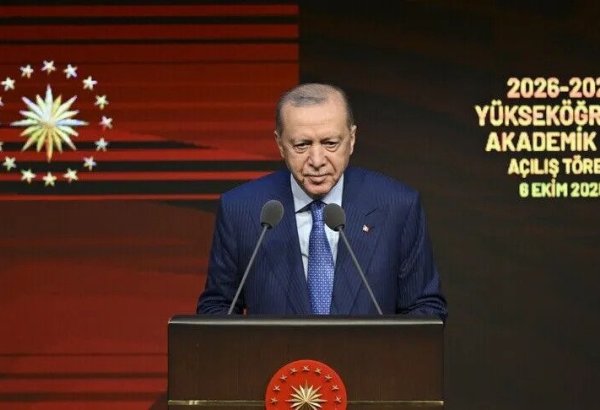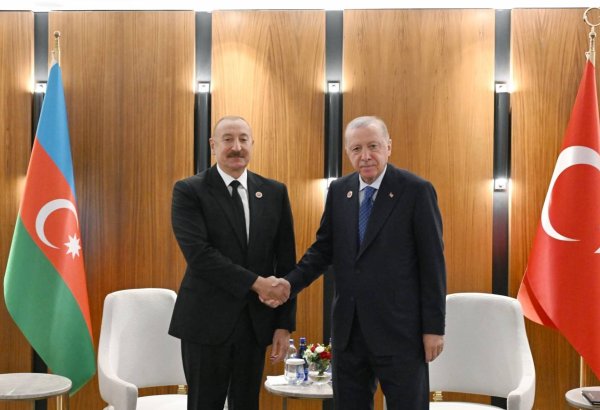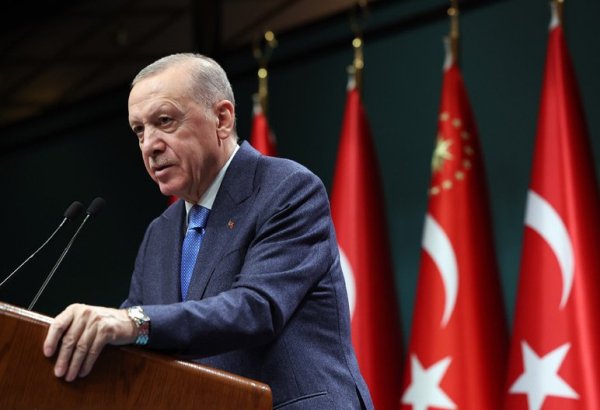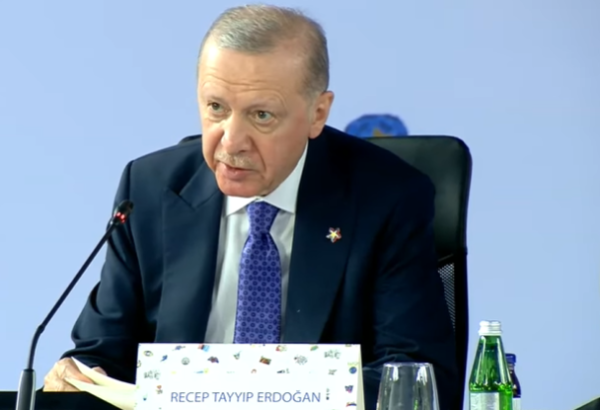
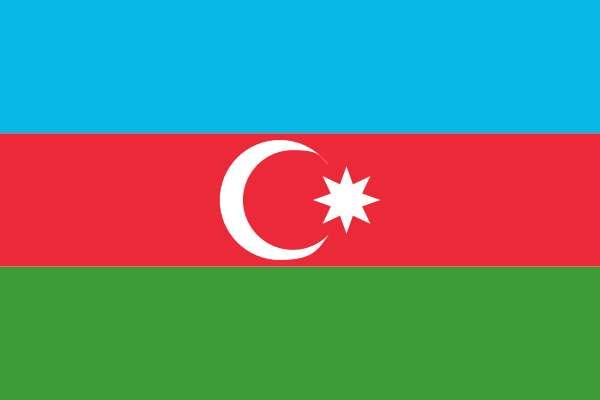
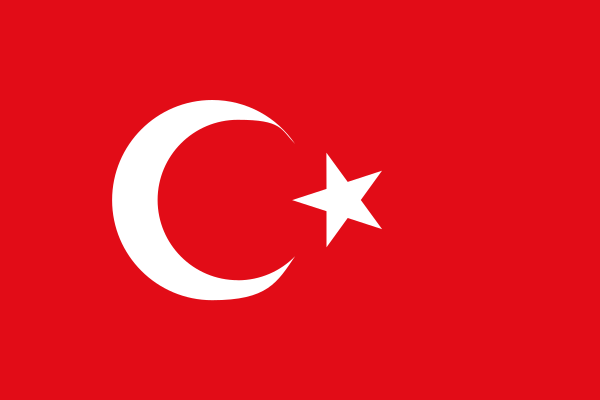
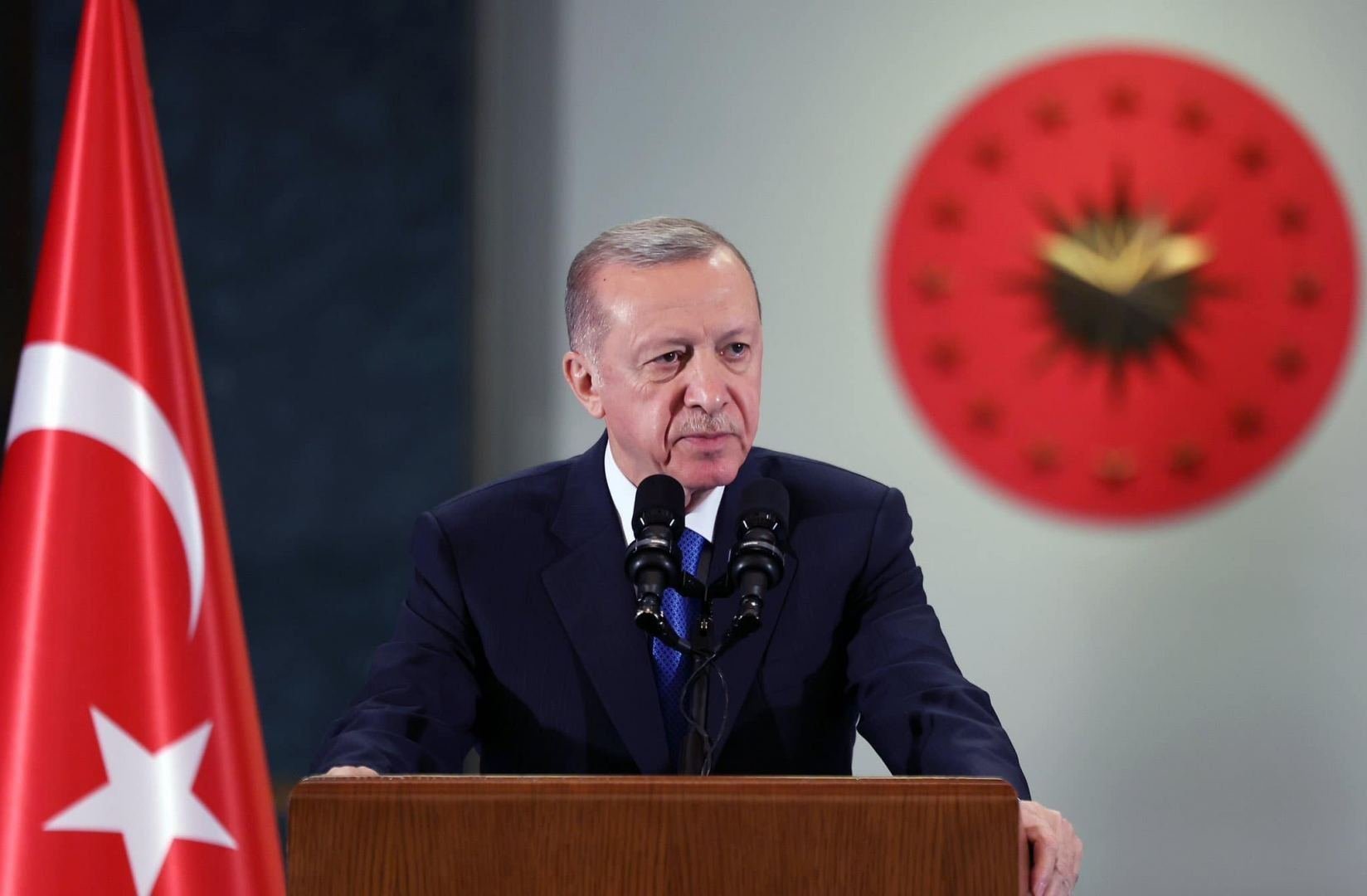
BAKU, Azerbaijan, September 15. President of Türkiye Recep Tayyip Erdoğan has congratulated Azerbaijan on the anniversary of the liberation of Baku, marked on September 15.
This was reflected in the relevant post published on Turkish President Recep Tayyip Erdoğan's X account.
"I congratulate [everyone] on the anniversary of the liberation of Baku—the capital of friendly and fraternal Azerbaijan—from enemy occupation, and I commemorate with reverence the commander of the Caucasus Islamic Army, Nuri Kıllıgil Paşa, and his heroic soldiers," the post stated.
When the Azerbaijan Democratic Republic was proclaimed on May 28, 1918, the city of Baku was under the control of Bolshevik-Armenian armed forces led by the Baku Council of People's Commissars (headed by Stepan Shaumyan). Consequently, the national government was temporarily based in Ganja, and the liberation of Baku became one of the Republic's primary objectives. Given that the government had a force of only 600 personnel at its disposal, it was impossible to contend with the Baku Soviet's 18,000-strong army.
In response to Azerbaijan's appeal, the Ottoman Empire decided to provide military assistance, and the Caucasus Army of Islam was formed under the command of Nuru Pasha. This military aid was formalized through a treaty signed between Azerbaijan and the Ottoman Empire on June 4, 1918. The victory achieved in the battles of Goychay in late June and early July halted the advance of the Baku Soviet troops toward Ganja and paved the way for a counter-offensive by the Caucasus Army of Islam in the direction of Baku; subsequently, the towns of Goychay, Kurdamir, Aghsu, and Shamakhi were liberated.
Despite the advance toward Baku, the Centro-Caspian Dictatorship and the foreign forces supporting it put up fierce resistance within the city. Although the Caucasus Islamic Army's initial assault on Baku on August 5 was unsuccessful, Turkish-Azerbaijani forces gained a decisive advantage during the subsequent offensive launched on the night of September 14. British troops withdrew from Baku on September 14, and the Centro-Caspian Dictatorship was defeated on September 15, bringing the two-day operation to a brilliant conclusion.
On September 16, a parade of Turkish-Azerbaijani military units was held to mark the liberation of Baku, and the following day, the government of the Azerbaijan Democratic Republic relocated its capital from Ganja to Baku. Thus, the liberation of Azerbaijan's political, economic, and strategic center ushered in a new phase in the republic's state-building process. The Ottoman army suffered 1,130 martyrs during the liberation of Baku, and this victory remains one of the most significant chapters in the history of friendship and brotherhood between Azerbaijan and Türkiye.