





BAKU, Azerbaijan, December 12. The trial of Armenian citizen Ruben Vardanyan, accused under articles of the Criminal Code of the Republic of Azerbaijan related to crimes against peace and humanity, war crimes, terrorism, financing of terrorism, and other serious crimes, continued on December 12, TurkicWorld reports.
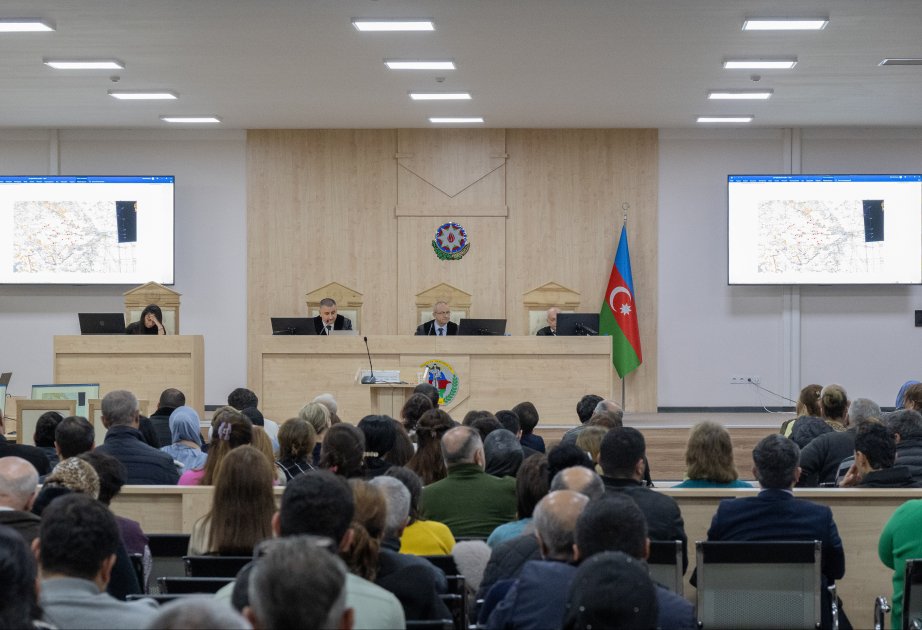
The open court session at the Baku Military Court, chaired by Judge Zeynal Aghayev and composed of judges Anar Rzayev and Jamal Ramazanov (reserve judge: Gunel Samadova), provided the accused with a Russian-language interpreter and a state-appointed defense lawyer.
Presiding Judge Zeynal Aghayev introduced the panel of judges, the prosecutors representing the state, the interpreters, and other participants to the victims and their legal successors attending the proceedings for the first time. He also explained their rights and obligations under the law.
Then, Vardanyan's defense attorney, Emil Babishov, submitted two motions.
In his first motion, the defense requested that all witness statements collected during the preliminary investigation, as well as the testimonies of Kamo Hayrapetyan, Musheg Grigorian, and other witnesses examined during the trial, be deemed inadmissible as evidence. Babishov argued that these statements should be excluded from the evidentiary record and not used against the accused Vardanyan in the adjudication of the case, as they bear no connection to him.
In his second motion, Babishov noted that, during the trial, a substantial body of evidence forming the basis of the indictment had been reviewed, including testimonies from hundreds of victims and their legal heirs, as well as other relevant documents. The defense maintained that, despite the examination of these materials and the disclosure of facts regarding injuries sustained by numerous individuals, the testimonies in question have no causal or factual link to the accused and therefore cannot be used as evidence against him.
It became apparent from the testimonies of the victims that the injuries they sustained occurred on different dates. A portion of these dates coincided with a period when the accused, Ruben Vardanyan, was not a citizen of the Republic of Armenia but was conducting his personal business as a citizen of the Russian Federation. Therefore, the defense requested that, during the trial, the statements provided by the victims and their legal heirs be deemed inadmissible and not used as evidence against the accused in the final judgment, due to their lack of connection with him.
The defendant affirmed his endorsement of the aforementioned motions.
State Prosecutor Tarana Mammadova responded to the motions, noting that both motions were substantially similar. She argued that the accused, as a member of a criminal organization established by the Armenian state, participated in numerous crimes during the occupation of Azerbaijani sovereign territories, acting in accordance with a common criminal plan and objectives. The individuals who testified as victims were targeted with injuries and attempted murders during this period, and the legal heirs’ testimonies reflect the killings of the victims.
Regarding the second motion, Prosecutor Mammadova emphasized that, in accordance with the Criminal Procedure Code of the Republic of Azerbaijan, statements provided by persons who have knowledge of circumstances of significant relevance to the case are also considered witness statements.
She further articulated that these matters necessitate a comprehensive evaluation during the strategic discussions in the consultation chamber and advocated for the postponement of the motions at this juncture.
The presiding magistrate, after conducting a thorough judicial inquiry, articulated that the conditions delineated in both petitions are matters that necessitate assessment prior to the issuance of the ultimate court ruling; consequently, these petitions are presently maintained in a state of abeyance.
The proceedings advanced with the scrutiny of additional pivotal documentation pertinent to the criminal matter, in accordance with a motion filed by the prosecutorial team.
The reviewed documents revealed that during an inspection of the radio receiving and broadcasting center located in Khankendi, a dark green military vehicle bearing registration number 03-11 31PB was discovered. It was established that the vehicle was equipped with specialized radio equipment and the "Repellant-1" system installed at the rear, designed to disrupt the control signals of unmanned aerial vehicles at a distance of 30-35 kilometers. The vehicle also contained a monitor, a control system, and a cooling unit.
Furthermore, during the inspection of seven pieces of equipment in dark green packaging of various sizes stored at a military unit in the Khojaly region, it was determined that the equipment consisted of a radio jamming station designated "Polya-21," which was also used to interfere with aircraft Global Positioning System (GPS) signals.
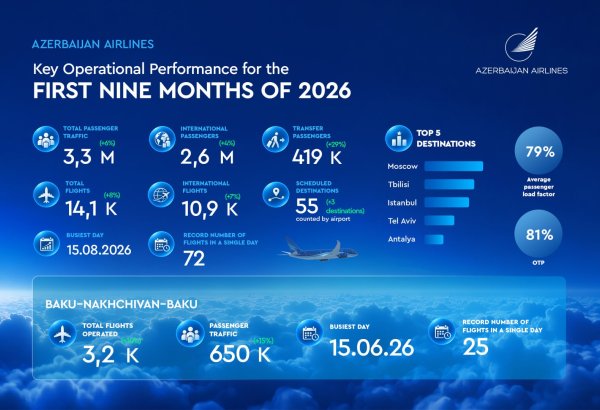
In addition, a letter dated September 27, 2021, from "Azerbaijan Airlines" Closed Joint-Stock Company to the Prime Minister of the Republic of Azerbaijan reported interference with satellite navigation signals in Azerbaijan’s airspace. Since early July 2021, numerous complaints have been received from flight crews of various airlines operating in the country, indicating unstable operation of the Global Navigation Satellite System (GNSS), including cases of signal disruption and distortion.
During this period, at least 42 complaints were documented relating to flights along different air corridors, including take-off, arrival, and landing procedures at airports. The instability of GNSS signals in Azerbaijani airspace poses a serious risk to aviation safety, as the primary means of controlling the flight trajectory of most aircraft relies on GNSS signal reception. The absence or distortion of these signals can result in significant operational and safety consequences.
Aerial reconnaissance was also conducted, during which the locations (coordinates) of radio jamming devices belonging to the Armenian Armed Forces and illegal Armenian armed groups were documented and photographed using unmanned aerial vehicles (UAVs).
Subsequently, the accused, Ruben Vardanyan, requested that a number of documents be formally attached to the criminal case file.
The defense attorney supported the defendant’s request, and the public prosecutors raised no objections.
The court ruled that the submitted document, being in Russian, should first be translated into Azerbaijani and then included in the official case materials.
Ruben Vardanyan further requested access to review volumes 1 through 15 of the criminal case and that the witnesses named in those volumes be summoned to court in connection with his detention.
The defense counsel, Emil Babishov, did not object to the granting of these motions.
Senior Assistant to the Prosecutor General, Vusal Aliyev, stated that if the motion pertains to obtaining materials from the criminal case, there is no objection. Regarding the summoning of witnesses, he noted that the accused had not commented on, nor objected to, any of the documents during their examination, and had not claimed that any information in the protocols was incorrect.
"At this stage, it does not appear why the information in that protocol is controversial or suspicious. We believe that there is no contradiction, no dispute. Therefore, we ask that the motion not be granted," he added.
Following a judicial consultation, the presiding judge ruled that the defendant’s motion to review the relevant volumes of the criminal case was granted, while the request to summon witnesses would be considered at a later stage.
Finally, Ruben Vardanyan requested access to review the audio and video materials related to the case.
The presiding judge instructed that a list of the required audio-video materials be submitted, and confirmed that the court would provide the accused with the opportunity to review them.
The next court session is scheduled for December 16.
Ruben Vardanyan faces multiple charges under the Criminal Code of the Republic of Azerbaijan, including Articles 100.1, 100.2 (planning, preparing, initiating, and waging a war of aggression), 107 (deportation and forced displacement of the population), 109 (persecution), 110 (forcible disappearance of persons), 112 (deprivation of liberty contrary to international law), 113 (torture), 114.1 (mercenary activity), 115.2 (violation of the laws and customs of warfare), 116.0.1, 116.0.2, 116.0.10, 116.0.11, 116.0.16, 116.0.18 (violations of international humanitarian law norms during an armed conflict), 120.2.1, 120.2.3, 120.2.4, 120.2.7, 120.2.11, 120.2.12 (intentional murder), 29.120.2.1, 29.120.2.3, 29.120.2.4, 29.120.2.7, 29.120.2.11, 29.120.2.12 (attempted intentional murder), 192.3.1 (illegal entrepreneurship), 214.2.1, 214.2.3, 214.2.4 (terrorism), 214-1 (financing of terrorism), 218.1, 218.2 (creation of a criminal group), 228.3 (illegal acquisition, transfer, sale, storage, transportation, and possession of firearms, ammunition, explosives, and devices), 270-1.2, 270-1.4 (acts threatening aviation safety), 278.1 (forcible seizure or retention of power, forcible change of the constitutional structure of the state), 279.1, 279.2, 279.3 (creation of armed formations not provided for by law), and 318.2 (illegal crossing of the state border).
To note, the preliminary investigation of the criminal case against Ruben Vardanyan, accused under articles concerning crimes against peace and humanity, war crimes, terrorism, financing of terrorism, and other offenses, was conducted by the State Security Service of the Republic of Azerbaijan.