






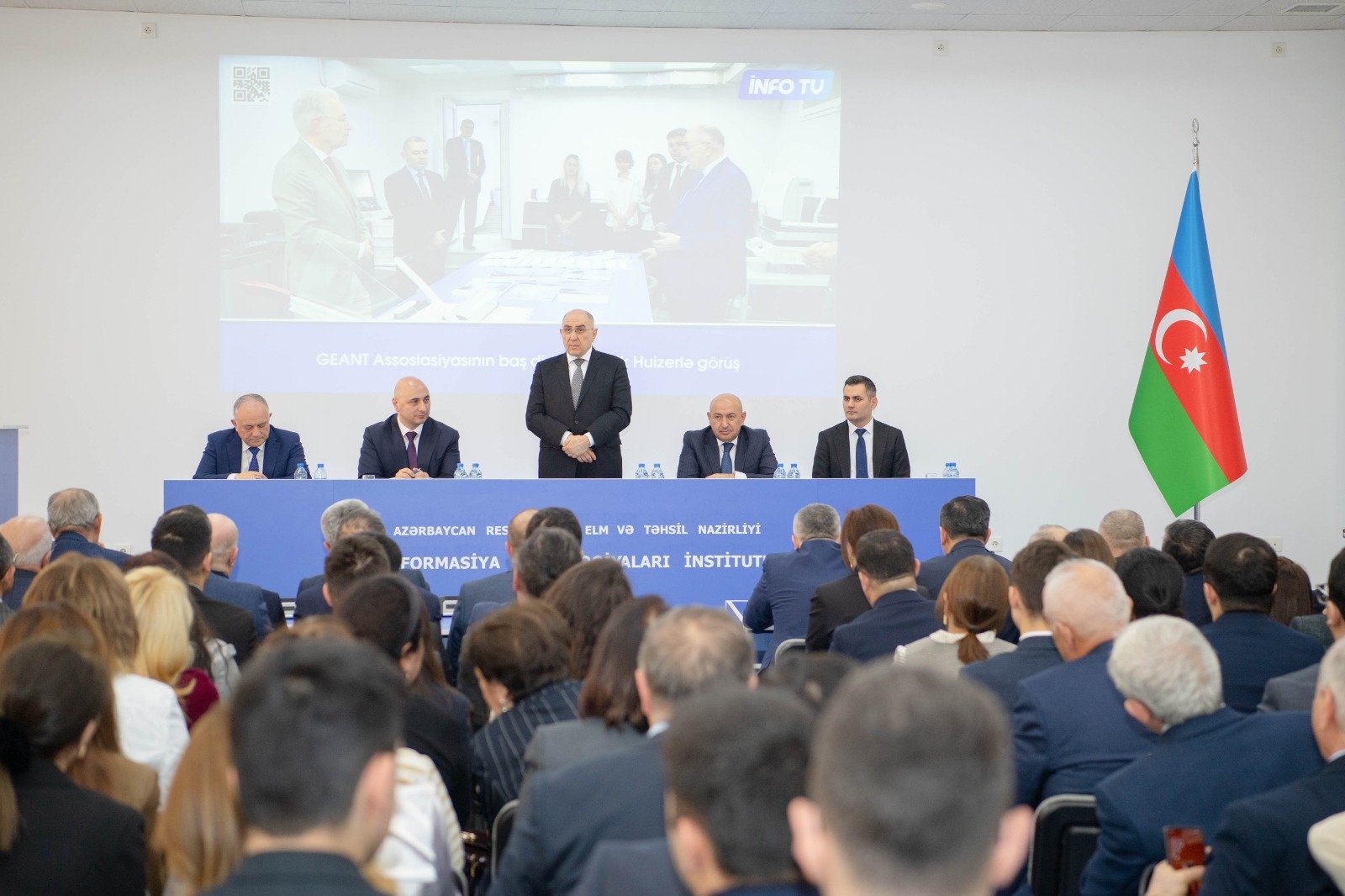
BAKU, Azerbaijan, March 10. A republican conference on "Scientific and practical problems of ensuring the state's cyber sovereignty" was held at the Information Technologies Institute of the Ministry of Science and Education in Baku,TurkicWorld reports.
The event was jointly organized by the Institute of Information Technologies, the Heydar Aliyev Academy of the State Security Service, Azerbaijan Technical University, and the Association of Cybersecurity Organizations of Azerbaijan
At the opening ceremony of the event, Vice-President of Azerbaijan National Academy of Sciences (ANAS), Director General of the Information Technologies Institute, Academician Rasim Aliguliyev noted that in recent years, in the direction of accelerating digital transformation processes in the country, cybersecurity and cyber sovereignty issues have become one of the priority directions of state policy, emphasizing that the conference is dedicated to discussing the scientific, theoretical and practical problems of ensuring the state's cyber sovereignty, solutions, existing approaches and results of conducted research.
He noted that the adoption of the "Digital development concept in Azerbaijan", the "Artificial intelligence strategy of Azerbaijan for 2025-2028", as well as the definition of a unified action plan for the "New digital architecture of Azerbaijan" have further increased the relevance of scientifically based approaches and institutional cooperation in this area.
Delivering a comprehensive report on the topic "Sustainable and secure digital architecture is the guarantee of the state's cyber sovereignty", the academician noted that the topic was dedicated to the need to form a new digital architecture in Azerbaijan and the development of its scientific and technological foundations in the context of global technological challenges.
In his speech, Elshad Nasirov, Head of the Heydar Aliyev Academy of the State Security Service, approached the issue of cyber sovereignty from the perspective of national security and state interests, and stated that the rapid development of digital technologies in modern times is forming new challenges and requirements for the sovereignty of states. According to him, cyberspace has become not only a technological sphere but also an important strategic environment that affects political, economic, social, and cultural processes. Therefore, the protection of the cyber sovereignty of states is of particular importance as an integral part of national security.
Noting that important steps have been taken in the country under the leadership of the Head of State, Ilham Aliyev, towards digital state building, application of artificial intelligence technologies and digitalization of society, the official drew attention to the fact that strengthening the cybersecurity and cyber sovereignty of our country against the background of these processes is one of the main tasks ahead, and expressed his confidence that such scientific conferences will play an important role in discussing current problems related to cyber sovereignty and formulating new approaches.
During his speech at the event, Davud Rustamov, Head of the National Cybersecurity Center of the State Security Service, provided detailed information about the main areas of activity of the center, areas identified as critical information infrastructure, and regulatory and legal mechanisms formed in this area. Touching upon the importance of the decree of the President of Azerbaijan dated April 17, 2021, "On some measures in the field of ensuring the security of critical information infrastructure", he noted that it was based on this document that the formation of a unified and systematic cybersecurity ecosystem in the country began. The speaker, who drew attention to the fact that cybersecurity has become one of the main pillars of state security, emphasized that the topic of the conference is of great relevance and strategic importance in the modern era.
Speaking at the event, Rector of Azerbaijan Technical University, Professor Vilayat Valiyev, articulated that cyber sovereignty is one of the most important elements of the sovereignty of states in the 21st century. Speaking about the need to form highly qualified personnel potential to ensure cybersovereignty, the rector noted that higher education institutions have a great responsibility in this area, and that the preparation of a new generation of specialists who can contribute to digital transformation processes is of great importance for the country's cybersecurity and technological development.
The event was also addressed by Deputy Head of the Main Department of the State Service for Special Communications and Information Security, Tural Mammadov, Executive Director of the Association of Cybersecurity Organizations of Azerbaijan, Rauf Jabarov, as well as President of the Internet Development Forum in Azerbaijan, Director of the Multimedia Center, Osman Gunduz. The speeches emphasized that strengthening the protection of state information systems is one of the main directions of cybersovereignty, and that the fight against risks and threats in cyberspace requires cooperation between state agencies, the scientific community, and civil society.
The conference noted that against the backdrop of digital transformation and the rapid development of artificial intelligence, the protection of cyber sovereignty is of particular relevance as one of the pillars of national security, and consistent measures are being taken in this area in the country.
Furthermore, Aliguliyev highly appreciated the ideas and opinions of the scientists and specialists, representatives of state institutions and civil society who spoke at the event, reflecting the current challenges related to ensuring cybersecurity, and at the end of his speech, he expressed deep gratitude to the leadership of the Ministry of Science and Education, the State Security Service, the State Service for Special Communications and Information Security, as well as representatives of the civil society sector for their support in organizing the event.
Then, the conference continued its work with section meetings.