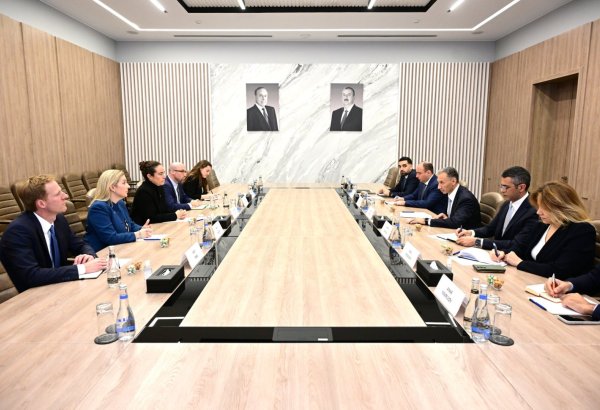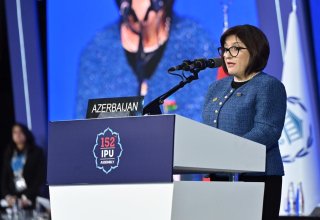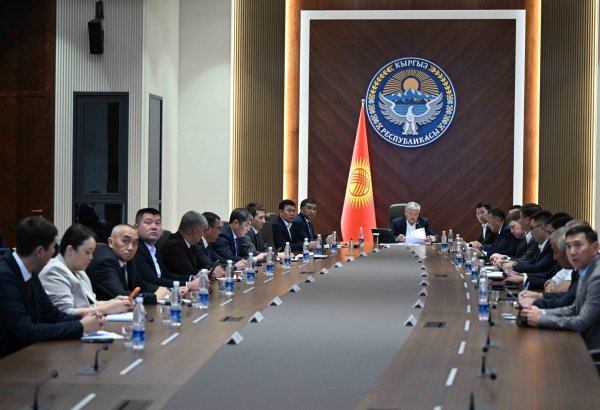







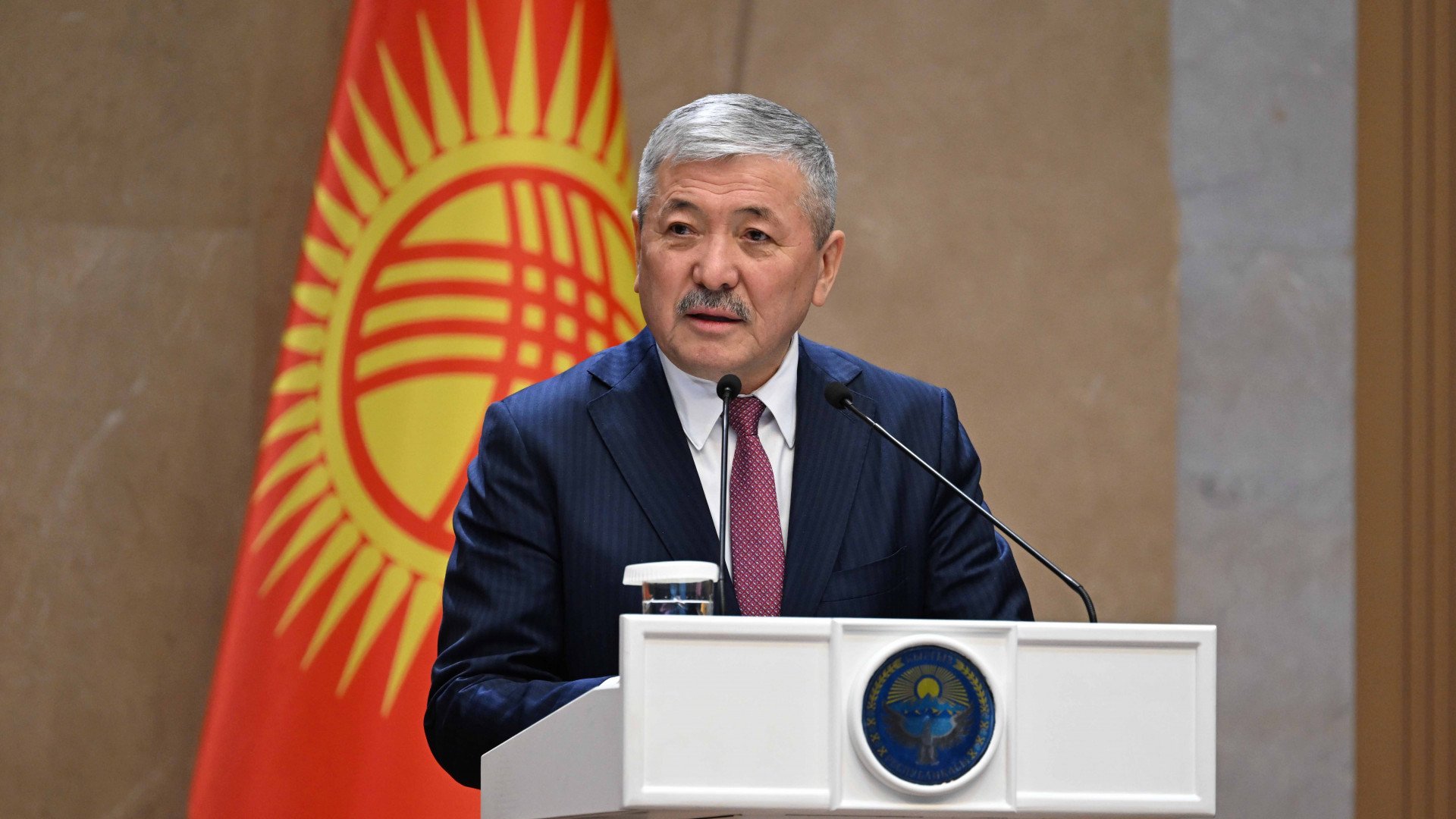
BAKU, Azerbaijan, April 2. Adylbek Kasymaliev, Chairman of the Cabinet of Ministers of the Kyrgyz Republic, will embark on an official working visit to Azerbaijan from April 1 to 2. He will participate in the second meeting of heads of governments and vice presidents of member states of the Organization of Turkic States (OTS).
This event will provide a platform for discussing practical aspects of economic cooperation, regional connectivity, and the coordination of sectoral initiatives among the member countries. For both Bishkek and Baku, it also presents an opportunity to align their bilateral agendas within the broader context of cooperation under the OTS framework.
Azerbaijan–Kyrgyzstan relations have demonstrated consistent institutionalization in recent years. Regular interactions at governmental and parliamentary levels, complemented by the work of the intergovernmental commission, lay the foundation for expanding cooperation in sectors such as the economy, investment, and humanitarian affairs. Following the previous commission meeting, the two sides agreed on key areas of focus, including the development of trade and logistics infrastructure, deepening industrial collaboration, and launching new joint investment initiatives.
In addition, enhanced financial and regulatory frameworks are providing further impetus for growth. The increase in the authorized capital of the Azerbaijani-Kyrgyz Development Fund to $100 million will facilitate larger project financing, particularly in infrastructure and processing industries. Concurrently, the double taxation avoidance agreement, which will take effect on January 1, 2026, is expected to create more stable and predictable conditions for business and cross-border investment activities.
Statistics also reveal a steady deepening of economic ties between the two countries. In 2025, Kyrgyzstan’s direct investments in Azerbaijan exceeded $13 million, representing a twofold increase compared to the previous year. While this remains a relatively small portion of total foreign investment, the growth signals a significant expansion of Kyrgyz capital’s footprint in Azerbaijan’s market.
The sectoral scope of cooperation is increasingly diversified. In addition to traditional sectors such as trade, agriculture, and transport, both nations are exploring new avenues of collaboration, particularly in the fields of digital solutions and space technologies. Among the discussions are opportunities to leverage Azerbaijan’s satellite capabilities for purposes such as communications, agricultural monitoring, and environmental management, potentially broadening the scope of bilateral cooperation.
Transport and logistics continue to be a pivotal area of focus. Key discussions center on the digitalization of the Middle Corridor, the streamlining of customs procedures, and the integration of infrastructure projects, notably the rail connections linking Central Asia with the Caucasus. In this context, Azerbaijan is seen as a crucial transit hub, while Kyrgyzstan is poised to play a significant role in expanding Eurasian supply chains.
The framework of the Organization of Turkic States (OTS) adds a further institutional dimension to these initiatives. The OTS platform facilitates coordinated approaches to infrastructure development, energy corridors, and digital ecosystems, as well as the establishment of harmonized policies to foster business and investment opportunities among its member countries.
Future cooperation may develop along several scenarios. In the baseline scenario, current projects are expected to deepen gradually with a focus on investment, transport, and trade, maintaining moderate growth rates. A more dynamic scenario envisions accelerated implementation of infrastructure initiatives, expanded roles for joint funds, and increased mutual investment volumes, including in new sectors such as digitalization and satellite technologies. Alternatively, development may focus primarily on the multilateral level within the OTS, where bilateral projects are integrated into broader regional programs. There is also a scenario in which the main emphasis shifts to specific sectors, such as logistics or energy, with more limited progress in other areas.