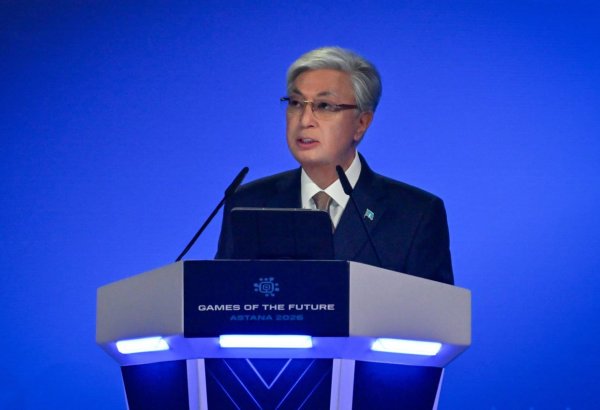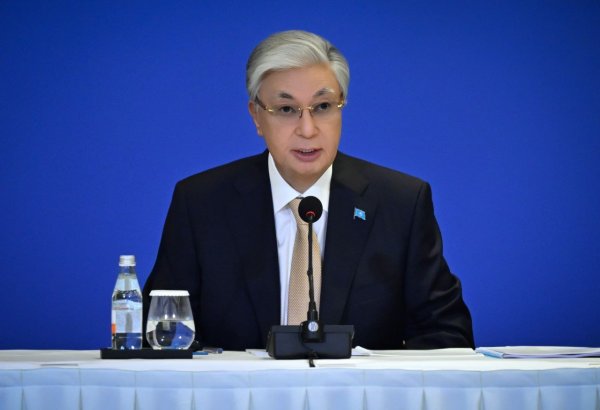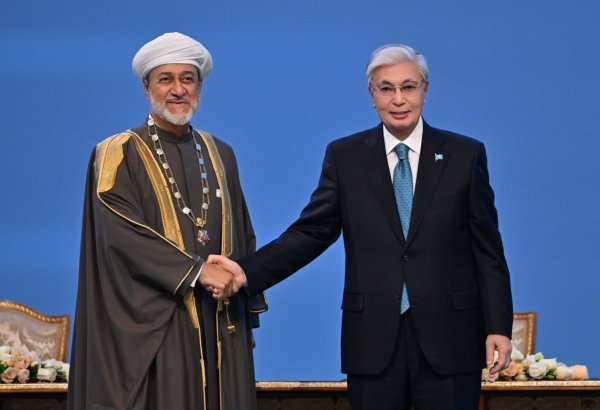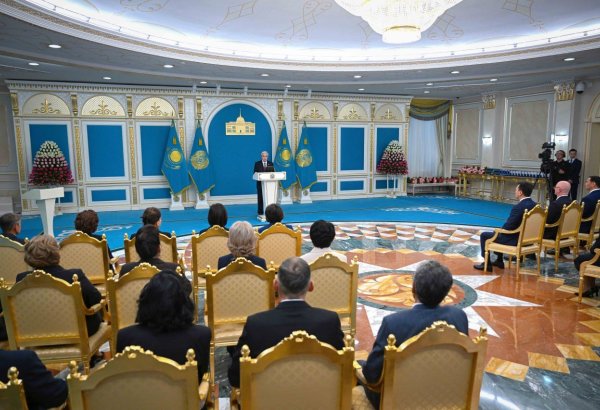







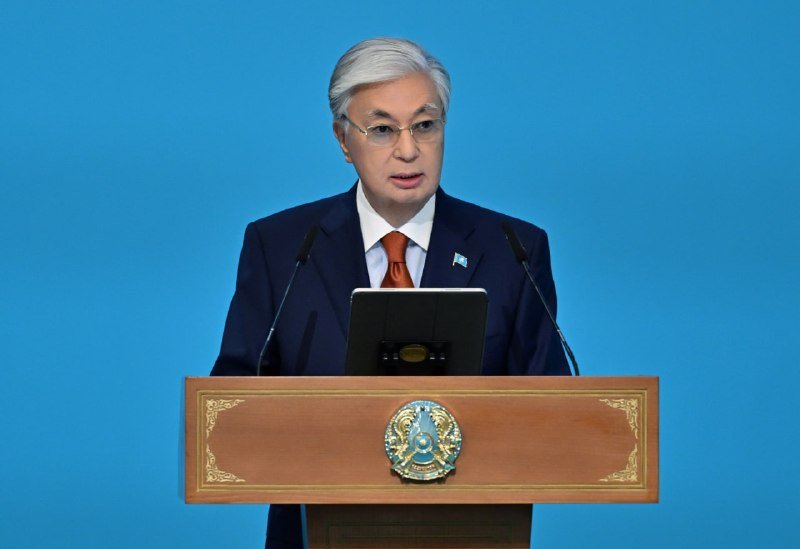
BAKU, Azerbaijan, September 21. Under President Kassym-Jomart Tokayev, digitalization has become one of the main areas of Kazakhstan’s state policy. In 2026, declared the Year of Digitalization and Artificial Intelligence, the country is simultaneously developing the use of AI, computing capacity, specialist training, and digital infrastructure.
For Astana, technological development is not linked to one particular sector. Digital solutions are now being introduced in public services, education, energy, industry, transport, logistics, agriculture and the financial sector.
The government has approved an action plan for the implementation of the Digital Qazaqstan strategy until 2029. In education, as part of the AI-SANA program, the goal is to ensure that at least 80% of graduates of schools, colleges and universities have basic AI skills by 2029. By 2028, artificial intelligence technologies are expected to be used in at least 80% of universities and colleges.
This approach is particularly important for Kazakhstan, given the scale of its territory and economy. Digital technologies make it possible to manage infrastructure more efficiently, process large amounts of data faster, and reduce decision-making time.
In the energy sector, Kazakhstan plans to connect at least 70% of its assets to digital monitoring by 2029. In the transport sector, digital cargo passports, end-to-end tracking and intelligent analysis of transport corridors are envisaged. For businesses, digital assessment and risk-based supervision are planned to be expanded, while tax administration is expected to become largely automated.
At the same time, Kazakhstan is also investing in the foundation for the development of artificial intelligence. The country already has the national supercomputing cluster Alem. Cloud and Kazakhtelecom’s commercial supercomputer. IT exports have reached $1.1 billion, while one of the largest new projects is the Data Center Valley, with a target capacity of up to 1 GW. Potential demand for its capacity already exceeds 500 MW.
This is one of the most important elements of Kazakhstan’s current digital policy. Artificial intelligence requires not only software and specialists. Its development requires computing capacity, data centers, reliable communication channels, and sufficient power supply. Therefore, the creation of such infrastructure simultaneously creates conditions for the emergence of new technology projects and the attraction of international companies.
Tokayev is also paying attention to this area in foreign policy. During the president's recent state visit to South Korea, Kazakhstan reached agreements on cooperation in unmanned aviation, urban air mobility and digital management of low-altitude airspace. The agreements envisage the transfer and localization of technologies, as well as data processing in Kazakhstan.
In the space sector, Kazakhstan and South Korean companies agreed to cooperate in satellite manufacturing, the processing of Earth remote sensing data and its commercialization. A separate agreement provides for the acquisition of satellite data to monitor methane emissions at oil and gas facilities.
The practical impact of digitalization is already visible in the work of government agencies. As Kazakhstan’s Vice Minister of Trade and Integration, Asset Nusupov said in an interview with Trend, AI is being used in the National Goods Catalog to process hundreds of thousands of applications. According to him, 749,000 applications were at the moderation stage, which the system processes automatically. He also said that Kazakhstan is in the process of implementing an AI agent for the attribute-based classification of the Common Classifier of Goods, Works and Services (OKTRU). It independently analyzes vast amounts of technical specifications, matches product positions, and creates and verifies nomenclature cards.
At the same time, Regional Head in Central Asia and Africa at Binance, Kyrylo Khomyakov, told Trend in an interview that Kazakhstan’s investments in artificial intelligence, data processing infrastructure and computing capacity create opportunities for broader cooperation between global technology companies and the local ecosystem.
All this shows that Tokayev’s digital agenda is being built in several areas at once: personnel training, AI development, the creation of computing infrastructure and the introduction of technologies into the real economy. This is particularly relevant for Kazakhstan at a time when the country’s competitiveness increasingly depends on its ability to work effectively with data and rapidly implement new technologies.
In the coming years, the outcome of this policy will be determined not by the number of announced digital projects, but by how widely technologies will be used in the economy and how strong a domestic technological base Kazakhstan will be able to create. Given the current pace of development of digital infrastructure and AI, this area is becoming one of the important elements of Tokayev’s long-term policy of modernizing the country.