

BAKU, Azerbaijan, September 10. Kazakhstan and Azerbaijan are preparing to resume passenger ferry services across the Caspian Sea on the Kuryk–Baku (Alat) route, marking another practical step in strengthening transport links between the two countries as trade and cargo flows along the Middle Corridor continue to grow.
Kazakh Ambassador to Azerbaijan Alim Bayel announced the planned resumption of passenger services on September 9. According to the ambassador, the initiative came from the Kazakh side and was supported by Azerbaijan, while the relevant transport authorities of the two countries have already begun work to restore the route as soon as possible.
Ferry services on the route operated until 2020, when they were suspended amid the COVID-19 pandemic. Before the suspension, about 1,500 passengers a year used the service. Passenger numbers are expected to increase once the route resumes, reflecting the stronger economic and transport links between the two countries.
The figure of 1,500 passengers a year was relatively modest even before the pandemic. However, the environment in which the route is being brought back has changed significantly. Over the past several years, Kazakhstan and Azerbaijan have expanded their transport infrastructure, increased bilateral trade and progressively integrated their ports and rail networks into the Middle Corridor.
This broader context gives the resumption of passenger ferry services added significance. It is not simply the restoration of an old route, but an expansion of a transport network developing in response to growing demand for the movement of both people and goods between Central Asia, the South Caucasus and Europe.
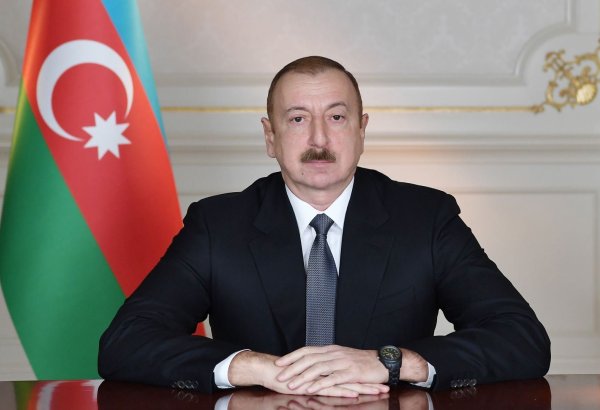
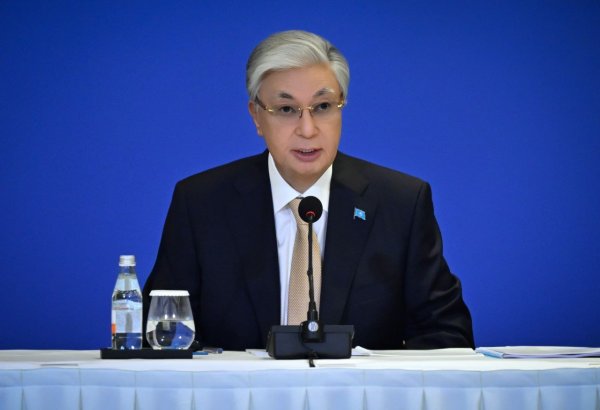
Kazakh President Kassym-Jomart Tokayev has repeatedly highlighted the growing importance of the Trans-Caspian International Transport Route, also known as the Middle Corridor. Azerbaijani President Ilham Aliyev, for his part, has described the Middle Corridor as a strategic project connecting Europe and Asia across the Caspian Sea. "The Middle Corridor is a strategic project spanning a vast geography. It provides a reliable and secure route connecting Europe and Asia through the Caspian Sea, serving as the shortest and most efficient pathway for cargo transportation from Asia to Europe and back. Azerbaijan’s favorable geographic location - right at the crossroads of two continents - enables our country to play a pivotal role in connectivity issues. Today, we can proudly say that, thanks to Azerbaijan’s long-term vision and tireless efforts, a major project like the Middle Corridor, which provides better synergy between Asia and Europe, has become a reality," President Ilham Aliyev said in an address to participants of the 6th Caspian Business Forum.
The resumption of passenger ferry services therefore fits into a broader transport strategy pursued by Azerbaijan and Kazakhstan under the leadership of Presidents Ilham Aliyev and Kassym-Jomart Tokayev.
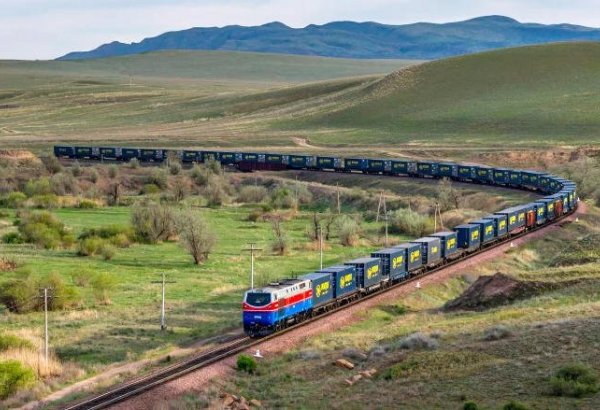
The Middle Corridor’s performance shows that this strategy is already translating into substantial growth in actual transport volumes. According to Kazakhstan’s Ministry of Transport, freight volumes along the TITR increased by 22% in the first eight months of 2026, while east-west transit traffic rose by 55%.
Kazakhstan’s Deputy Minister of Transport Zhanibek Taizhanov presented the figures at the Georgian International Maritime Forum in Batumi on September 7–8. The scale of the route has changed considerably in just a few years. In 2021, freight volumes stood at about 0.59 million tons, while by 2025 they had reached roughly 4.1–4.5 million tons. In 2024, volumes were estimated at around 4.5 million tons, up 62% year on year. Container traffic reached approximately 77,000 TEUs in 2025.
Delivery times have also fallen significantly. Whereas transportation along the relevant routes could previously take 28–32 days, transit times now range from 12 to 18 days in many cases. Kazakhstan and Azerbaijan are targeting further growth. Joint plans call for Middle Corridor freight volumes to exceed 10 million tons by 2030, while container traffic is expected to reach up to 300,000 TEUs by 2029. The Caspian Sea is a connecting link within this system. Kazakhstan is steadily expanding the capacity of its Caspian ports, including Aktau and Kuryk, while Azerbaijan is developing the Alat port as one of the key nodes of the regional transport network.
Kazakhstan plans to increase the capacity of its Caspian ports from about 21.8 million tons to 30 million tons by 2030. The annual capacity of the Middle Corridor itself is expected to rise from 6 million to 10 million tons. Around 90% of cargo leaving Kuryk is currently destined for Baku.
The ferries will carry passengers, passenger cars, trucks and railway wagons. The crossing takes about 18 hours in favorable weather conditions. Services operate around the clock, but there is no fixed timetable because departures depend on cargo availability and weather conditions. The ferry service is not intended to compete with air travel. Instead, it will provide an additional transport option. There are currently 37 flights operating between Baku and Kazakhstan’s Astana, Almaty, Shymkent, Aktau and Atyrau.
The economic foundation for stronger transport links is also expanding. According to Kazakhstan’s Deputy Minister of Trade and Integration Asset Nusupov, bilateral trade between Kazakhstan and Azerbaijan totaled $536 million in 2024, while trade exceeded $150 million in January–May 2026. "We are moving at a pace that, if maintained, will allow us to confidently approach the $1 billion mark," Nusupov told Trend in an exclusive interview.
The two countries have already established mechanisms to reach that target, including a Roadmap for the Development of Trade and Economic Cooperation. The document calls for diversifying the trade basket, increasing exports of non-commodity goods, expanding direct B2B contacts and further digitalizing transport and customs procedures.
These developments show that transport cooperation between Kazakhstan and Azerbaijan is advancing alongside bilateral trade. Rising cargo volumes create demand for additional infrastructure, while improved infrastructure, in turn, creates more opportunities for trade.
The OECD has also highlighted this connection. The organization told Trend that Kazakhstan is at the center of Eurasian connectivity and that the development of the Middle Corridor offers significant opportunities to strengthen trade links between Europe and Asia. "By improving infrastructure, streamlining border procedures and deepening regional cooperation, Kazakhstan can help create more efficient, sustainable and reliable trade routes while strengthening its position as a key logistics hub in Eurasia," the OECD said.
The next stage of cooperation is digitalization. Kazakhstan and Azerbaijan are exploring joint artificial intelligence solutions for managing cargo flows, processing documentation and assessing risks in cross-border trade. Nusupov said the two countries’ growing interdependence along the Middle Corridor creates a "unique basis for joint AI solutions." Potential areas of cooperation include predictive management of cargo flows between Kazakhstan Railways and the Baku International Sea Trade Port at Alat. "By synchronizing our AI systems in logistics, we can increase the speed of cargo movements while reducing uncertainty. This benefits shippers across the region," he said.
At the same time, Kazakhstan and Azerbaijan are working on other elements of cross-border connectivity. A 391-kilometer fiber-optic cable across the Caspian Sea, with a capacity of up to 400 Tbps, is expected to be completed by the end of 2026. During the first eight months of 2026, KazTransOil increased oil transportation volumes by 4%, while oil shipments toward the Baku–Tbilisi–Ceyhan pipeline rose by 12%.
These projects reflect a broader economic strategy pursued by Presidents Ilham Aliyev and Kassym-Jomart Tokayev. Kazakhstan is seeking to strengthen its role as a transcontinental trade hub, diversify its transport routes and improve logistics efficiency, while Azerbaijan is consolidating its position as a major transport hub linking the South Caucasus, Central Asia and European markets.
Tokayev has described the Middle Corridor as "an important factor contributing to strengthening Kazakhstan’s role as a transcontinental trade hub," while also highlighting the development of the Smart Cargo digital platform. "To effectively coordinate the transit transportation system, a unified Smart Cargo digital management platform has been developed. Overall, expanding the capabilities of the Middle Corridor serves the long-term interests of our countries. In this regard, we have proposed jointly implementing the e-permit project, which will enable logistics procedures to be carried out electronically, in other words, ensuring maximum transparency of processes and minimizing administrative costs. I believe it is important to link the Middle Corridor project with the Route for International Peace and Prosperity (TRIPP) initiative," Tokayev said at the Kazakhstan–Türkiye Business Forum in May 2026.
President Ilham Aliyev, meanwhile, has said that according to calculations, the Middle Corridor’s capacity is expected to triple by 2030, while cargo transit times will be cut in half. "In the Azerbaijani segment of the Middle Corridor, work is underway to upgrade, digitize, and modernize infrastructure, as well as to expand its transit capacity. Over the past three years, cargo shipments along the Middle Corridor through Azerbaijan have grown by approximately 90%, while transit times have been significantly shortened. Projections indicate that by 2030, the freight capacity of the Middle Corridor will triple compared to 2021, with transit times expected to be cut in half," the head of state said in his address to participants of the 6th Caspian Business Forum, titled "Connectivity, Finance, and Energy along the Middle Corridor."
The sequence of these developments shows how the economic policies pursued by the two presidents are creating demand for new forms of cooperation. Growing trade requires additional logistics capacity, rising cargo volumes require expanded ports and transport infrastructure, while stronger business and tourism ties create demand for additional passenger routes.
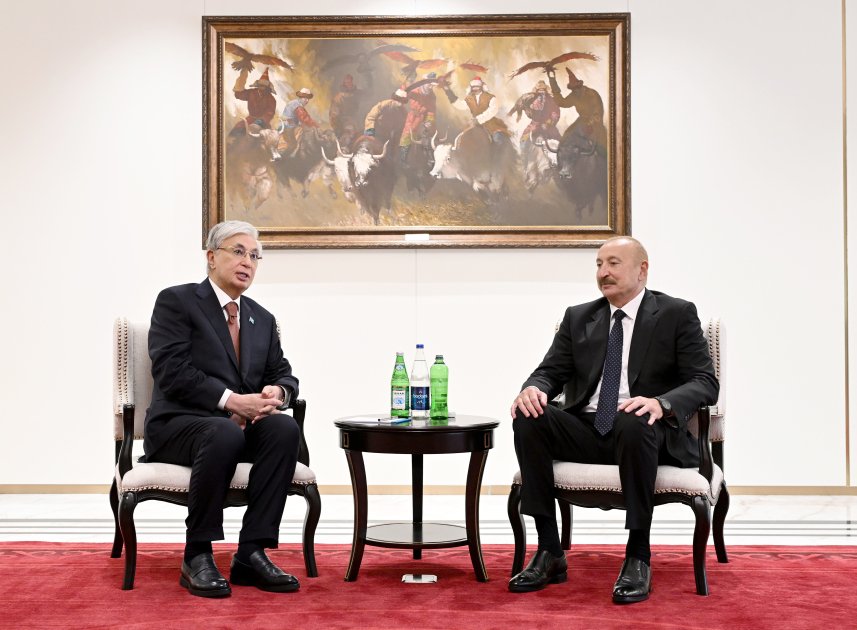
At their meeting in Bishkek on August 31, 2026, President Ilham Aliyev and President Tokayev again discussed transport logistics and the importance of the Middle Corridor. A year earlier, in October 2025 in Astana, the two countries signed 15 documents and presented a joint project for the development of the Middle Corridor. The sides also discussed the possibility of establishing a new Trans-Caspian ferry system.
Against this backdrop, the resumption of passenger services between Kuryk and Baku is becoming another component of the emerging transport network. Its significance will not be measured only by the number of passengers using the service, but also by how effectively the route can complement air travel, support tourism and integrate with the Middle Corridor’s growing freight capacity.
For Kazakhstan and Azerbaijan, the move also points to a broader shift from individual infrastructure projects toward a more integrated model of economic cooperation. The transport and trade policies pursued by Presidents Ilham Aliyev and Kassym-Jomart Tokayev have already expanded practical cooperation between the two countries, while the Middle Corridor’s growing performance is creating conditions for further development.
The return of passenger ferries to the Caspian reflects this broader trend. As Kazakhstan and Azerbaijan deepen their trade, transport and investment ties, the infrastructure underpinning their bilateral relationship is also expanding. The Middle Corridor is becoming a central pillar of that connectivity, while the policies of President Ilham Aliyev and President Kassym-Jomart Tokayev are helping create the conditions for the Caspian route to play a larger role in economic links between Central Asia, the South Caucasus and Europe.