







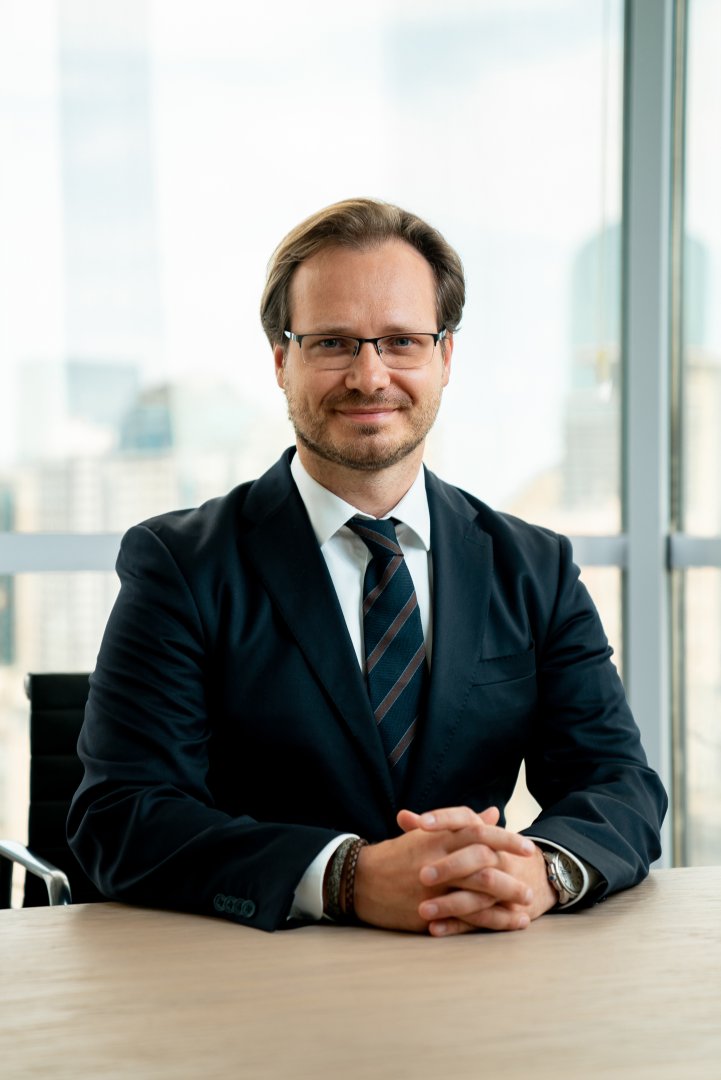
BAKU, Azerbaijan, December 22. Azerbaijan can play a vital role in applying Artificial Intelligence (AI) to energy, Anton Aristov, Managing Director and Partner at Boston Consulting Group (BCG) said in an exclusive interview with Trend, TurkicWorld reported.
Aristov noted that one of the areas in which Azerbaijan has advantaged expertise is the energy sector.
"And so, when you combine AI with deep knowledge and expertise in energy—particularly in oil and gas and the broader energy transition—you create a powerful market opportunity. This is where Azerbaijan can play a vital role in advancing the application of AI.
The second idea we had when establishing the Caspian AI Institute was to embed into its very DNA a principle: 70% of its resources should be dedicated to practical use cases in energy, while the remaining 30% should be devoted to research that pushes the boundaries of cutting-edge technologies relevant to the global community.
The logic behind this is simple. If you focus exclusively on use of cases relevant to a national energy company, you will quickly end up with an institute that is, in essence, just another "AI department," no different from those found in many organizations. By contrast, committing 30% of resources to research projects of global interest allows you to stay relevant internationally and earn the right to engage with leading institutions such as MIT, Stanford, Berkeley, and Imperial College. It gives you a "foot in the door."
This is the approach that guides our selection of innovative and forward-looking research projects—one of which is AutonomousLab.AI, though it is certainly not the only one," he explained.
Aristov went on to add that recently in Dubai, Azerbaijan’s state oil company SOCAR and the Caspian AI Institute unveiled a breakthrough: an AI-designed carbon-capture solvent that can significantly improve emission-reduction efficiency.
" Yet the innovation goes far beyond identifying a single solvent. It demonstrates AI’s ability to generate entirely new chemical compounds. The system relies on a sequence of pre-trained models capable of understanding the existing chemistry within a specific domain — in this pilot, carbon-capture molecules. These interconnected models were trained on all scientifically documented ionic liquids used for CO₂ capture. Today, science has described the properties of roughly 4,000 such liquids.
Once trained on this dataset, the AI was tasked with designing new candidates — and it produced around 400,000 molecules, nearly 100 times more than what is currently known to science. This enormous reservoir of novel, AI-designed molecules enables researchers to predict properties computationally and carefully "cherry-pick" the most promising options — compounds that have never been synthesized before and may offer significantly higher CO₂ absorption capacity," he explained.
Aristov noted that there has been identified a portfolio of roughly 40 candidates that are supposed to capture 50% more CO2 than what's used in the industry.
"Out of that, we selected a few and synthesized them in laboratory in Spain. And laboratory confirmed their ability to outperform the molecules that are used in the industry. On one hand, you have a great example of something that actually captures the CO2 much better. But on the other hand, you have a mechanism that can generate novel chemistry across various domains. Think of, for example, corrosion inhibitors, lubricant additives, or other chemical domains that are used in the industry.
You can essentially go domain by domain: train the model on everything that is already known, generate novel molecules, select those predicted to outperform, synthesize them, test them in the laboratory, and then scale to production. This is the engine that has been built at the Caspian AI Institute. It can now move systematically — chemical domain by chemical domain — to support energy companies. The ambition is, in a sense, to create a ‘Chemistry 2.0 for Energy Companies’ framework: a step change across multiple chemical domains within the energy sector," he said.
Aristov noted that the product is very novel, it is now being tested it on dedicated modeling tools.
"If these tests go well, we can move to the next step — engaging the engineers and seeing whether they are willing to test it in actual production. While inventing a new chemical compound typically takes around ten years, we have compressed this cycle to roughly three months. Looking ahead, we see that the next major bottleneck is laboratory experimentation. That is why we are working to automate these processes, aiming to establish a fully robotic laboratory operating 24/7, synthesizing molecules and feeding back results — whether success or failure — in real time.
We believe that combining AI-driven generation with robotic automation will dramatically accelerate the development of novel materials," he added.
Turning Azerbaijan into innovation regional hub
"In order to turn Azerbaijan into a regional hub of innovation, our first priority is to build a bridge to the global AI ecosystem. We are working with Silicon Valley investors and seeking to attract venture capital so that this project can grow independently, at scale, and ultimately serve other energy companies. Once we succeed and have our first pilot proven, we will be in a position to export the knowledge created in Azerbaijan — developed here and tested on Azerbaijani energy challenges — to the global community," he said.
Aristov believes the process could also work in reverse.
"Today, it is becoming increasingly difficult for international talent to obtain work permits in the United States. In this context, we can create local opportunities for AI specialists by establishing an innovation hub in one of the most attractive regions of Azerbaijan and inviting global talent to work from here. It could become a true two-way corridor between Baku and one of the major global AI centers. To achieve this, we need to be recognized within the Silicon Valley community: set up several startups there, build visibility, and establish Azerbaijan as a source of promising innovation. In other words, create a real bridge between Baku and Silicon Valley," he said.
Aristov noted that Azerbaijan now stands shoulder to shoulder with other global innovators in AI, proudly presenting its research at the ADIPEC Tech conference.
Konstantin Polunin, Partner and Director at BCG, for his part, pointed out that Europe is lacking the speed of changes in the sphere of innovations, while Azerbaijan, Central Asian countries are doing really fast moves.
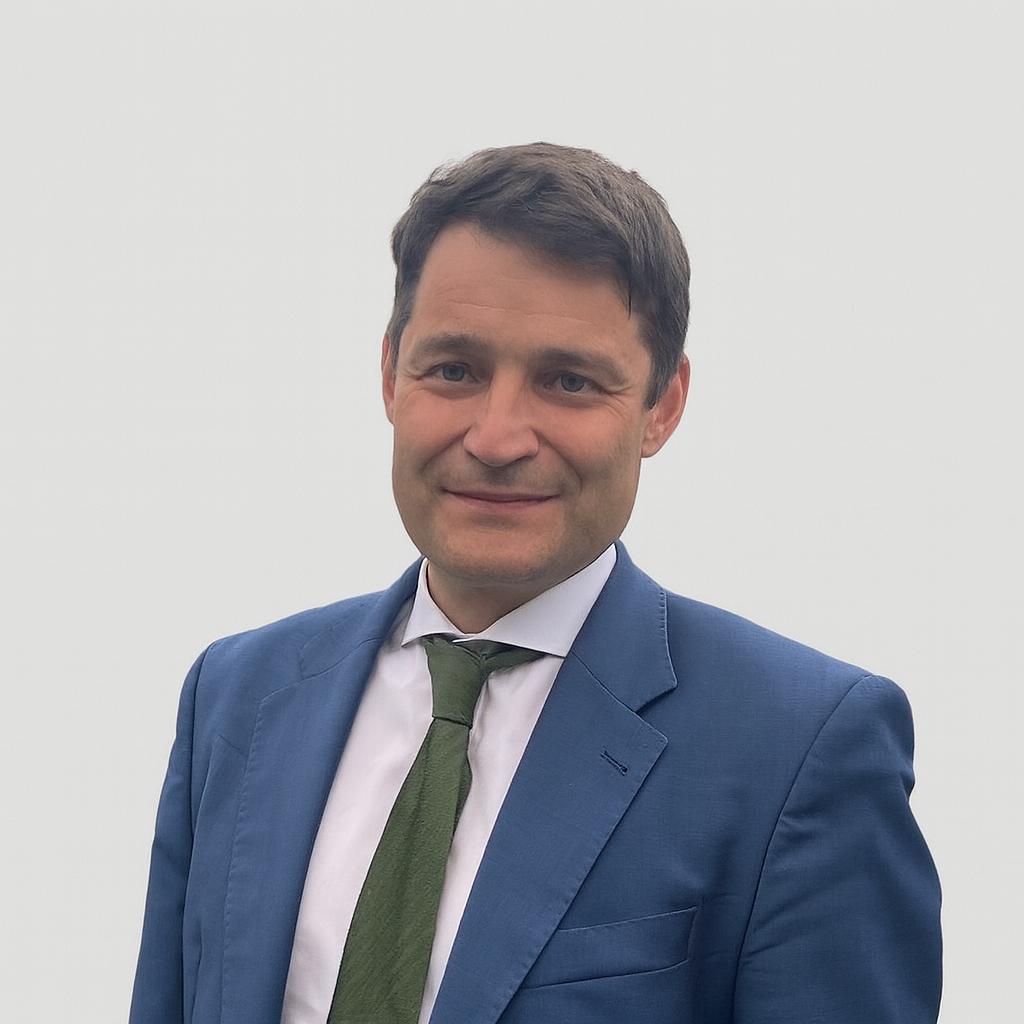
"Europe could potentially learn from these fast movers, which propose interesting solutions. I think Azerbaijan has a right to win, just because it's faster, it's agile, and the state could do a lot to support this entire process. One of the ideas would be to focus on such centers of excellence and centers of innovation, which is a hub attracting talent, capital, scale, and also technological application possibilities. I think SOCAR’s Caspian AI Institute, could be a prototype for this type of center," he said.
Aristov highlighted the fact that Azerbaijan’s liberated territories have now the status of special economic zone: "And given that there is a strong push in making it a green and innovative location, I think it's difficult to name a place where the first hub could be better organized than this one. If we allow data scientists, data engineers to work in Azerbaijan with some privileges of that type, I think that could be an interesting spin, especially if we have a bridge to the global hub."
Accelerating decarbonization with the help of AI in refining and chemicals
Aristov pointed out that SOCAR has made a significant leap over the past two years — not only by setting clear emission-reduction targets but also by developing a deep understanding of where those emissions originate.
"I believe there is another important area we can address: the chemistry we use. Our goal is to reduce the energy required to produce these chemical materials, making them less carbon-intensive and more cost-efficient. This transformation can begin in Azerbaijan and eventually extend far beyond its borders," he said.
Transitioning experimental AI into practice
Polunin noted that the entire path to get to commercially viable, applicable in industry takes years.
"I think that with radical speed-up of the first stage, there's a chance to get to commercially viable products, not only in chemistry, but also in exports of this chemistry, and in exports of these capabilities. It might be that Azerbaijan will not decide to go to develop own application, but will work together with industrial partners around the globe who would be willing to develop pragmatic technical solution, because they have capabilities, and scale-up of a new chemistry is a lengthy process where you need a lot of technical competence. But funding right partners, right network, right licensing model, putting the first product on the shelf, would create a momentum in Azerbaijan to go ahead and to test other capabilities and other molecules.
We have a molecule, it proves that this is viable, and there is a longer path to scale-up to technological applications, but that's a question of partners, and that's a question of opening up own capacities to test this technology, and then making a commercially viable export product worldwide. That could be the path much faster than if Azerbaijan would decide to go for scale-up with own capabilities," he said.
Compression of time required for seismic
Aristov noted that one of the projects focuses on dramatically compressing the time required for seismic work.
"We’re reducing the routine workload of subsurface engineers who operate complex professional software. AI agents run directly over the interface of this software — entering data, pressing buttons, identifying mistakes, making decisions, and taking the same paths a human expert would, but doing so relentlessly and at high speed. With this novel interface-level approach, we are not replacing the professional software; rather, we are eliminating the repetitive operational tasks that humans must perform to use it," he explained.
Aristov emphasized that this opens a tremendous opportunity for human specialists to focus on the most complex and intellectually demanding aspects of their work.
"It also enables experts to transfer their knowledge into the AI system. When a seasoned expert is preparing to retire, the question becomes: how do we preserve decades of accumulated insight? A well-trained AI agent can essentially inherit this expertise and continue the work, applying the full depth of the expert’s knowledge. And once trained, it can be replicated across multiple workstations."
Aristov noted that the first prototype of this project is already complete. "Our next step is to expand it and create a marketplace of AI agents that accelerate different steps of the seismic processing workflow — allowing professionals around the world to download the specific agent they need at each stage of their process," he said.
Methane.AI
Aristov noted that Methane.AI, the joint project of BCG and SOCAR, is a platform that collects data, analyzes it, and identifies the sources and volumes of methane emissions, while also forecasting the abatement curve required to reduce them.
"The key aspect of Methane.AI is that it is designed for companies with limited digitalization. It enables these organizations to conduct sampled, on-the-ground measurements and then extrapolate the findings across the rest of their infrastructure. It is highly tailored to the realities of post-Soviet countries, where legacy assets often remain non-digitalized.
We have established the Caspian Methane Accelerator, essentially a roundtable that brings several companies together. SOCAR, KazMunayGaz, and Uzbekneftegaz have already confirmed participation, with more expected to join. The goal is to work collectively on methane reduction now that Methane.AI platform give the right framework and tool-set."
"We use the Accelerator to build a common baseline — understanding where methane is emitted and in what quantities — and to jointly determine what types of measurements are needed, as well as the level of investment required to replace parts of the infrastructure. Investors are increasingly interested in this kind of coordinated effort. For local Caspian companies, this Accelerator may become a powerful mechanism to jointly lower the cost of reducing methane emissions," he concluded.