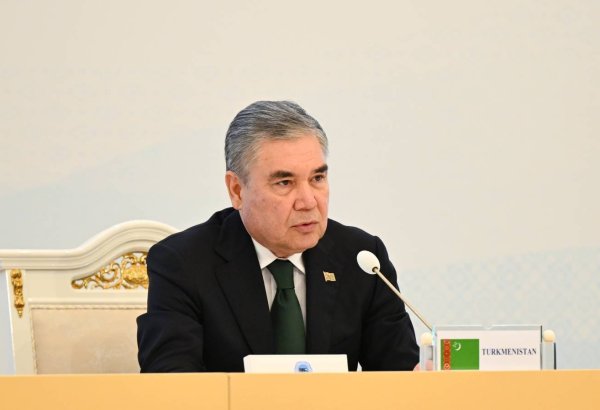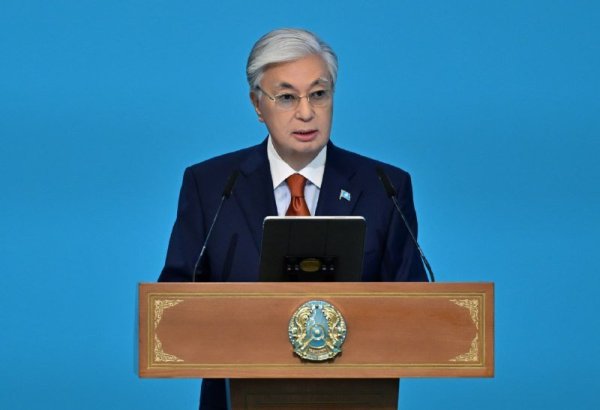







BAKU, Azerbaijan, December 6. President Serdar Berdymukhamedov took the reins at a Cabinet meeting, taking stock of the government’s efforts over the first eleven months of the year, TurkicWorld reports via Mejlis’ (the Parliament) press release.
Between January and November, 27 legislative acts were adopted on domestic and foreign policy issues, among them the ratification of the Treaty on Eternal Good-Neighborliness, Friendship, and Cooperation involving Kazakhstan, Kyrgyzstan, Tajikistan, Turkmenistan, Uzbekistan, and China. The Mejlis also issued 20 resolutions over the same period.
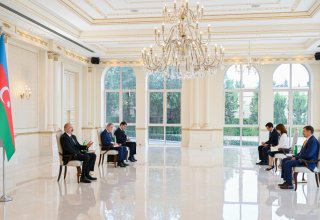
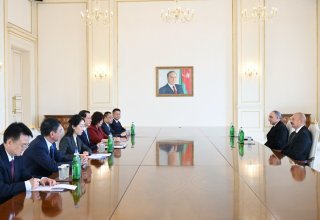
In external relations, Turkmenistan received credentials from 10 newly appointed ambassadors and held 56 meetings with representatives of foreign parliaments, diplomatic missions, and international organizations. Deputies and Mejlis staff joined 106 international seminars, and parliamentary delegations completed 44 working trips abroad.
The National Tourist Zone Avaza hosted a parliamentary forum as part of the Third UN Conference on Landlocked Developing Countries, while the Mejlis held the second meeting of parliamentary speakers of the Group of Friends of Neutrality in a hybrid format.
Earlier, in October, the UN and Turkmenistan discussed the draft Framework Program for Cooperation for 2026-2030 and ways to implement the country’s initiatives presented at the 80th session of the UN General Assembly. Discussions focused on strengthening cooperation in achieving the Sustainable Development Goals, implementing the outcomes of the 3rd UN Conference on Landlocked Developing Countries, and promoting Turkmenistan’s international initiatives in areas such as peace and security, sustainable transport, and environmental protection.
The Treaty on Eternal Good-Neighborliness, Friendship, and Cooperation, signed on June 17, 2025, at the Second China-Central Asia Summit in Astana, creates a legal framework for enhanced political, economic, and security ties between China and five Central Asian states: Kazakhstan, Kyrgyzstan, Tajikistan, Turkmenistan, and Uzbekistan. The treaty aims to promote peace, mutual respect, and sustainable development while fostering regional stability and economic cooperation, including infrastructure projects like the China-Kyrgyzstan-Uzbekistan railway.
It signifies a milestone in China's diplomacy, responding to growing economic ties and trade volumes. Ratification by national legislatures is pending, with Kyrgyzstan already signing and others, such as Tajikistan and Turkmenistan, delaying their approval for domestic review. This treaty marks the beginning of a new era of regional partnership driven by economic incentives and strategic stability amidst China's expanding influence in Central Asia.