



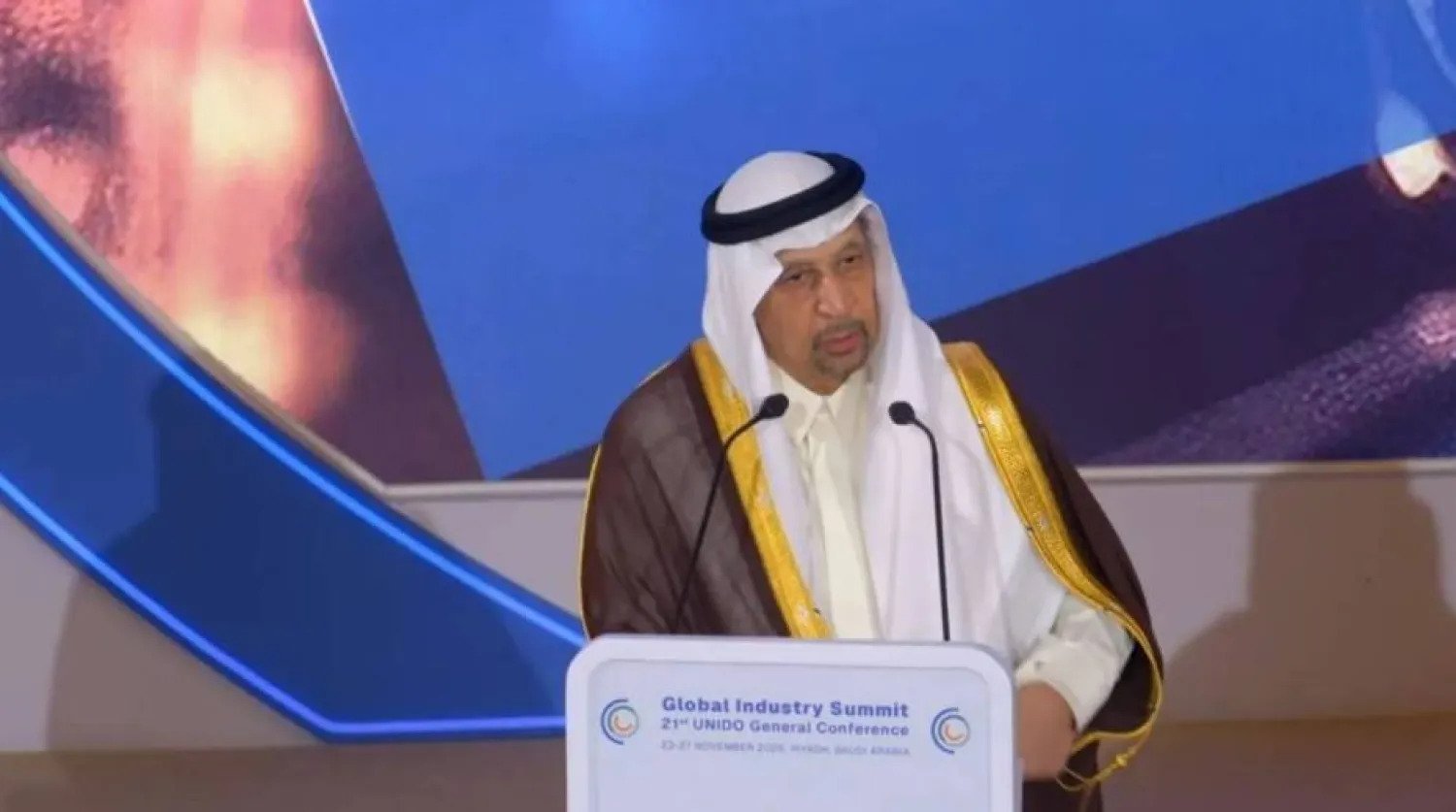
BAKU, Azerbaijan, November 25. Minister of Investment Khalid Al-Falih has said that Saudi Arabia is steadily advancing toward greater industrial competitiveness, thanks to its strategic location, high-quality resources, and ambitious economic reforms, noting the Kingdom has now become a key pillar in the reshaping of global supply chains, TurkicWorld reports via Asharq Al-Awsat.
He highlighted global industrial competitiveness and the emergence of a new landscape for supply chains worldwide, stressing that industrial production is no longer concentrated in a few major global centers.
Al-Falih indicated that supply chains are now being reorganized into regionally connected industrial clusters, allowing them to capitalize on this transformation to attract investment and boost their industrial importance.
The minister delivered his remarks during the 21st session of the UNIDO General Conference (GC21), held in Riyadh under the title “Global Industry Summit 2025."
He noted that the conference comes at a pivotal moment as the global economy witnesses changes in trade and investment patterns, accelerated industrial technologies, and increasing sustainability demands, which represent both a challenge and an opportunity.
He highlighted that the Middle East holds nearly half of the world’s proven oil reserves and 40% of confirmed gas reserves, in addition to vast mineral resources, including 79% of cobalt, 44% of manganese, 21% of graphite, and significant deposits of other critical minerals.
Al-Falih noted the transformation of the region, which has evolved from being viewed primarily as a source of energy and capital to steadily becoming a platform attracting industrial and technological investment, leveraging its abundant human, natural, and financial resources.
He pointed out that the Middle East and North Africa account for approximately 6% of the world’s population, 5% of global trade, and 4% of global GDP, while receiving only 3% of global investments.
He stated that economic diversification is a key focus, emphasizing that Saudi Vision 2030 is built on broadening income and growth sources, promoting innovation, and empowering youth, who constitute two-thirds of the population, are digitally connected worldwide, and possess a strong entrepreneurial spirit.
The minister outlined the Kingdom’s main strategic transformation pathways, including advanced manufacturing, mining, and downstream petrochemicals, alongside the development of the mining sector, whose estimated mineral reserves are valued at approximately $2.5 trillion and can be leveraged with low-emission energy.
Moreover, he stressed Saudi Arabia’s progress in clean energy, as well as blue and green hydrogen, noting the development of one of the world’s most competitive renewable energy assets.
According to Al-Falih, the Kingdom has a goal to become a global leader in artificial intelligence by 2030, with the digital economy expected to contribute 19% of gross domestic product (GDP. He cited Saudi Arabia’s top global rankings in technology and connectivity indicators.
He also noted significant growth in the entrepreneurial ecosystem, with venture capital activity rising 158% to reach $1.3 billion in the third quarter of the year, alongside the issuance of more than 2,500 innovative entrepreneur registrations from around the world to operate in the Kingdom.
"Saudi Arabia is experiencing rapid expansion in promising sectors such as tourism, hospitality, culture, and heritage, through major international projects like AlUla, Diriyah, and Red Sea Global, which have become key drivers of economic growth and high-quality job creation," the minister said.
The Kingdom supports regional growth through broad partnerships with neighboring countries, including Egypt, India, Pakistan, and the Levant states, in addition to the regional headquarters program that attracts global companies to establish their business centers in Saudi Arabia, the minister added.
He addressed the strength of Saudi Arabia’s financial markets, noting that the Kingdom’s sovereign wealth capital amounts to approximately $1.5 trillion. He highlighted that GDP has doubled since the launch of Saudi Vision 2030, the contribution of non-oil activities has risen to 56%, and gross fixed capital formation has more than doubled, surpassing strategic targets by 50%. Meanwhile, foreign direct investment inflows and stock have quadrupled, he noted.
The minister said Saudi Vision 2030 was founded on partnerships from the outset, with international organizations, most notably UNIDO, playing a key role in capacity building, strengthening industrial policy, and accelerating development across various sectors.
Al-Falih also stressed that the best way to build the future is through bold, responsible, and collaborative investment, expressing the Kingdom’s pride in its international partnerships and its commitment to continuing joint efforts toward a more prosperous and sustainable future.