






BAKU. TurkicWorld:
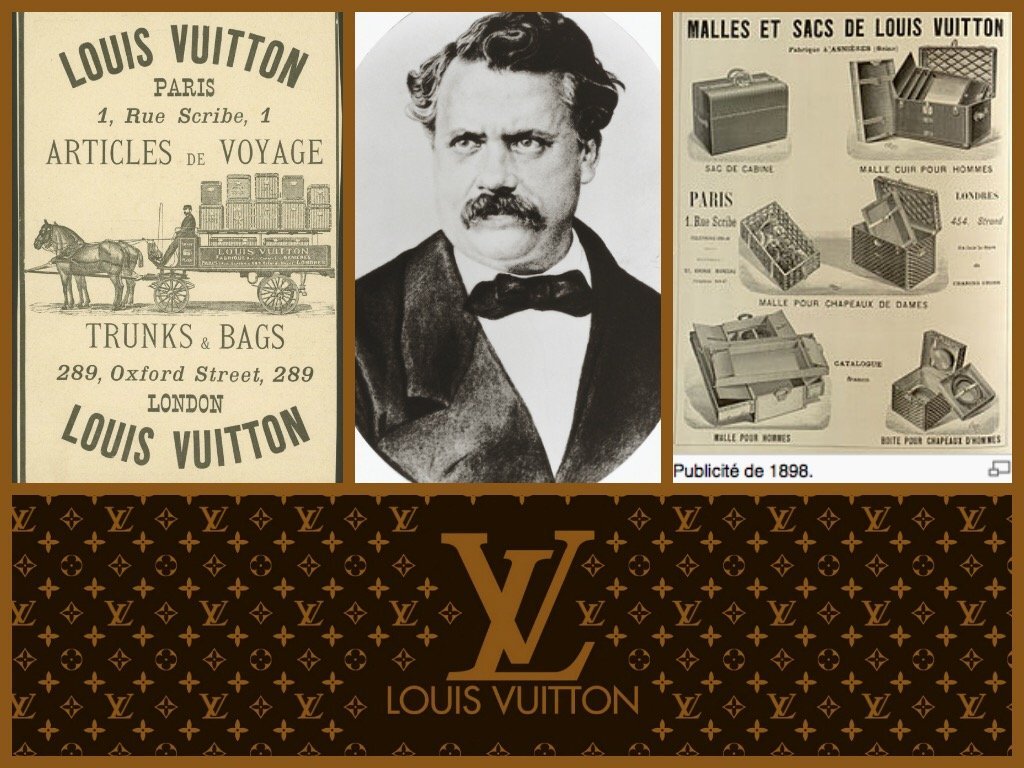
Louis Vuitton was a French box-maker and packer who founded the luxury brand of the same name over 150 years ago.
He was born on August 4, 1821 in Anchay, a small working-class settlement in the east of France. His father, Xavier Vuitton, was a farmer and his mother, Coronne Gaillard - who died when he was 10.
At the age of 13, tired of provincial life and of his strict stepmother, Vuitton left home for Paris.
The 292 mile journey took him two years on foot with stops to carry out odd jobs to support himself along the way.
Upon arrival in Paris in 1837, Vuitton became an apprentice at a successful box-making and packing workshop - a craft that was highly respected at the time. Within a few years he had gained a reputation as one of the best in his field in the city.
Vuitton's fortunes rose again in 1853 when he was appointed the personal box-maker and packer of the Empress of France, Eugenie de Montijo - the wife of Napoleon Bonaparte.
The Empress charged Vuitton with beautifully packaging her clothes for transportation between the Tuileres Palace, the Château de Saint-Cloud and various seaside resorts.
The position opened the doors to a new class of elite and royal clientele.
In 1854 Vuitton married 17-year-old Clemence-Emilie Parriaux.
Shortly afterwards he left the shop he had apprenticed for and opened his own box-making and packing workshop in Paris.
The sign outside read: "Securely packs the most fragile objects. Specialising in packing fashions". He also began creating his trunks in canvas instead of leather, which gave them the advantage of being hard-wearing and waterproof.
Four years later, Vuitton introduced stackable rectangular shaped trunks to a market in which they had previously been rounded.
Demand for the innovative and convenient trunk, which addressed the requirements of increasingly popular travel by train, was such that he had to expand into a larger workshop outside of Paris.
In 1867 Vuitton was awarded a bronze medal at the Exposition Universelle, an international exposition organised by Napoleon and held in Paris, which further increased the popularity of his work.
During the Franco-Prussian War, from 1870-71, Vuitton's workshop was looted and destroyed. Once the war ended he set up a new workshop in an aristocratic area of central Paris.
Vuitton introduced a trunk in a beige and red striped canvas in 1872. The design appealed to the new Parisian elite and helped secure the brand's position as a luxury offering.
In 1889 Vuitton won a gold medal and the grand prize at the Exposition Universelle, which once again helped to bolster the popularity of his work.
Vuitton continued to work until his death at the age of 72 on February 27, 1892. He left control of the company to his son, Georges Vuitton.
Source: British Vouge