






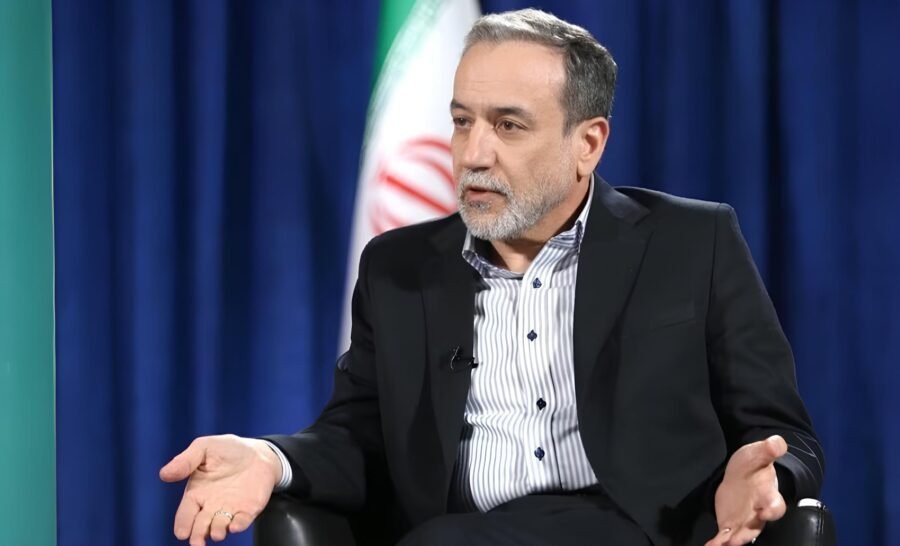
BAKU, Azerbaijan, August 15. Iran has not yet decided to resume talks with the United States, Iranian Foreign Minister Seyyed Abbas Araghchi said in a post.
"Intermediaries, both Qatar and Pakistan, are conveying messages between Iran and the United States to the parties and remain in close contact with Iran. However, this does not constitute talks," he said.
Araghchi said the memorandum of understanding signed between Iran and the United States in Islamabad referred to ending the war. The US side violated the memorandum, and hostilities resumed. From Iran’s perspective, there was no issue of a ceasefire whose extension could be considered. Iran’s objective was an end to the war. A new situation has now emerged, he said.
The Iranian foreign minister added that the envisaged 60-day period was in fact an opportunity for negotiations aimed at reaching a final agreement.
"Discussions between Iran and Oman regarding the Strait of Hormuz are continuing. This is an entirely separate issue. It is a technical matter concerning the designation of maritime routes in the Strait of Hormuz for the passage of vessels. The routes that previously existed are currently not sufficient for effective operations. Accordingly, a new route needs to be determined. Iran and Oman are currently planning a temporary route that could become a permanent route at later stages," he said.
Araghchi noted that the process is technical and is being conducted between experts from the two countries. The armed forces are also involved, as they are the main parties responsible for the matter. He said a result could be reached soon.
"However, it should again be emphasized that the opening of the Strait of Hormuz and the discussions between Iran and Oman are two separate issues," he said.
"These discussions concern the technical issue of determining a maritime route. Once the route is determined, will vessels begin transiting the Strait of Hormuz or not? The opening of the Strait of Hormuz requires the fulfillment of other conditions related to the US side’s adherence to its commitments," Araghchi said.
Iran has restricted the passage of vessels through the Strait of Hormuz, citing military attacks by the United States and Israel on Iran. In response, the United States has imposed a naval blockade on Iran in the Gulf of Oman.
The ongoing tensions surrounding the Strait of Hormuz have complicated the supply of energy from Gulf countries, which account for 15% of the world’s energy supply.