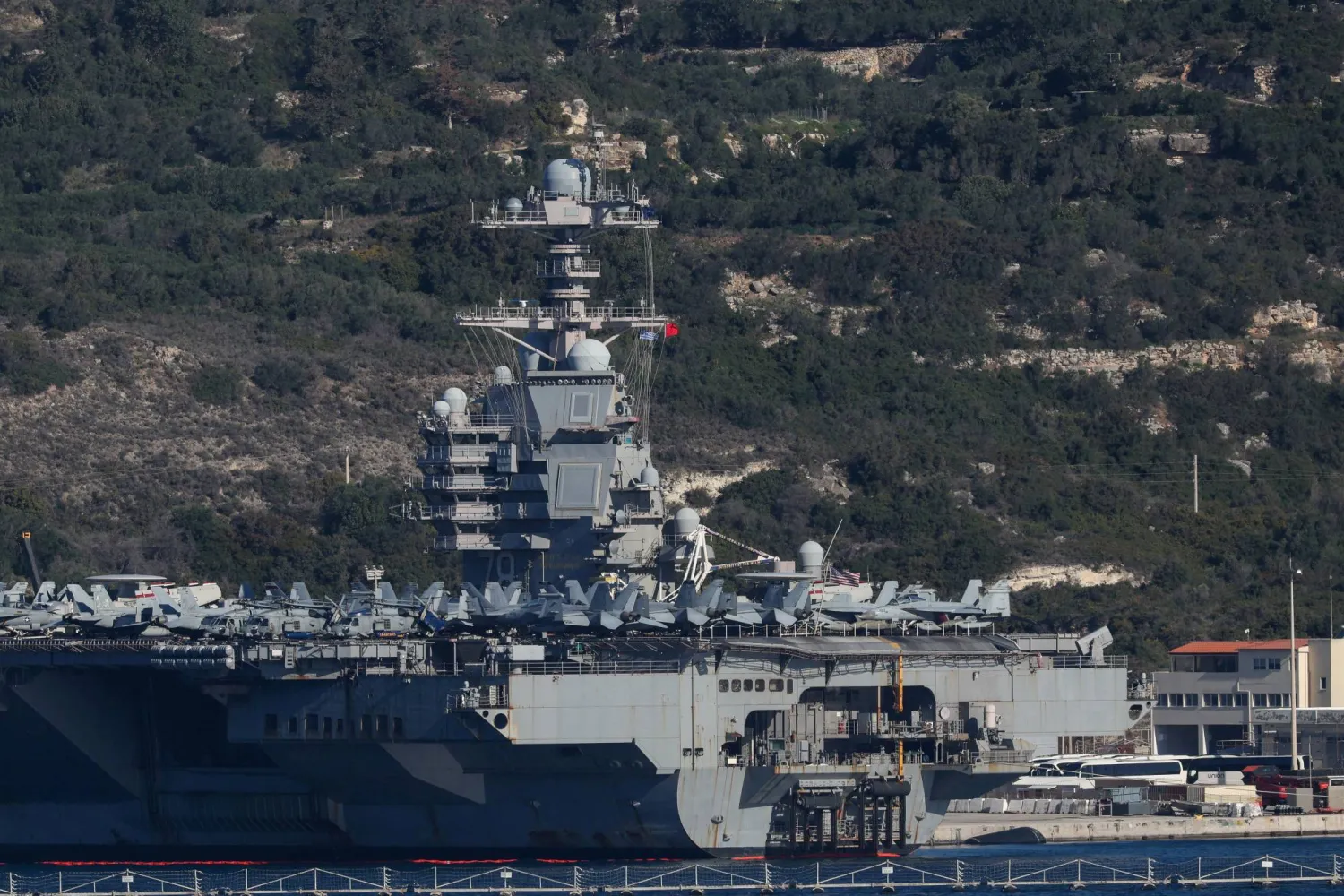
BAKU, Azerbaijan, February 24. The USS Gerald R. Ford, the world's largest aircraft carrier, has reached the US naval base of Souda Bay on Crete, en route to joining a massive military build-up in the Middle East TurkicWorld reports via aawsat.
President Donald Trump, who ordered strikes on Iran last year, has repeatedly threatened Tehran with fresh military action if it does not cut a new deal on its contentious nuclear program, which the West fears is aimed at building an atomic weapon.
The Ford reached the Greek island on Monday, according to an AFP photographer.
The Greek defense ministry declined to comment on the aircraft carrier's arrival, and the US embassy in Athens did not immediately respond to questions from AFP.
US Naval Support Activity Souda Bay is home to approximately 1,000 people, including active duty military, US civilian employees, local national employees, contractors, and family members.
Washington currently has more than a dozen warships in the Middle East: one aircraft carrier -- the USS Abraham Lincoln -- nine destroyers and three littoral combat ships.
It is rare for there to be two US aircraft carriers -- which carry dozens of warplanes and are crewed by thousands of sailors -- in the Middle East.
The United States had two of the massive warships in the region in June last year when it bombed three Iranian nuclear sites during Israel's 12-day war with Iran.
In his first term in office, Trump abandoned a landmark 2015 nuclear deal with Iran that placed curbs on its atomic activities in exchange for sanctions relief.
Following the United States' withdrawal, Iran began enriching uranium at higher levels -- up to 60 percent, near the 90 percent needed for a bomb -- though it has always maintained its program is strictly peaceful.
A previous round of nuclear diplomacy last year fell apart when Israel launched its surprise campaign against the country.