BAKU, Azerbaijan, December 11.What are the structural factors shaping the transformation of the Ankara–new Damascus authorities–SDF triangle, and to what extent can the “Terror-Free Turkey” process serve as a framework for systemic de-escalation, given Turkey’s institutional interests, the SDF’s positioning, U.S. involvement, and the emerging regional alliances?
A Shifting Triangle: Ankara, Damascus, and the SDF
The balance of power in northern Syria is changing fast — and with it, the fragile geometry connecting Ankara, Damascus’s new leadership, and the Syrian Democratic Forces (SDF). At the center of this transformation lies a question that will define the next phase of the conflict: can Turkey’s “Terror-Free Turkey” initiative become a framework for systemic de-escalation, or will it collapse under the weight of clashing institutional interests, U.S. entanglement, and shifting regional alliances?
The Geopolitical Context: A Conflict Rebuilt from Within
A year into Syria’s new governing setup, the country’s northeast has evolved into a semi-autonomous management zone under SDF control — an area critical for water, oil, and logistics. According to UN data, nearly 42% of all humanitarian supplies into Syria between 2023 and 2024 passed through this northeastern corridor, making the SDF an indispensable administrative actor, whether Damascus or Ankara likes it or not TurkicWorld reports citing BakuNetwork.
For Turkey, the corridor from Ayn al-Arab to Qamishli is more than geography — it’s a security perimeter. Ankara’s Ministry of Defense estimates that up to 78% of cross-border threats between 2022 and 2024 originated from territories linked to the PKK network. Turkey’s actions are rooted in Article 51 of the UN Charter, interpreting the right to self-defense as applicable to non-state armed groups operating from foreign soil.
The “Terror-Free Turkey” process was meant to turn this confrontation into a structured transition: integrating SDF units into the Syrian army, demobilizing militias, unifying command structures, and coordinating internal security under state authority. The March 10 framework, endorsed by Damascus, envisioned a full dissolution of autonomous SDF forces. But the SDF see the deal differently — as a state-to-state negotiation that doesn’t bind non-state actors like themselves.
That legal nuance exposes a deep fault line. For Ankara, the SDF are the PKK in different uniforms. For the SDF, they’re a distinct political movement. For Washington, they remain indispensable partners against ISIS. That triangle of contradictions — Turkey, SDF, and the U.S. — now forms an institutional deadlock that cannot be resolved without outside mediation.
Three Signals of Escalation
Between December 6 and 8, Ankara sent three deliberate messages — each marking a shift from diplomacy to coercion.
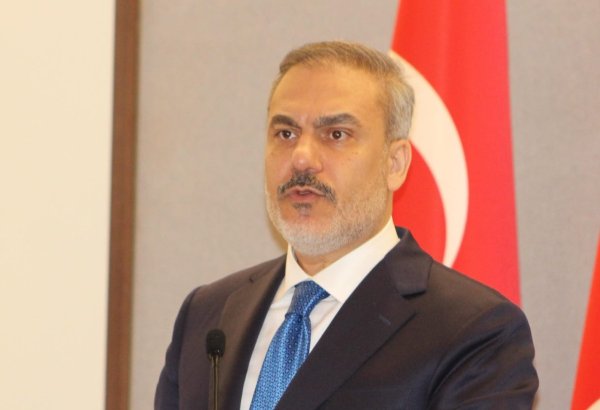
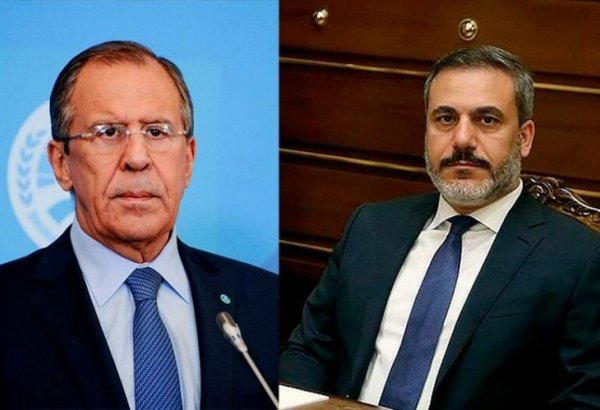
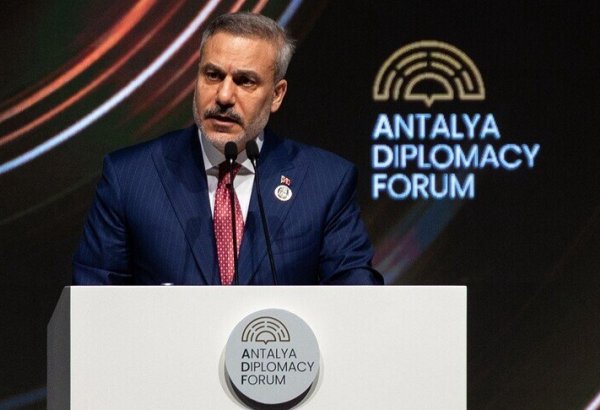
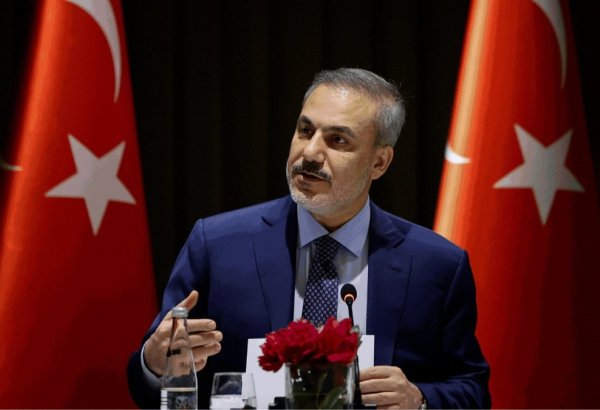
First came Foreign Minister Hakan Fidan’s statement in Doha, openly accusing the SDF of ignoring agreements with Damascus. His reference to “local arrangements” hinted at internal Kurdish maneuvers aimed at preserving limited security authority — a red flag for Ankara.
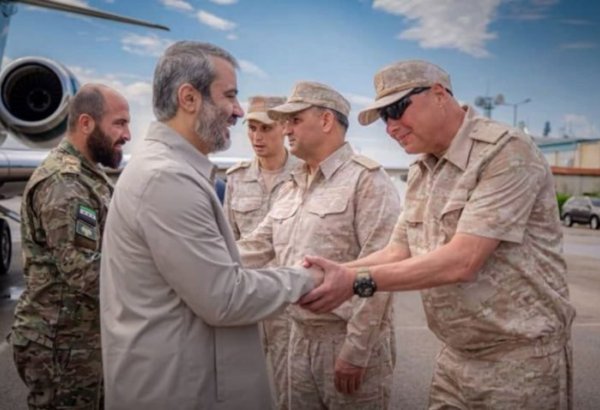
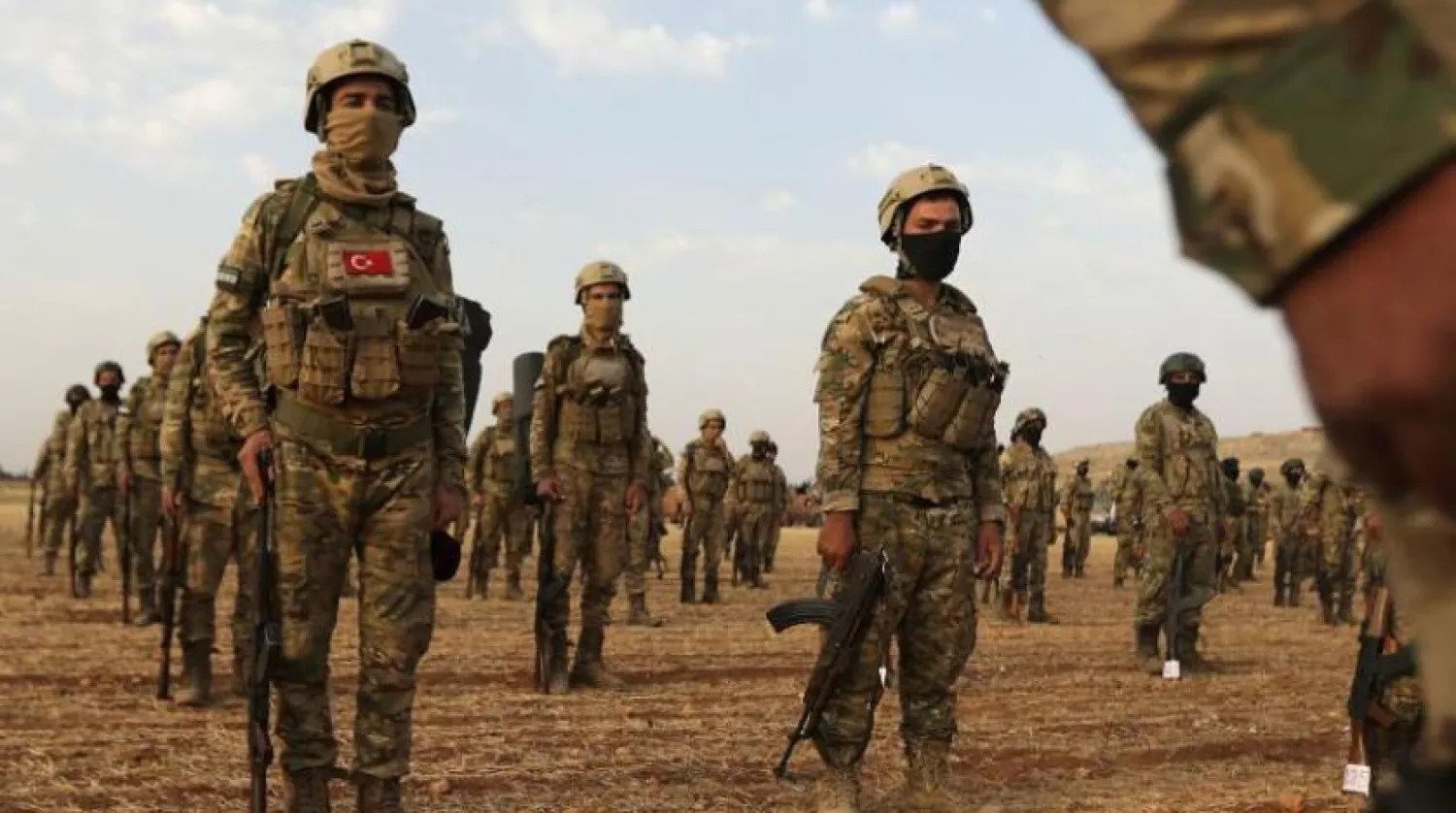
Second was the visit of Turkish Chief of General Staff Gen. Selçuk Bayraktaroğlu to Damascus — an extraordinary move in itself. According to diplomatic sources, talks focused on setting up a Joint Operations Center. The presence of Turkish generals inspecting Syrian army units signals a level of operational synchronization between the two capitals that would have been unthinkable a few years ago. For Turkey, that coordination legitimizes a potential future military campaign.
Finally came the statement from Mehmet Uçum, President Erdoğan’s chief legal advisor, framing Ankara’s position in doctrinal terms: no political goal, he said, can be achieved by “methods of a terrorist nature.” In other words, Turkey reserves the right to act unilaterally under its interpretation of international law if the “Terror-Free Turkey” process fails.
Together, these three signals fit a familiar Turkish playbook: first, define the threat publicly; second, deliver a military warning; third, establish a legal justification.
The SDF Position: Independent Actor or Syrian Substructure?
At a December conference in Istanbul, SDF political figure Ilham Ahmed made it clear: the SDF don’t see themselves as part of “Terror-Free Turkey.” By framing the issue as a purely domestic Syrian matter, they’re signaling a refusal to enter a state-to-state framework where obligations might become binding.
In a separate interview with The Jerusalem Post, SDF commander Mazloum Abdi said his forces are open to cooperation with the Syrian government — as long as they can preserve their own structure. That’s an echo of Iraq’s “asymmetric integration” model, where Kurdish forces retained de facto autonomy under a federal umbrella.
Meanwhile, Israel is quietly expanding direct contacts with the SDF. Middle East security sources say Jerusalem sees them as both a counterweight to Iranian influence and a valuable intelligence partner. That puts Israel and Turkey — both U.S. allies — in competition for influence over the same Syrian actors. The result: rising strategic ambiguity and a further delay of any sustainable peace mechanism.
A Crisis of Trust and the Collapse of Negotiation Tracks
Three previous dialogue attempts — Oslo in 2009, the 2012–2015 talks, and the early 2023–2024 stage — all broke down for the same reason: incompatible expectations. Ankara demanded an end to SDF military monopolies; the SDF sought institutional recognition of their autonomy. The U.S. backed the SDF militarily but withheld political endorsement. Damascus viewed them as a rival administrative entity yet lacked the leverage to reassert control.
The Syrian conflict has thus evolved into a multilayered game where every player recognizes only their own version of legitimacy. For Ankara, the SDF are a PKK proxy. For Washington, a counterterror partner. For Damascus, an administrative anomaly. For Israel, a potential stabilizer.
By late 2025, Turkey’s ultimatum requires the SDF to integrate into the Syrian army — or face military consequences. That deadline could redefine not only Syria’s internal order but the entire regional security architecture.
Washington’s Dilemma: Between Partnership and Restraint
The U.S. role remains shaped by its “limited engagement” doctrine — a legacy of the anti-ISIS campaign. As of 2024, roughly 900 American troops were still stationed in northeastern Syria, tasked with counterterror operations and detention oversight, not ethnic or political arbitration.
This creates a built-in contradiction. Washington wants to support its local partner, the SDF, while maintaining stable relations with Ankara, a NATO ally. The 2024 State Department report emphasized America’s “recognition of Turkey’s security concerns” and its support for “political dialogue under full respect for Syria’s territorial integrity.” But these are diplomatic placeholders, not conflict-resolution tools.
According to SIPRI, Turkey has been among NATO’s most militarily active members outside its borders from 2021 to 2024. That forces Washington into a balancing act: respecting Turkey’s strategic autonomy while safeguarding its own posture in the Eastern Mediterranean. Successive U.S. administrations, regardless of political party, have held to the same line — partnership with the SDF without granting them formal political status.
In practice, that leaves the U.S. not as an architect of peace but as a stabilizer of the status quo — or perhaps, more accurately, a source of its inertia. As Ankara approaches its 2025 integration deadline, Washington’s caution risks turning it into an external constraint on Turkish action rather than a genuine agent of regional stability.
Damascus’s Multi-Layered Logic: Between Internal Consolidation and Regional Expectations
Syria’s new leadership is intent on reclaiming control over both its territory and the instruments of national security. According to UN OCHA estimates, by 2024 the Syrian state governed roughly 68% of the population and 61% of the country’s territory — yet still lacked direct access to the resource-rich northeast.
The March 10 agreement, which mandates the integration of the SDF into Syria’s armed forces, was designed to reestablish central authority without triggering a costly military campaign. With inflation topping 120% at the end of 2024 and the national budget tethered to international aid, Damascus simply cannot afford a full-scale war.
For the new Syrian government, turning to Ankara for security coordination may be both pragmatic and politically feasible. The post-regime transition opened a narrow window for cooperation: Turkey could serve as an external stabilizer, much as it did with Iraq between 2023 and 2024, when joint operations targeted cross-border militias under a shared security framework.
But in Syria’s case, that model faces two hard constraints:
— Any formal arrangement with Turkey must reckon with the enduring U.S. presence.
— The SDF still hold de facto authority over areas Damascus refuses to recognize as autonomous.
What emerges is an architecture of “managed contradiction”: the parties acknowledge the need for dialogue but lack compatible standards for political integration.
Israel’s Outer-Ring Strategy: Countering Iranian Consolidation
Israel’s involvement in Syria has quietly evolved into a structural factor. Since 2022, Jerusalem has cultivated direct channels with the SDF, viewing them as a buffer against Iran’s Revolutionary Guard Corps and allied militias.
Israeli defense assessments describe northeastern Syria as one of the few zones where a non-Iranian barrier can still be built. From this perspective, empowering the SDF reduces the risk of Iranian logistical corridors stretching across Syria.
But that strategy runs headlong into Turkish interests. Ankara seeks to eliminate all external sources of SDF support, including Israeli ones. The paradox is glaring: two U.S. allies — Turkey and Israel — are now effectively competing on the same Syrian battlefield.
This rivalry adds new volatility to an already fragile region. Should Turkey move forward with a military operation, Israel would face a strategic dilemma: preserve its channel with the SDF or protect its growing energy partnership with Ankara, particularly in the Eastern Mediterranean gas corridor. Either way, Israel’s involvement deepens the institutional complexity of the conflict, introducing a layer of strategic multi-moves that defies any simplified peace model.
Scenarios Through 2025: What Comes Next
Analyses by RAND and CSIS point to three plausible scenarios for how this triangle — Ankara, Damascus, and the SDF — could evolve by the end of 2025, each with distinct implications for regional security.
1. Managed Integration of the SDF into the Syrian Army (Low Probability)
This would mean full implementation of the March 10 agreement: phased demobilization, handover of infrastructure to Damascus, and the creation of joint security units. For that to happen, three conditions must align:
— U.S. consent to reduce its troop presence;
— a halt to Israeli support for the SDF;
— Turkish guarantees on disarming PKK-linked factions.
Given current realities, this outcome is largely aspirational.
2. Limited Turkish Operation with Damascus’s Formal Consent (Moderate Probability)
This scenario envisions the al-Sharaa government inviting Turkish assistance to “preserve territorial integrity.” Such a move would give Ankara legal cover for military intervention and blunt international criticism. The operation would likely resemble the 2017–2018 Idlib model — but with far tighter coordination between Turkish and Syrian forces.
3. Full-Scale Military Phase and Territorial Reconfiguration (High Probability)
If the SDF refuse integration by late 2025, Ankara is expected to act militarily, while Washington limits itself to diplomatic objections. The fallout could be transformative:
— SDF-held territory would shrink dramatically.
— Damascus would regain administrative authority in key zones.
— Israel’s operational footprint in Syria would contract.
— Humanitarian and energy supply routes would be redrawn.
Strategic Consequences: Security, Alliances, and the Regional Chessboard
The Ankara–Damascus–SDF triangle has become one of the Middle East’s critical security knots — intersecting NATO strategy, U.S. policy, Israeli deterrence, Iranian influence, Iraqi coordination, and Arab state diplomacy. It touches everything from energy routes to Euphrates water control.
For Turkey, the top priority remains dismantling PKK-affiliated militias. Between 2020 and 2024, Turkish Interior Ministry data show a 24% rise in cross-border attacks originating from Syria. Ankara now frames the issue not just as counterterrorism but as a NATO security concern, seeking to internationalize its justification under alliance law.
A limited military operation, coordinated with Damascus, would likely neutralize some threats and institutionalize a framework for joint control — without binding Turkey to a long-term occupation. Ankara’s strategic vision is to fold all northeastern armed entities into the Syrian state’s hierarchy, ensuring no autonomous command structures survive. That model would let Turkey trade permanent troop presence for political leverage through coordination and security agreements.
For Damascus, joint action with Turkey could yield tangible political capital. It would signal restored sovereignty, reinforce legitimacy, and expand control over key administrative systems — positioning the government as a credible actor in international forums and reducing dependence on select foreign patrons.
For the U.S., the transformation poses a challenge of containment. The American mission in Syria is narrowly defined around counterterrorism, but any large-scale restructuring of the SDF will inevitably force Washington to rethink its presence. In strategic terms, a stronger Damascus–Ankara axis may be preferable to an ungovernable militia structure that Washington can neither control nor formally endorse.
For Israel, a Turkish operation would be a setback, cutting off its informal channel to the SDF. Over time, however, Jerusalem could pivot toward alternative theaters — Iraq or Jordan — to maintain its regional counterbalance to Iran.
And for the SDF themselves, the choices are narrowing. Continuing their current path risks isolation, dwindling resources, and territorial losses. The only viable alternative may be to accept integration into the Syrian state’s architecture — even at the cost of giving up their autonomous command. In the shifting power map of the Middle East, that may be the price of survival.
Long-Term Institutional Effects: Toward a New Regional Norm
If Ankara and Damascus succeed in building a partially coordinated model of cross-border security cooperation, the Middle East could see the birth of a new regional norm: joint state action against non-state armed groups operating across national boundaries. A similar precedent emerged in 2023–2024, when Turkey and Iraq conducted synchronized operations against PKK positions in northern Iraq — a partnership that redefined what “territorial sovereignty” means in the age of hybrid conflicts.
Such a framework could become a cornerstone of a revamped regional security architecture. Over time, it might:
— eliminate “gray zones” of ungoverned territory;
— reduce the risk of state-to-state clashes;
— restore and stabilize humanitarian corridors;
— secure a more predictable flow of energy across the region.
But any institutional agreement will hinge on credible guarantees. Unlike Iraq, Syria’s landscape is far more layered — the continued U.S. military presence, Israel’s strategic interests, Syria’s economic fragility, and the SDF’s political fragmentation all narrow the space for lasting institutional stability.
Conclusion: Implications for the Global System and the Shape of What’s Next
The “Terror-Free Turkey” process represents more than a counterterror initiative; it’s an experiment in building a new regional order — one that fuses sovereign state control, coordinated security management, and the gradual redistribution of armed power. In essence, it’s an attempt to move beyond the outdated paradigms of the Syrian war toward a system where regional powers, not external patrons, take the lead in defining security norms.
Whether or not Turkey ultimately launches a full-scale operation, analysts widely agree this is the final political cycle that allows for a hybrid settlement — one blending negotiation, military coordination, and limited integration. Should the process fail, the region risks sliding into a prolonged fragmentation of Syria’s northeast, entrenching rival enclaves and proxy zones for years to come.
Turkey, Damascus, and the broader international community now face a narrow but pivotal window. To prevent another decade of instability, they must adapt their political playbooks to a transformed reality — one defined by shifting actors, recalibrated power balances, and dwindling economic and strategic bandwidth.
The most plausible outcome, for now, points to a limited, coordinated Turkish operation under formal Syrian request, followed by the gradual institutional absorption of SDF-held territories into the Syrian state system. If successful, that model could quietly establish a new regional norm — one where sovereignty is reasserted not through isolation, but through managed cooperation.