






BAKU, Azerbaijan, December 5. Hezbollah officials have avoided commenting on the Lebanese government’s decision to appoint former ambassador Simon Karam as head of the Lebanese delegation to the “mechanism committee” overseeing the ceasefire with Israel, which effectively shifted the committee’s work from military-technical talks to political negotiations, TurkicWorld reports via Asharq Al-Awsat.
A formal party position is expected Friday, to be delivered by Hezbollah Secretary-General Sheikh Naim Qassem in a previously scheduled appearance.
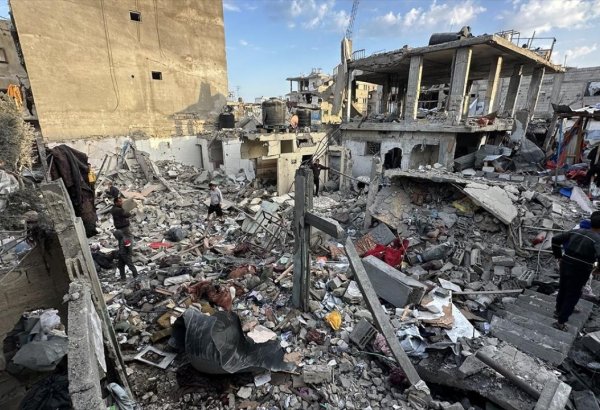
Yet media outlets aligned with Hezbollah, along with its supporters on social platforms, quickly denounced the presidential decision. They described it as “another act of surrender by Lebanon, taken despite the absence of any Israeli willingness to meet Lebanese demands, chief among them ending attacks and violations, withdrawing from occupied territory, and releasing detainees.”
Sources familiar with Hezbollah’s internal discussions told Asharq Al-Awsat that Qassem will reiterate the party’s refusal to enter “a new round of negotiations as long as Israel fails to meet its obligations.”
He is also expected to reference the open letter he sent on November 6 to Lebanon’s President, Parliament Speaker, Premier and the public, stressing rejection of any new talks and reaffirming “the right of resistance.”
The sources added that both Hezbollah and Speaker Nabih Berri are dissatisfied with Karam’s appointment because of his known political stance against “the resistance.”
Still, neither intends to provoke internal conflict. Instead, they will continue working with the state “within the framework of insisting that Lebanon assume responsibility for halting Israeli aggression, recovering land, securing prisoner releases, initiating reconstruction, and above all, preventing another Israeli war.”
On Wednesday evening, Hezbollah’s Al-Manar TV criticized the inclusion of a civilian in the mechanism committee, declaring that “the Lebanese state has taken its decisions and must bear their consequences.”
It added that the government “has stepped into the unknown without guaranteed returns,” insisting that “the people of the land will not concede rights or surrender.”
Political analyst Kassem Kassir, who closely follows Hezbollah, stressed that the priority for the party and its supporters remains achieving concrete outcomes: stopping Israeli assaults, withdrawing from occupied land, freeing prisoners, and rebuilding devastated areas.
Ali Al-Amin, editor of the Janoubia news site, recalled that Hezbollah had already informed Lebanon’s leaders of its rejection of negotiations with Israel.
Still, Karam’s appointment was “a Lebanese decision driven by internal considerations,” and the party cannot block it at a time when Israel has threatened a devastating war.
While Hezbollah signaled displeasure - prompting small street protests - it has not issued an outright rejection.
Asked about the party’s red lines, Al-Amin said Hezbollah will not relinquish its weapons, particularly north of the Litani River.
Should the government attempt to enforce disarmament, he warned, confrontation with the army could follow, an outcome still viewed by Hezbollah as less costly than a new Israeli war with unpredictable consequences.