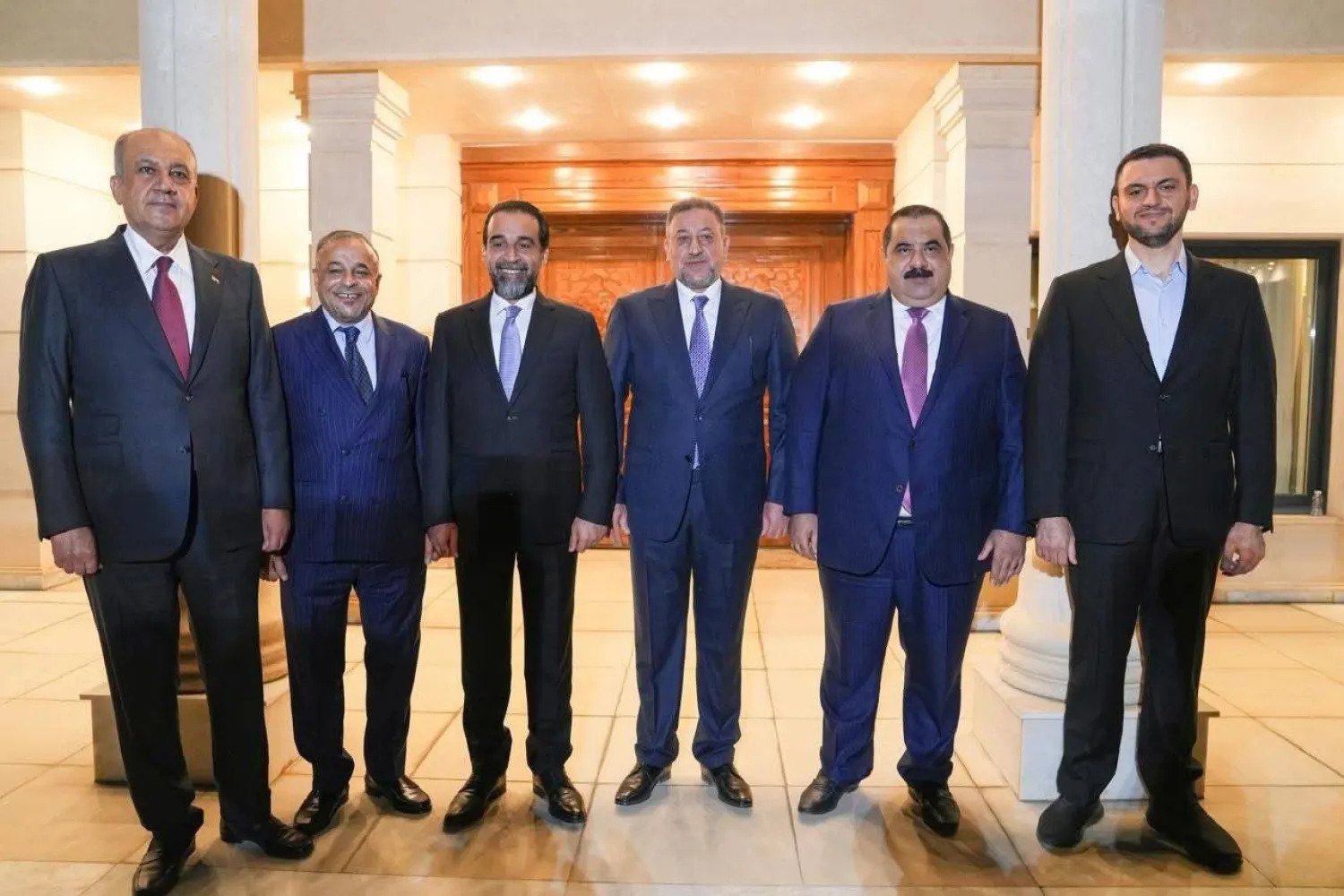
BAKU, Azerbaijan, November 25. Major Sunni powers and parties in Iraq declared the formation of a unified bloc, following the example of the Shiite forces that had formed the Coordination Framework a few years ago, TurkicWorld reports via Asharq Al-Awsat.
The new National Political Council brings together the main parties that won over 65 seats in this month’s parliamentary elections. The bloc is formed of the Taqadum party, led by former parliament Speaker Mohammed al-Halbousi, the Azm Alliance, led by MP Muthanna al-Samarrai, the Sovereignty coalition, led by Khamis al-Khanjar, the National Resolution Alliance (al-Hasm al-Watani), headed by Defense Minister Thabet al-Abbasi, and the National Masses Party (al-Jamaheer al-Wataniya), led by former MP Ahmed al-Jubouri.
The council held its first meeting at Khanjar’s Baghdad residence on Sunday. The gatherers stressed that the council will "coordinate stances and unify visions and decisions over major national files," said a statement after the meeting.
They discussed various political developments and the challenges facing Iraq, in their provinces in particular. They stressed the importance of unifying efforts and working on a joint vision to maintain political and social stability, ensure constitutional rights and bolster representation at state institutions.
The members of the council mostly represent Iraq’s northern and western provinces, such as Nineveh, Salaheddine and al-Anbar, as well as the eastern Diyala province.
The gatherers said the council "will be open to all national partners and is committed to the principles that consolidate Iraq’s unity and stability and maintain the rights of its people without exception, based on a national vision that aims to build a strong and just state for all."
A source informed of Sunni disputes predicted that the council will fail given that the Sunnis "are beholden to foreign sponsors."
Speaking to Asharq Al-Awsat on condition of anonymity, he said it was "good for the Sunni party leaders to agree on a framework for understanding and decision-making" given the unity of Shiite forces, "however, achieving it won’t be that easy, unfortunately."
"The main problem with the Sunnis is that several of them are beholden to regional sponsors, such as Türkiye, some Gulf countries, Jordan and Iran," he added.
"The Shiites, meanwhile, are all allied with Tehran," he explained.
Besides the foreign sponsors, the Sunnis have "deep conflicting interests within their own parties, which will hinder their efforts to unite. For example, some leaders are eying the presidency, others the position of parliament speaker, while the Shiites are all holding on to the post of prime minister," continued the source.
He also noted how some powerful Shiite forces are not above intimidation "to sabotage Sunni efforts to unite."
Political analyst and former diplomat Dr. Ghazi Faisal said the Sunni formation of a political council was a "qualitative leap" that may help unify stances on economic, social and legal affairs.
"Should the council remain united, it may stand against unilateral actions by the Shiites in parliament and government," especially if it managed to coordinate its positions with Kurdish parties, he told Asharq Al-Awsat.
Professor of International Relations at the University of Mosul Dr. Firas Elias predicted that the council "will ultimately fail and will not be allowed to succeed for several political reasons, namely because it is not guided by strong political rules like those held by the Coordination Framework."
He told Asharq Al-Awsat that since 2003, the Sunnis have repeatedly failed in uniting because they are driven by their personal interests rather than the interests of a whole bloc.
Moreover, he noted that the formation of the council was a reaction to the parliamentary elections results and what appears to be possible rapprochement between the Shiites and Kurdish powers.